Start with the job each part does
Not every damaged part of a pack carries the same risk. A loose strap keeper may let a webbing tail flap around, while a failing shoulder strap attachment can affect how securely you carry the whole load. Before choosing a fix, identify what the part holds, how much tension it takes and what would happen if it failed during a walk.
Empty the pack and inspect it in good light. Then add a typical day-trip load and check it again. Pay particular attention to shoulder straps, the hip belt, sternum strap, compression straps, haul handle and any straps securing gear outside the pack. Look at both the visible webbing and the points where it folds through a buckle or joins the pack body. Damage often becomes easier to see when a strap is under tension.
Know the signs of wear
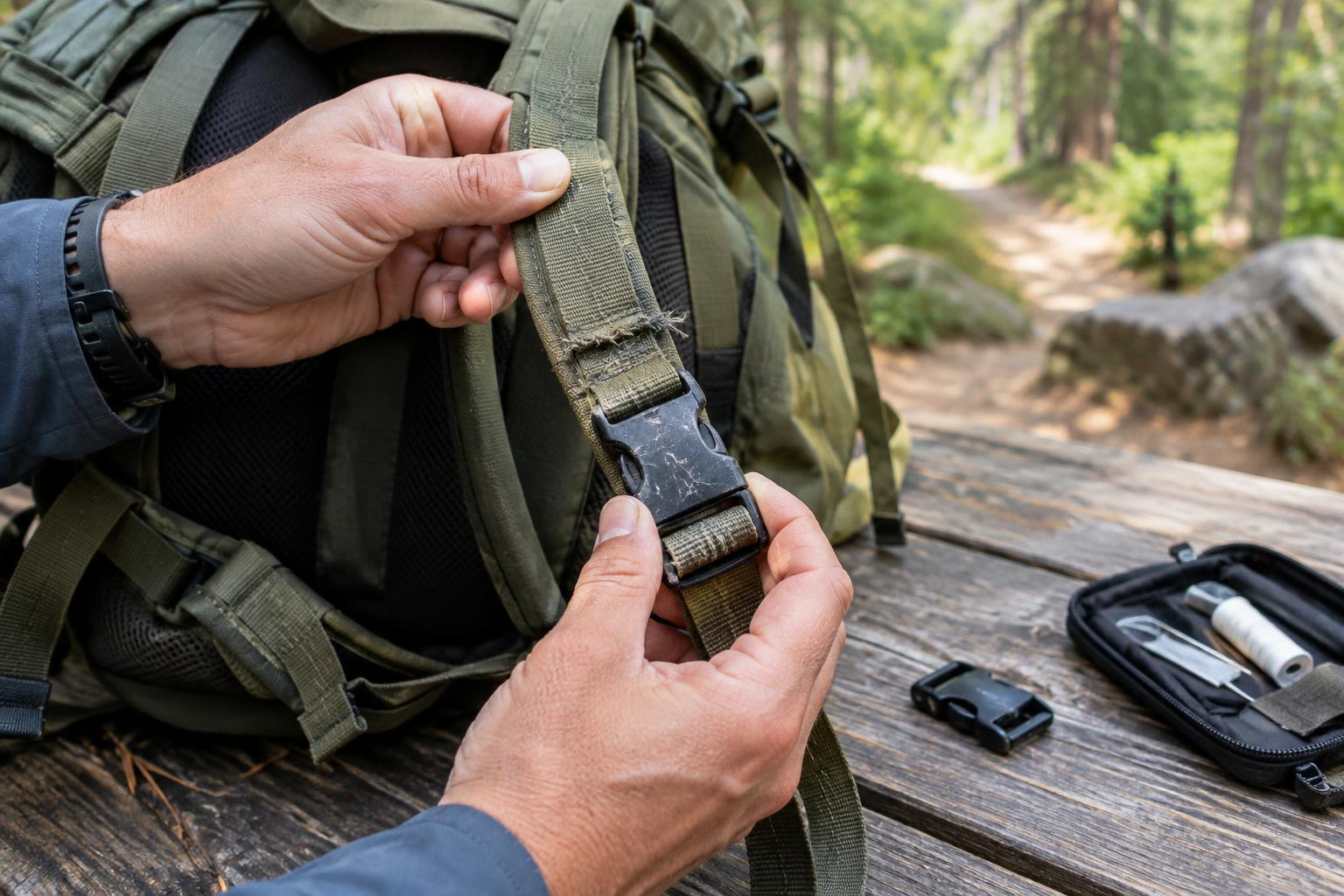
Buckles should click together cleanly and release when you intend them to. Replace a buckle if a prong is cracked, a socket is distorted, or the closure opens under a firm hand pull. A buckle that repeatedly slips may be damaged, but first check that the webbing is threaded correctly and lies flat. Dirt caught inside a buckle can also interfere with its action; brushing it out may solve the problem if the plastic itself is sound.
On straps, watch for cuts, substantial fraying, thinning, stiff or brittle areas, and edges that have curled enough to feed poorly through an adjuster. A few loose fibers at the end of a webbing tail are different from damage across the part that bears weight. Check seams too: missing stitches, a widening gap or fabric tearing around an attachment point calls for more than trimming loose threads.
Test adjustments while wearing the loaded pack. If a strap creeps longer as you walk or a buckle sits at an awkward angle, take the pack off and investigate. You should not have to keep tightening a strap to compensate for a part that no longer grips.
Match the repair to the damage
Small, non-load-bearing problems are often straightforward to fix. A missing strap keeper can usually be replaced with a compatible keeper, and a loose webbing tail can be secured so it does not snag. If a buckle is broken but its strap and stitching are sound, replacing the buckle may be enough. Choose a part made for the webbing’s width and check that the strap can be threaded as intended. Buckle halves that look similar are not necessarily compatible.
A split-bar replacement buckle can sometimes be fitted without removing a sewn-in strap. Check that its bar closes securely and that the replacement is suitable for the buckle’s job. If a repair requires cutting webbing or undoing stitching, consider whether you have the tools and experience to restore the original attachment. Knots, tape and improvised clips may help manage a minor nuisance temporarily, but they are poor substitutes for a dependable load-bearing connection.
For a torn shoulder strap, a failing hip-belt attachment or ripped fabric where a strap meets the pack, consider a qualified gear repair service or the pack maker’s repair options. The problem may involve the seam and surrounding fabric, not just the visible strap. Replace the pack if those parts cannot be repaired reliably or if the cost and effort no longer make sense for how you use it.
Check a fix before relying on it
After fitting a buckle or adjusting webbing, follow the strap’s path from its attachment point through every slot. Compare it with an undamaged strap on the pack if there is one. Pull firmly in the direction the strap normally bears weight, then release and repeat. The buckle should stay closed, and the webbing should not slide unexpectedly or bunch up.
Load the pack with what you normally carry and wear it on a short walk close to home. Adjust each strap, move your arms and shoulders, and check whether anything slips or rubs. This trial is especially useful before a longer outing: a repair that holds during a hand test may still be uncomfortable or poorly positioned in use.
Make inspection part of pack care
After a trip, brush grit from buckles and let damp straps dry before storing the pack. Avoid leaving webbing twisted through adjusters, and check that external straps are not dragging or catching on rough surfaces. These habits make developing problems easier to spot.
Before each outing, give the main carrying straps and closures a quick pull and look over their seams. If you are unsure whether a critical attachment will hold, use another pack until you can repair or replace it. A small buckle problem is easiest to deal with at home, before it becomes the reason you have to turn back.