Start with the walk and the footwear
A good hiking sock is not simply a thicker everyday sock. It has to work with your shoes, the expected weather and the amount of time you plan to spend walking. For a short, dry path in roomy shoes, a light sock may be enough. A long day in firmer boots might call for more padding around the heel and underfoot. The best choice is the one that stays comfortable inside your particular footwear.
Before comparing labels, put on the shoes or boots you intend to wear. Think about where they feel snug and where your foot has room to move. Socks take up space, so changing from a thin pair to a heavily cushioned one can alter the fit of a shoe. If your toes already feel crowded, extra thickness may make the problem worse rather than improve comfort.
Compare fabrics by how they handle moisture
Merino wool and synthetic fibers are common choices for hiking socks because they can help move moisture away from the skin. Merino often feels comfortable across a range of temperatures and tends to retain less odor during repeated wear. Synthetic fabrics such as polyester and nylon can dry relatively quickly and add durability, especially in high-wear areas. Many socks blend these fibers to balance comfort, stretch and resilience.
Fabric choice still depends on conditions. A sock that dries readily may be useful when you expect rain or frequent stream crossings; one that feels warm when damp may appeal in cooler weather. Cotton absorbs moisture and can remain damp during an active walk, so it is usually a less practical choice for longer outings. Whatever the label says, a sock that stays bunched or soaked inside your shoe will not perform well for you.
Choose cushioning without crowding your feet
Cushioning refers to extra knit material, often placed beneath the foot and around the heel or toes. Lightly cushioned socks take up less room and can feel cooler in close-fitting footwear. Medium cushioning offers a little more softness for varied day walks. Heavily cushioned socks may feel pleasant under load, but they are not automatically better: if they make your shoes tight, pressure and rubbing can outweigh the benefit.
Also look at where the cushioning sits. Padding under the heel and ball of the foot can feel different from an evenly thick sock. Try walking in your footwear rather than judging the sock only by how soft it feels in your hand. You should be able to wiggle your toes, and your heel should stay reasonably secure. If the sock changes the way the shoe fits, consider a lighter option before changing shoe size.
Check the fit from toes to cuff
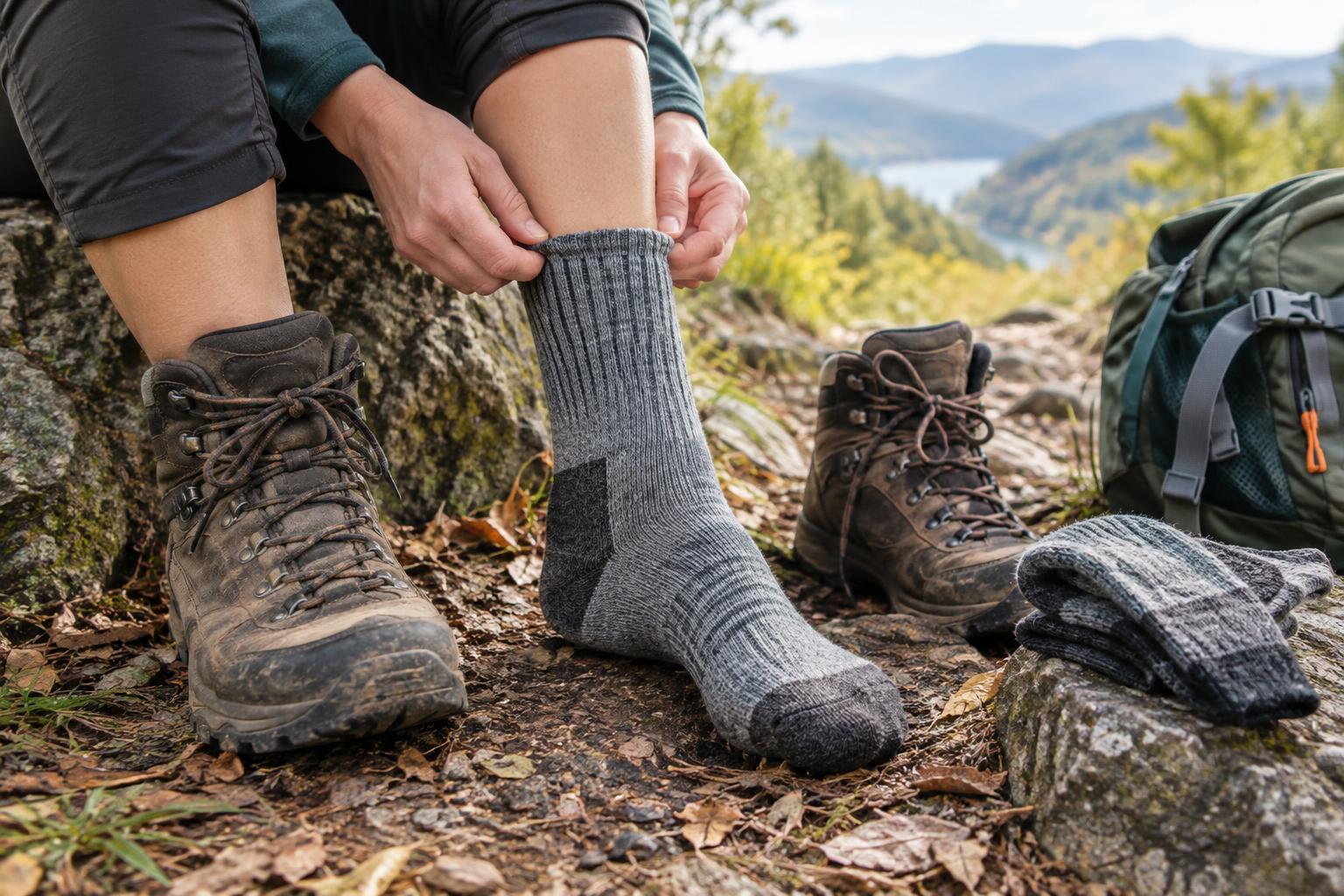
A hiking sock should lie smoothly against the foot. The heel pocket should sit on your heel, not creep toward the sole, and the toe area should have enough room to avoid pulling the fabric tight. Excess material at the toes or a loose arch can fold into ridges as you walk. A snug cuff should hold the sock up without feeling uncomfortably tight. Sizing charts are a starting point, but trying socks on is more useful when possible.
Choose a height that protects your skin from the top of your footwear. Low socks can work with low-cut walking shoes if they stay above the collar; crew-length socks generally provide more coverage with boots. Seams, elastic bands and textured panels may feel different once your foot is moving, so test new socks on an ordinary local walk before relying on them for a longer day out.
Make a simple choice, then care for it
If you are unsure where to begin, try a close-fitting merino-synthetic blend with light or medium cushioning, in a height that clears your shoe or boot collar. Wear it with your usual walking footwear and notice whether it slips, bunches, feels damp or leaves your toes cramped. Those observations are more useful than choosing by thickness or price alone. For a longer outing, carrying a dry spare pair gives you an easy way to change if your socks get wet.
Follow the care label to help preserve the sock’s stretch and shape. Empty grit from your shoes before walking, and let damp socks dry fully after use. Check worn areas at the heel and toe; thinning fabric can change how a familiar pair feels. Once you find a combination that suits your feet, footwear and usual routes, it becomes much easier to pack for the next walk.