Start with the walk, not the label
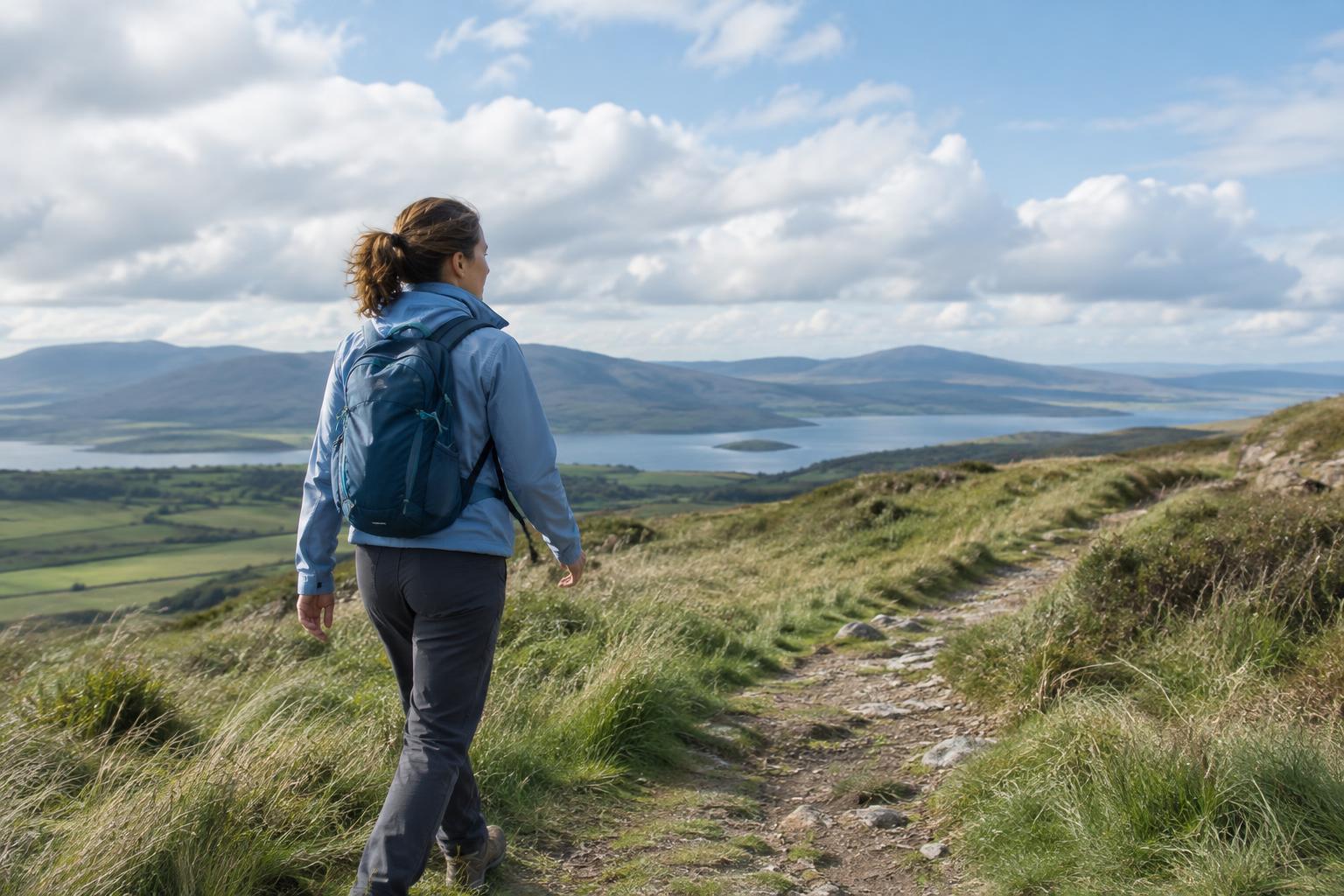
The better choice between hiking trousers and leggings depends on where you are going and what feels comfortable on your body. A maintained path on a mild day asks less of your clothing than a narrow trail with overhanging branches, wet grass or rough places to sit. Think about the expected weather, how much you will move, and whether you are likely to brush against vegetation.
Neither category guarantees a particular level of performance. Lightweight hiking trousers can feel nearly as flexible as leggings, while thick leggings may offer more warmth and abrasion resistance than thin trousers. Fabric, cut and construction matter more than the name on the tag.
Comfort while walking and stopping
Leggings stretch with each step and usually have little loose fabric to catch around the knees or ankles. Many walkers like their close fit for steady movement, especially when climbing or taking long strides. The waistband matters, though: one that rolls, slides or presses under a pack’s hip belt can become distracting. Check comfort while bending, stepping up and sitting down, not just while standing in front of a mirror.
Hiking trousers offer more room around the legs and may feel less clingy when you stop for a break. Look for a cut that lets you lift a knee without pulling at the seat or waist. Articulated knees, a gusset or a little stretch can help, but a well-fitting simple pair can work just as well. If the hems are wide, check that they do not drag or snag underfoot.
On warm walks, a loose trouser leg may allow more air to circulate. Close-fitting leggings may dry comfortably on the body after light moisture, but they can also feel clammy if the fabric holds sweat. Try walking in your chosen pair before relying on it for a longer day.
Durability where the trail touches your clothes
Trousers often provide a useful buffer between skin and rough surfaces. A sturdy woven fabric is a sensible choice if your route includes scrubby edges, rocky steps or frequent sitting on the ground. Check the knees, seat and inner thighs for substantial fabric and sound seams, since those areas tend to take the most wear.
Leggings vary widely. Thin everyday pairs can snag or become worn where they rub against rock, branches or a backpack. Leggings made with denser fabric or reinforced panels may cope better, though they are not automatically tougher than trousers. If you already own a pair, inspect it after a few local walks. Pilling, thinning fabric or stressed seams can tell you more about its suitability than a product label.
Durability also affects care. Brush off grit before washing, follow the garment’s care label and let it dry fully before storing it. Grit left in pockets or caught in fabric can add wear over time.
Coverage in changing conditions
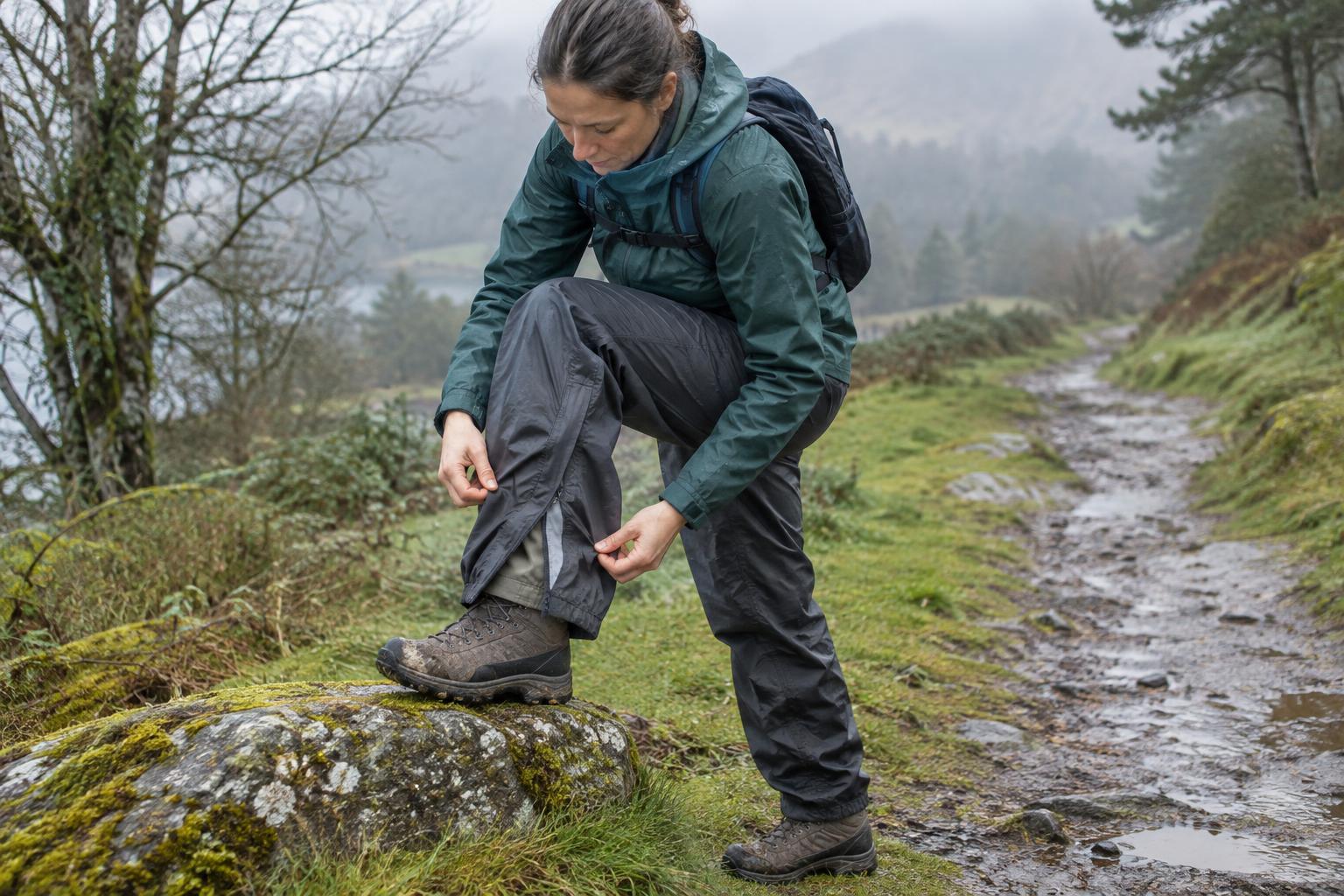
Full-length trousers generally leave a little space between fabric and skin, which can be welcome around scratchy plants or during a breezy rest stop. They are not a substitute for rain trousers: even a fabric that sheds brief drizzle may eventually wet through. In persistent rain, a separate waterproof layer can make either choice more comfortable.
Leggings offer close coverage without flapping, but their comfort in cold or wind depends on fabric thickness and what you wear over them. They can work as a layer beneath roomier trousers or rainwear if the combination does not restrict movement. For sunny routes, check how much skin your choice leaves exposed at the ankles and waist, particularly when you bend or reach.
Coverage is also personal. Some people prefer the opacity and looser outline of trousers; others feel fully comfortable in leggings. Stretch the fabric over a bent knee in good light to check whether it becomes see-through, and make sure the waistband stays covered when you move.
Make the final choice practical
Pockets can settle the decision. Trouser pockets may hold a map, tissues or snacks, but bulky items can bounce or pull the waistband down. Leggings sometimes have fitted side pockets that keep a phone close. Whichever you choose, test the pockets while walking and use a pack for anything heavy or essential.
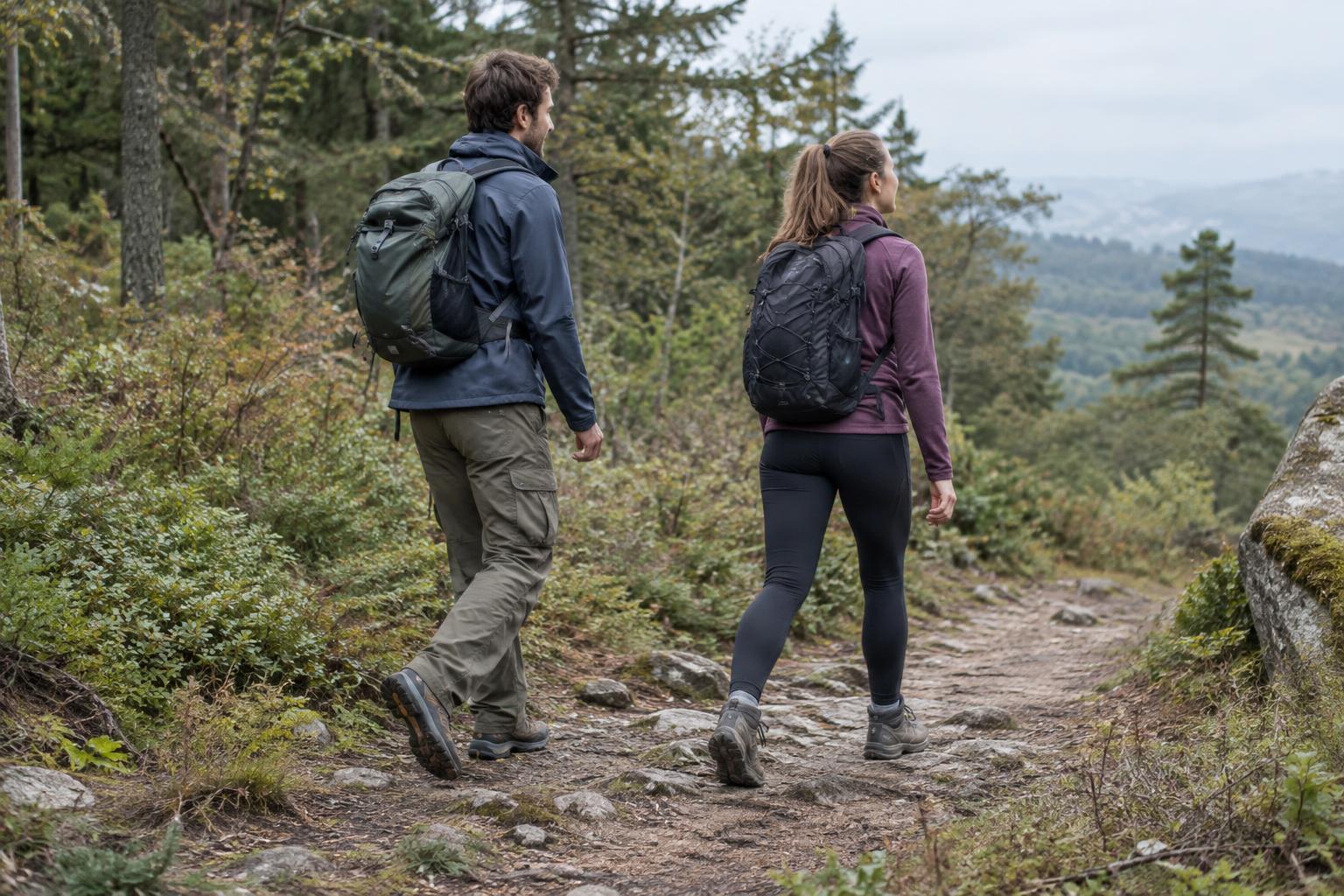
For a straightforward day trip, choose the pair that fits well, suits the forecast and gives you enough protection for the route. Leggings may be the easy pick for open paths and unrestricted movement; trousers may be more reassuring on rougher, brushier walks. If you are unsure, take a short local walk in both. The most useful test is whether you can move, pause and head home without having to think about your clothing.