Make the decision early
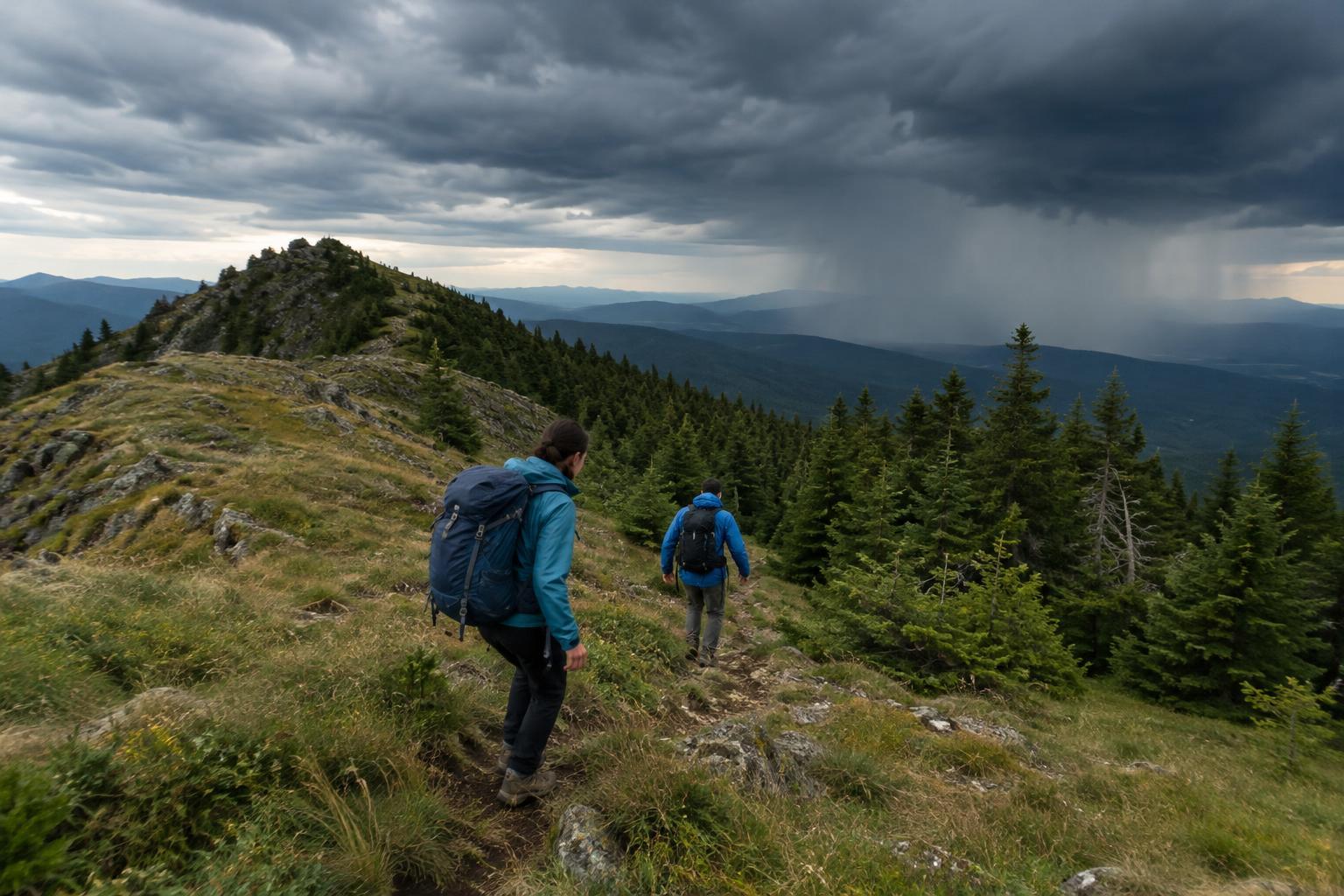
If you can hear thunder, lightning is close enough to be a concern. Do not wait for rain to reach you or for the storm to appear directly overhead. Stop, identify the nearest substantial building or fully enclosed, hard-topped vehicle, and head there by the safest available route. A picnic shelter, tent, or open-sided structure is not reliable lightning shelter.
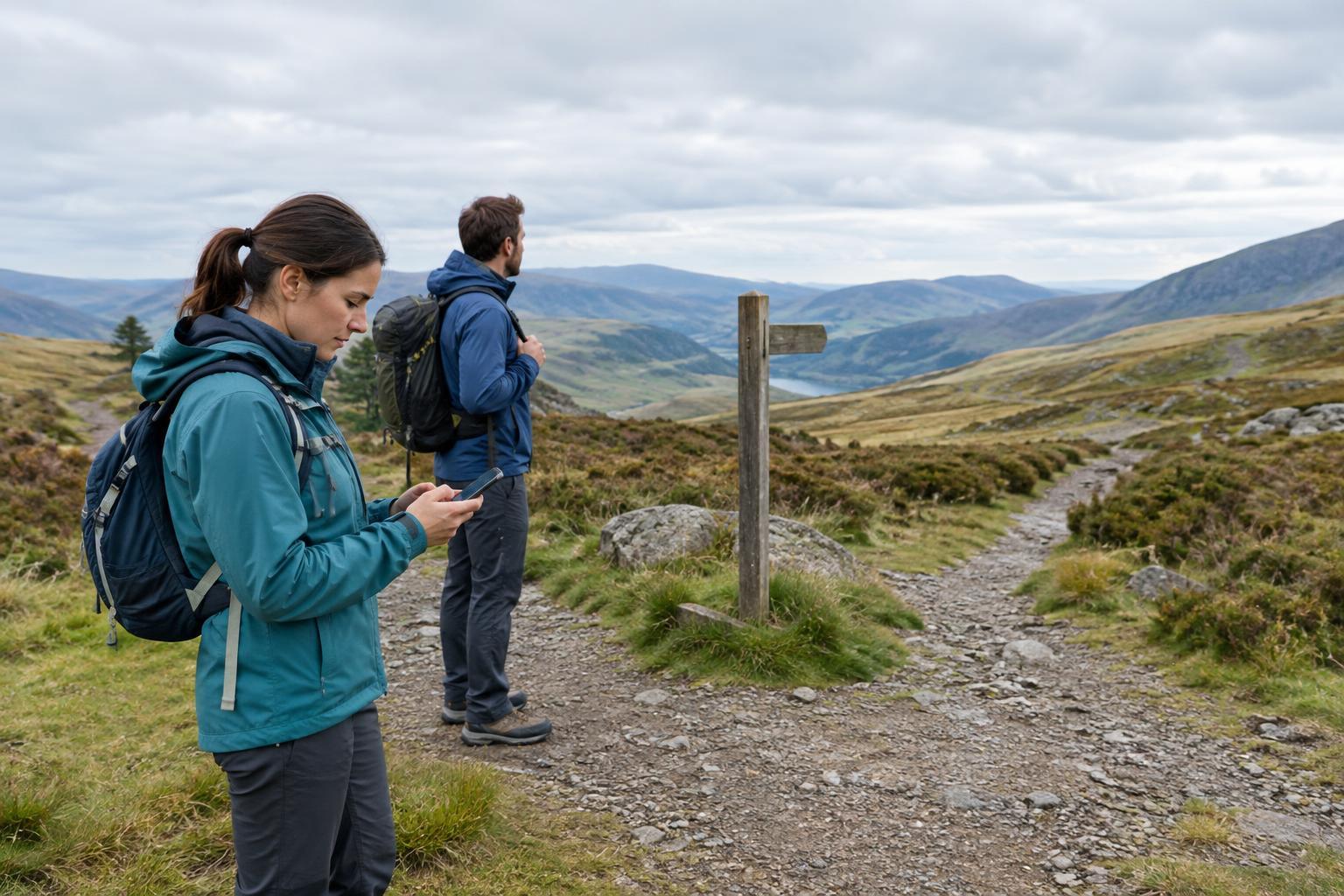
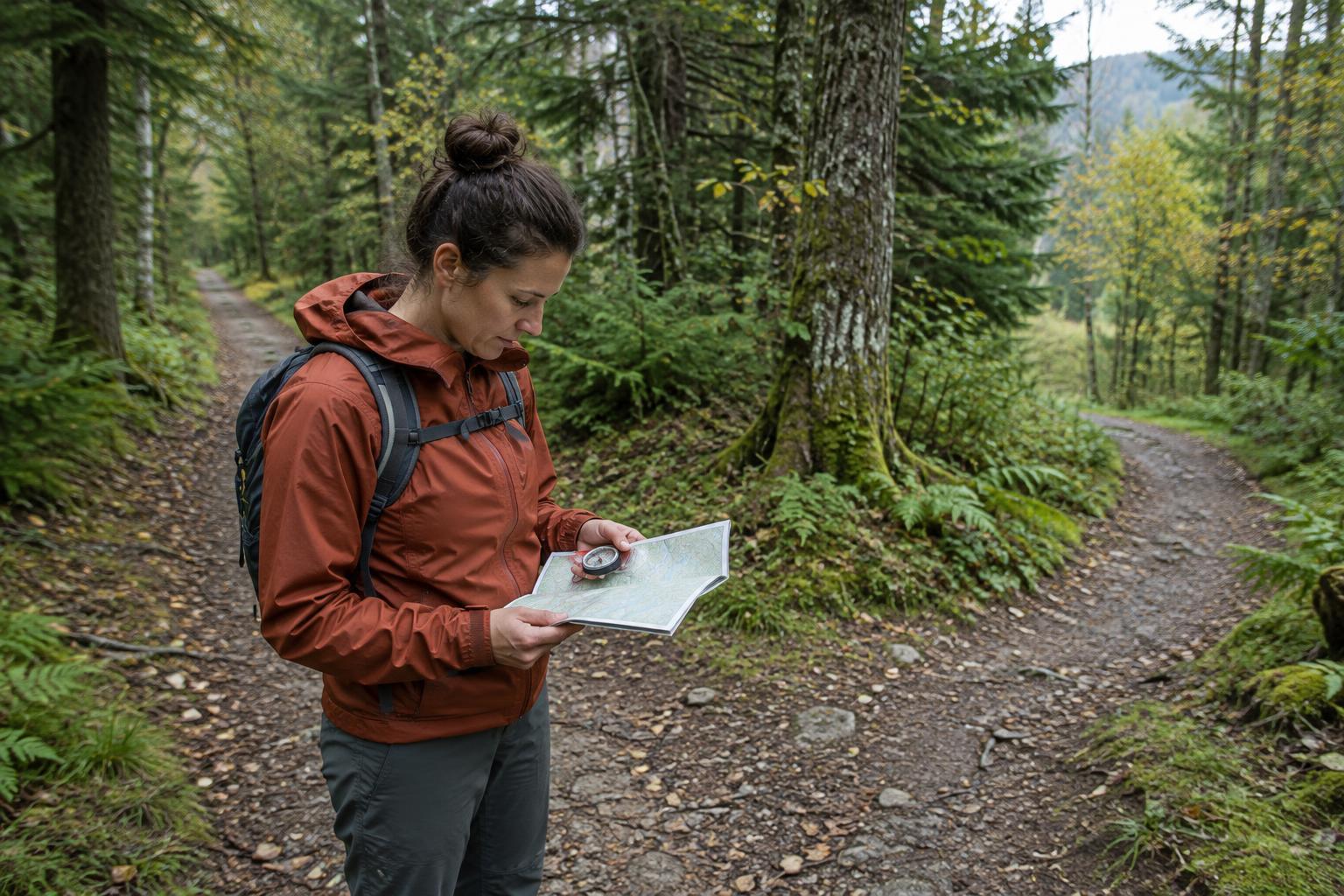
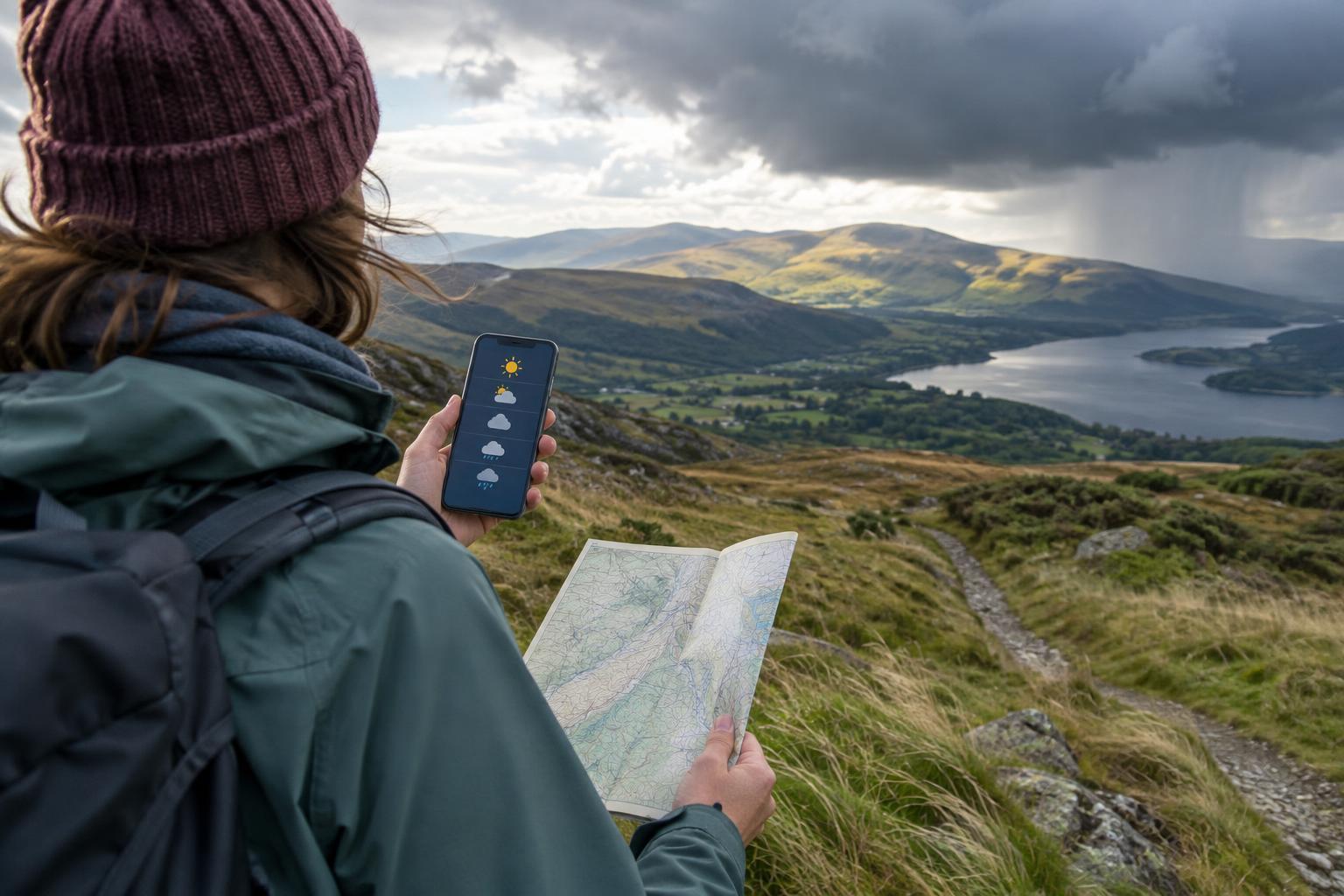
Before a walk, check the forecast, note where you could leave the trail, and consider how long it would take to reach shelter from exposed sections. On the trail, darkening clouds, a sudden change in wind, or distant thunder are reasons to reassess. Turning around may be disappointing, but continuing toward a summit or open viewpoint can leave you with fewer options.
Leave exposed places without rushing into another hazard
Move away from ridgelines, summits, open fields, shorelines, and other exposed ground. Avoid isolated tall trees, poles, and cliff edges. If you are in woodland and cannot reach a substantial building or vehicle, a lower area among trees of similar height is generally preferable to standing beneath one prominent tree. Do not shelter in a cave entrance or under a shallow rock overhang.
Keep away from lakes, streams, and wet shorelines. Put down trekking poles and other long metal items rather than carrying them upright. Metal does not need to attract lightning to be dangerous: it can conduct current if a strike occurs nearby. Follow the trail where possible, and watch your footing. A fall on a steep or slippery shortcut is an immediate risk, too.
If there is no safe shelter nearby
Outside a substantial building or enclosed vehicle, there is no reliably safe place during a thunderstorm. Your priority is to keep moving toward better shelter when you can do so without crossing more exposed terrain. If you are caught in an open area, leave it promptly rather than stopping to reorganize your pack or wait out the rain.
If lightning seems imminent and you cannot move to shelter, avoid lying flat on the ground. A low crouch with your feet close together may reduce some exposure compared with standing tall, but it does not make you safe; use it only as a last resort while you look for a way out. If you are walking in a group, separate enough that one nearby strike is less likely to affect everyone, while staying within sight or voice contact. Keep children and anyone who needs help accounted for.
Wait before resuming your walk
Reaching shelter does not mean the storm has passed. Stay inside the substantial building or enclosed vehicle until at least 30 minutes after the last thunder you hear. If thunder returns, restart the wait. Do not leave simply because the rain has eased or sunlight has appeared.
Once the storm has moved on, reconsider the route rather than automatically continuing. Trails may be slick, streams may be higher, and daylight may be limited. If the remaining walk would take you back onto exposed ground with little margin for another change in weather, choose a shorter route or finish the trip for the day.
Help an injured person and plan for the next trip
If someone is struck or appears injured, call emergency services as soon as you can and give your location. A lightning-strike victim does not carry an electrical charge and can be touched. Move the person to a safer place if you can do so without putting others in further danger. Follow the emergency dispatcher’s instructions; if the person is unresponsive and not breathing normally, begin CPR if you are trained and it is safe to do so.
For future walks, make storm decisions part of ordinary route planning. Carry a charged phone, share your intended route, and know where the exposed stretches are. Good preparation cannot control the weather, but it can make an early, calm change of plan much easier.