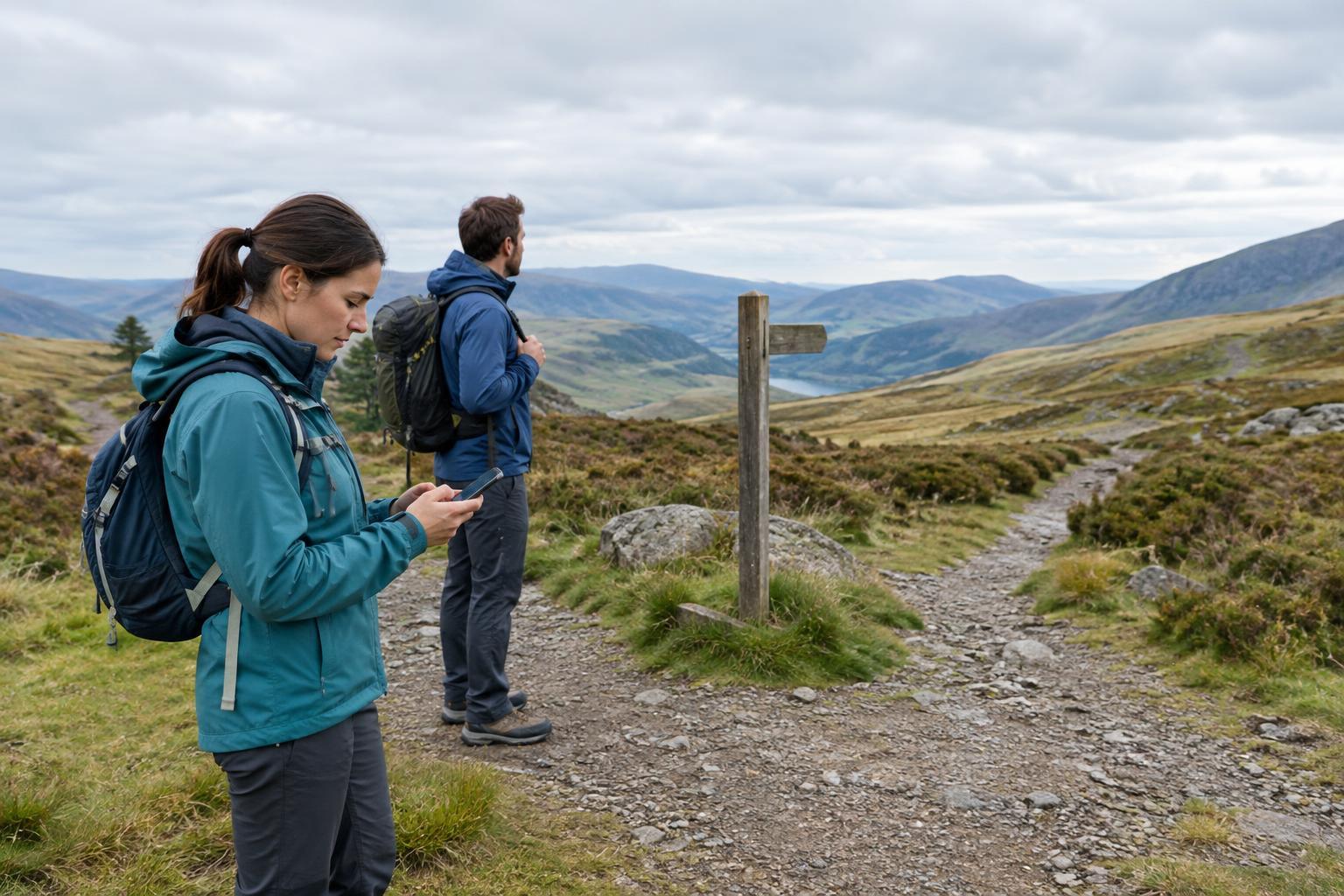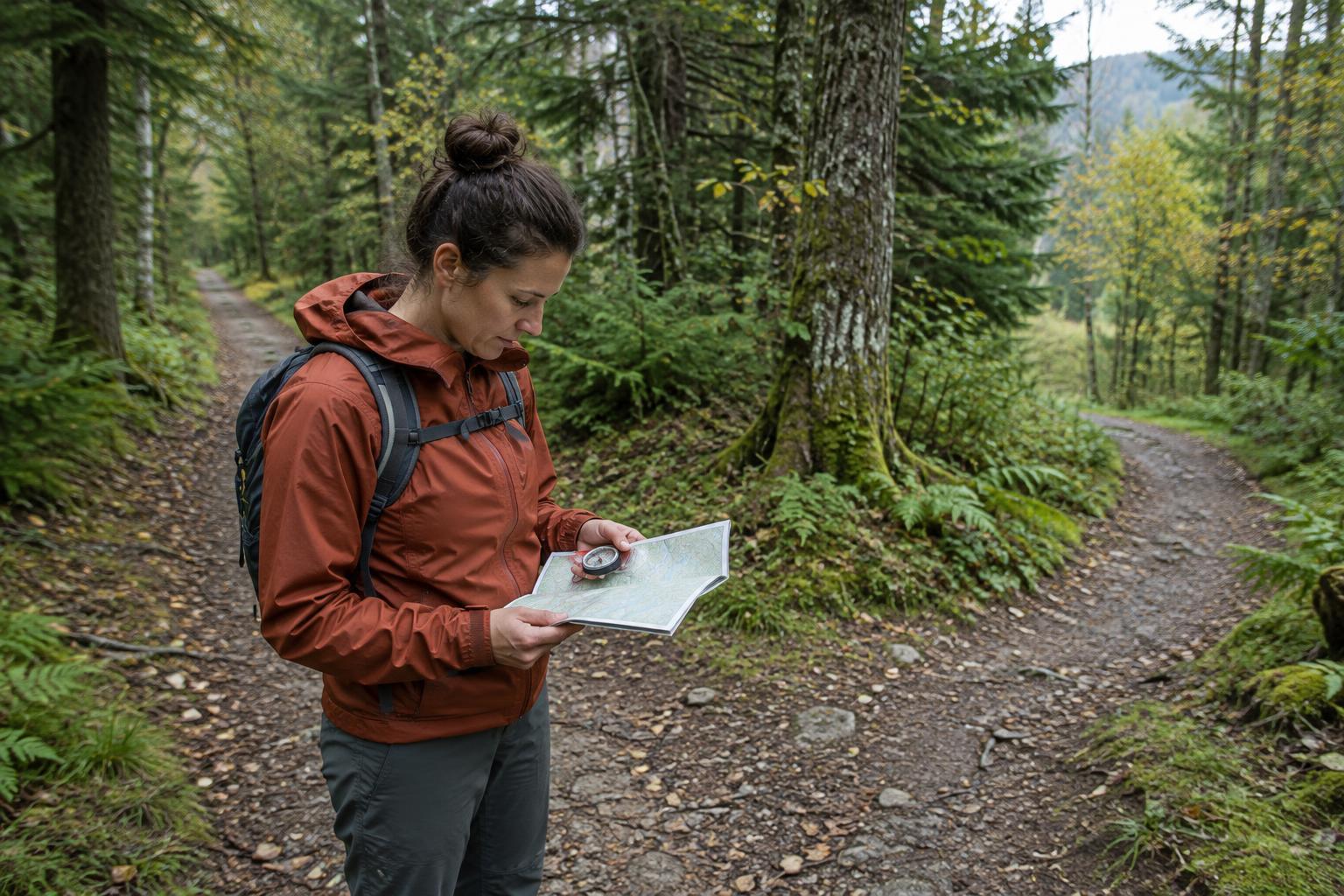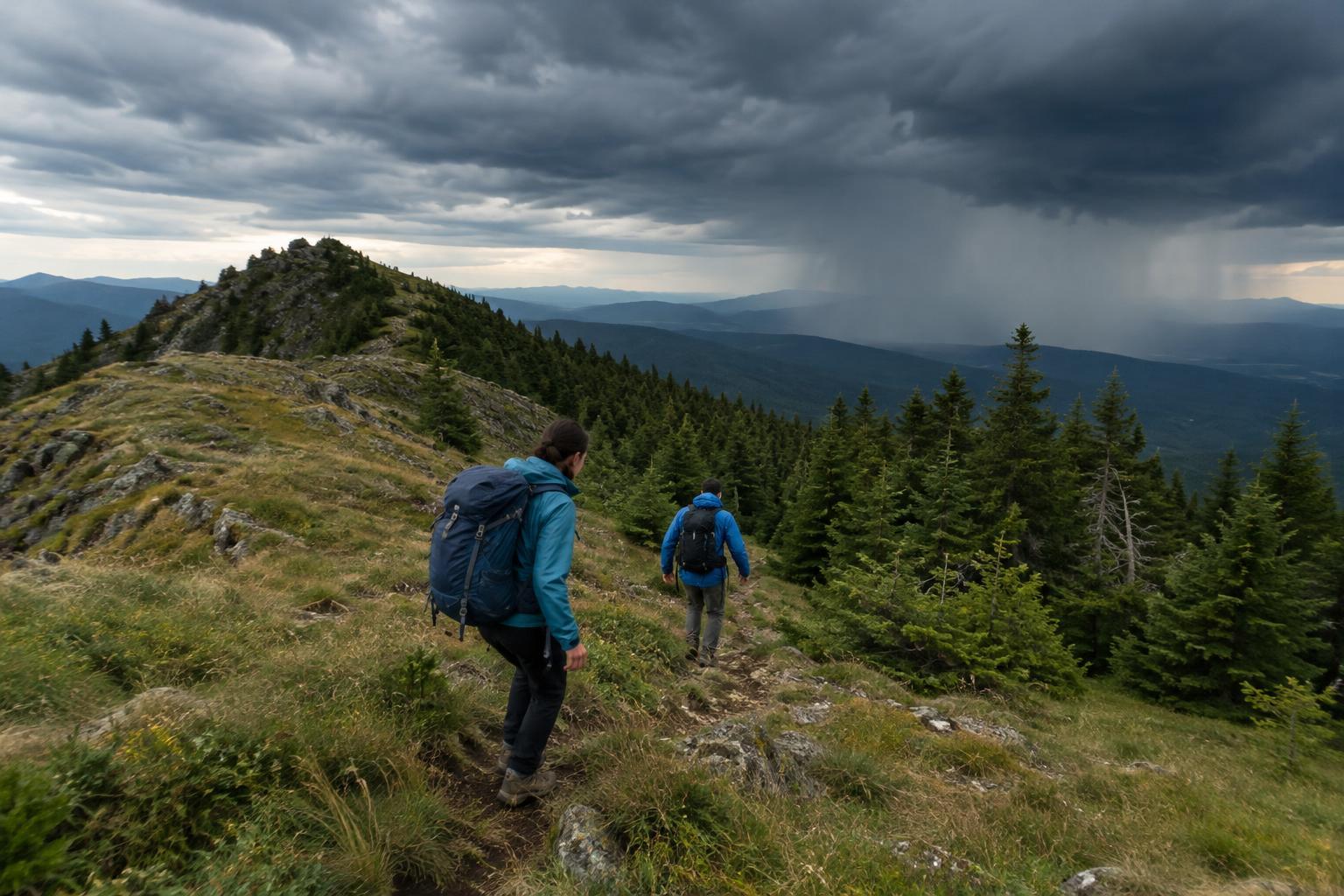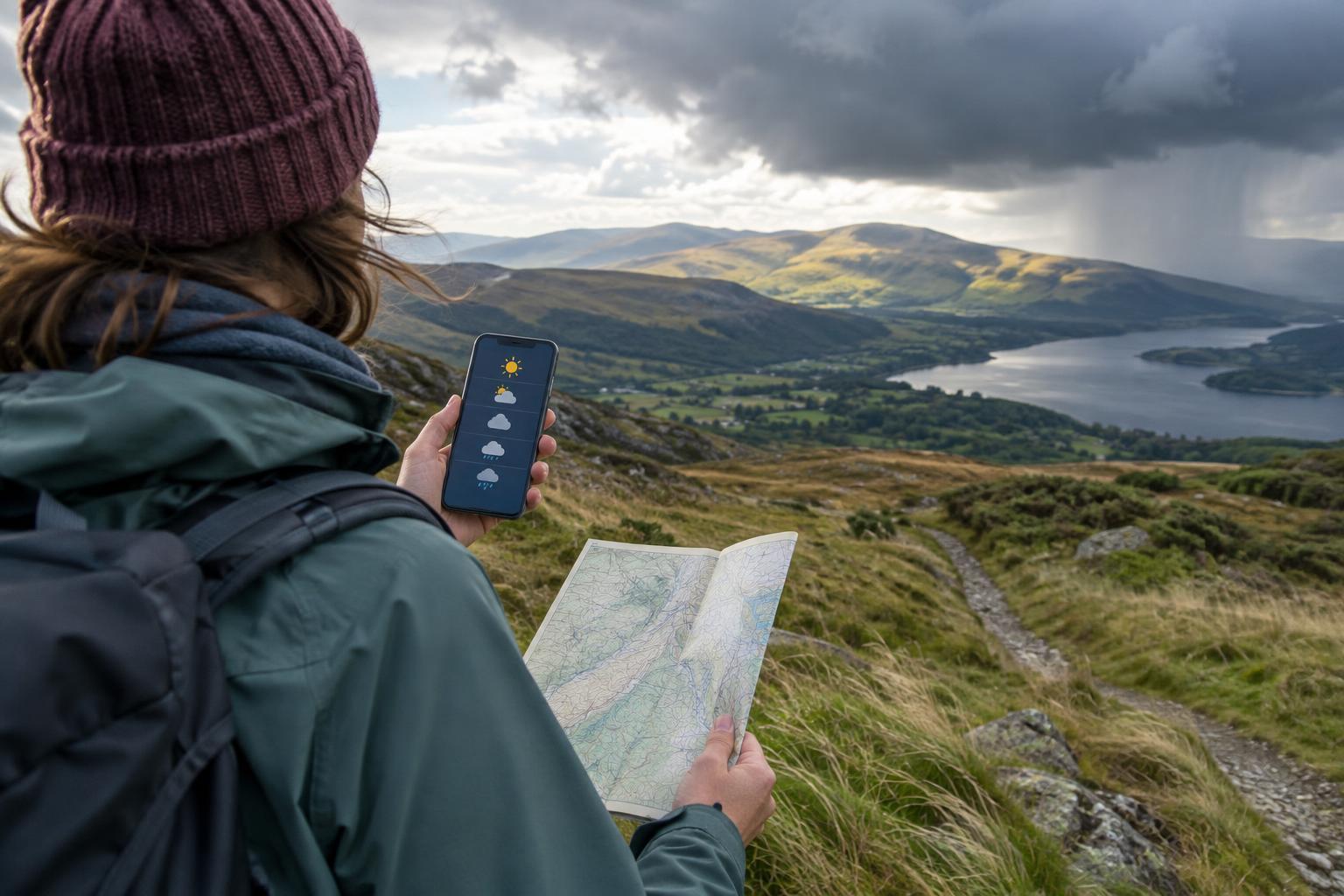
Start with the place and time you will actually walk
A forecast for the nearest town is a starting point, but it may not describe an exposed ridge, a wooded valley or a coast path. Check the forecast for the closest available location to your route, then look at any available information for higher ground or the coast if either is relevant. Note where the route is most exposed and where shelter or a shorter return would be possible.
Read the hourly forecast across the whole outing, including your journey back, rather than relying on a daily weather symbol. A dry morning and a wet afternoon may call for an earlier start or a shorter loop. Compare the forecast times with your expected walking pace, allowing extra time for breaks, navigation and slower sections. Also check when daylight ends so a delay does not leave you finishing in the dark.
Look beyond the rain symbol
Rainfall chance and rainfall amount answer different questions. A high chance of light rain may mean a damp but manageable walk; a lower chance of heavy rain can still matter if the path is steep, slippery or difficult to leave. Look at when rain is expected, how long it may last and whether showers are scattered or a longer spell is forecast. If thunderstorms are mentioned, take particular care with exposed routes and consider a sheltered alternative.
Check the temperature alongside the wind, not in isolation. A mild reading can feel much colder when you stop on an open hillside, especially if your clothes are wet. Look at sustained wind and gusts: gusts can affect balance on narrow or exposed ground even when the average wind seems comfortable. Wind direction can help you anticipate whether a coastal stretch or ridgeline will feel more exposed, though local terrain may change what you experience.
Allow for terrain and uncertainty
Weather can vary over a short distance. Higher sections of a walk may be cooler, windier or cloudier than the starting point, while low-lying paths may hold puddles or become muddy after earlier rain. A forecast cannot tell you exactly how firm every path will be. Think about recent conditions as well as the hours ahead, and choose footwear and a route that suit the likely ground.
Forecasts are estimates, and the details can change. If two forecasts differ, or an hourly outlook keeps shifting, treat that as a reason to build more flexibility into your plan rather than picking the version you prefer. Pay attention to any weather warnings that cover the area. For a route where exposure, river crossings or poor visibility would create problems, uncertainty itself may be a good reason to choose an easier walk.
Turn the forecast into a practical plan
Match what you carry to the conditions you might reasonably meet, not just the conditions at the car park. A light waterproof layer, an extra warm layer and a way to keep spare clothing dry can make a change in weather easier to manage. Carry water, food and a reliable means of navigation as well. Clothing helps you stay comfortable, but it is not a substitute for changing plans when conditions become unsuitable.
Before leaving, identify a point where you can shorten the walk and a time by which you need to turn back. Tell someone your intended route and when you expect to return, particularly if you will be walking somewhere quiet. On the walk, compare the forecast with what you can see: darkening skies, strengthening gusts or falling visibility are reasons to reassess early, not to wait until you reach the most exposed section.
Check once more before setting out
Review the forecast close to departure because timing and conditions may have changed since you first planned the route. Confirm the hourly outlook, wind and any warnings, then make a simple decision: keep the route, shorten it, choose a more sheltered option or postpone it. The goal is not to predict every change. It is to start with a realistic picture and leave yourself room to respond safely if the day unfolds differently.