Two tools that solve different problems
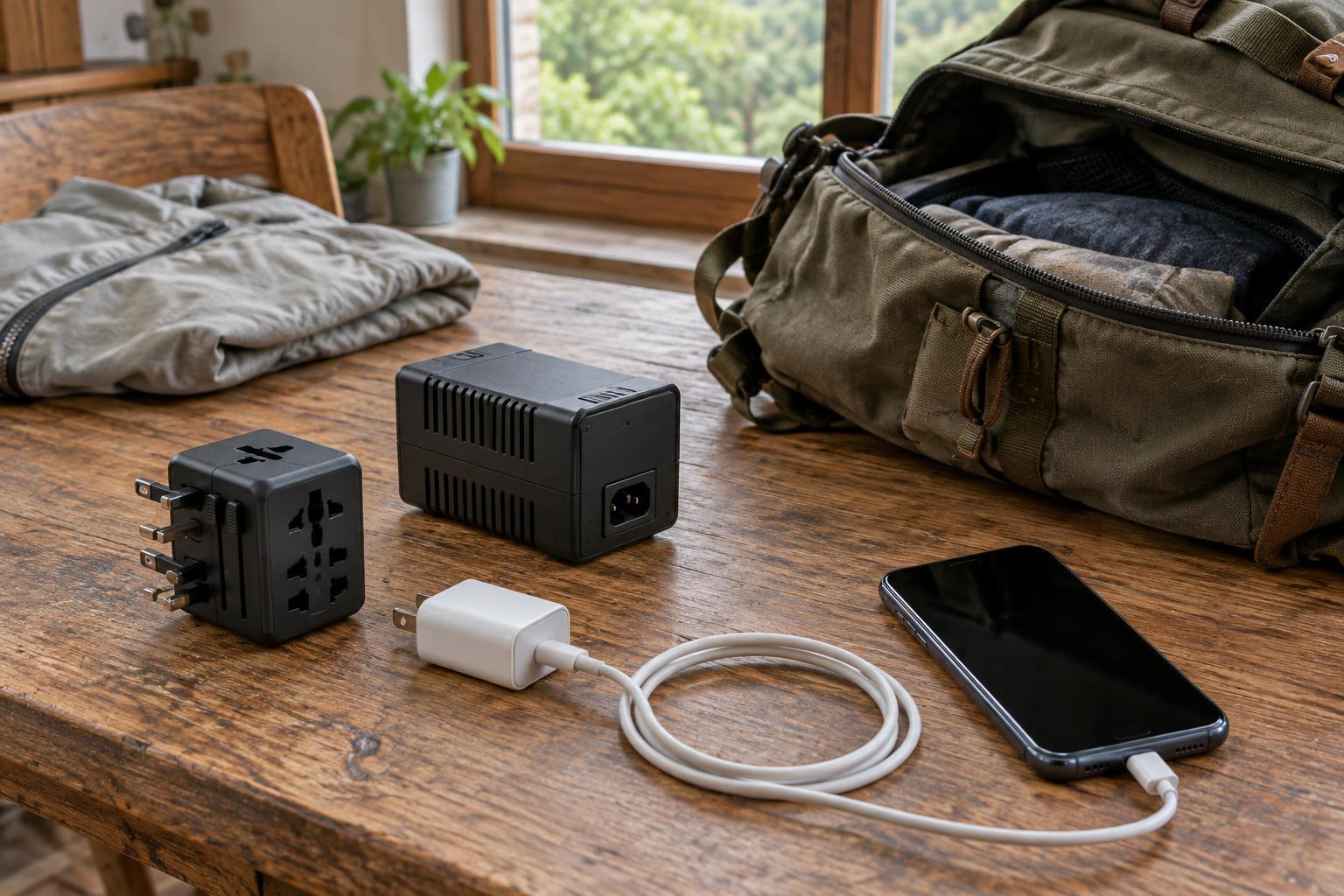
A travel plug adapter changes the shape of a plug so it fits a different wall socket. It does not normally change the electricity coming from that socket. If you are traveling with a phone charger, camera charger or laptop power supply, the adapter may be all you need—but the answer is printed on the charger, not determined by the plug alone.
A voltage converter is meant to change the voltage supplied to equipment that cannot accept the local voltage. That is a separate job, and converters are not a universal fix: they must be suitable for the device’s power draw and type of load. Before buying one, check whether the device can already handle the voltage at your destination.
Read the input label before you pack
Look for a line marked “Input” on each power supply or directly on the appliance. A charger labeled “100–240 V, 50/60 Hz” is designed to accept a broad range of common mains voltages and frequencies. For that charger, a compatible plug adapter is generally enough. Check each charger separately; the label on your laptop brick tells you nothing about an unrelated toothbrush base or camera accessory.
Pay attention to which side of the charger you are reading. “Output” describes the power delivered to your device, not what the charger can safely take from a wall socket. If the input lists only one voltage, do not assume a plug adapter will make it suitable elsewhere. Compare the label with the power supply at your destination and consult the device’s instructions if anything is unclear.
Choose an adapter that fits the whole setup
Check the socket types used where you are going, including any stopovers where you expect to charge. A multi-region adapter can be convenient, while a compact single-region adapter may be easier to carry and less likely to wobble in a wall socket. Either way, confirm that it accepts your plug securely and is rated for the equipment you plan to connect.
Grounding matters too. If your device has a grounded plug, use an adapter and socket arrangement that maintains that connection; do not force it into an ungrounded adapter. Avoid loose adapters, damaged cords and precarious stacks of adapters. In a small hotel room, one well-placed charger with multiple USB ports can be tidier than several heavy power supplies hanging from one socket.
Know when a converter is not the best answer
High-power appliances such as hair dryers, kettles and some styling tools deserve particular care. They can draw far more power than a phone charger, and a converter must be specifically suitable for the appliance. Even then, differences in electrical frequency or the way a device operates may cause problems that a basic converter does not solve. If the appliance is not rated for the local supply, using one provided at your accommodation or buying a compatible travel version is often simpler.
For rechargeable electronics, focus first on the supplied charger or power brick. Many are designed for varied input voltages, but their charging capabilities still differ. If you plan to replace several chargers with one USB charger, check that its ports and power output meet the needs of each device. A plug adapter gets the charger into the wall; it does not increase the charger’s output.
Make a quick pre-trip charging check
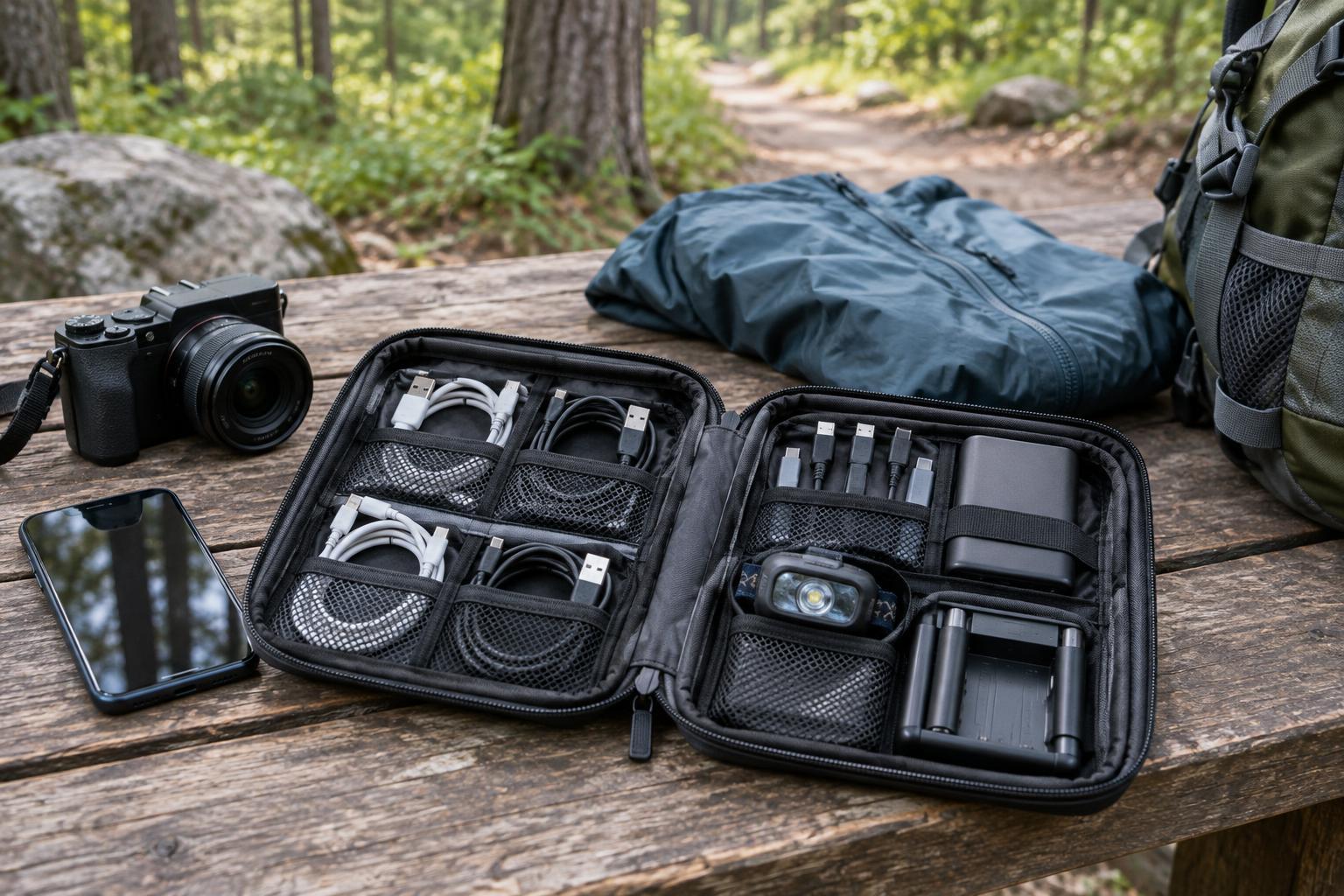
Lay out everything you intend to charge, including small items that are easy to overlook, such as a headlamp, watch or toothbrush. Read each input label, note its plug shape, and group devices by the charger they use. Then check the sockets at your destination and pack the appropriate adapter or adapters. If one item has a single-voltage input, resolve that separately rather than treating your entire kit as though it needs a converter.
Finally, test your charging arrangement at home where possible: make sure cables reach comfortably, ports are sufficient and connections feel secure. On the trip, keep charging gear dry, allow power supplies room to shed heat, and unplug anything that becomes unusually hot or shows signs of damage. The goal is a small, dependable kit—not extra electrical equipment packed just in case.