Start with the devices, not the cables
Before an outdoor trip, lay out every device you expect to charge: perhaps a phone, camera, headlamp, watch or power bank. Check the port on each device and the output on the charger or power bank you plan to use. A cable that fits one end may not fit the other, so compare both ends rather than relying on a vague label such as “phone cable.”
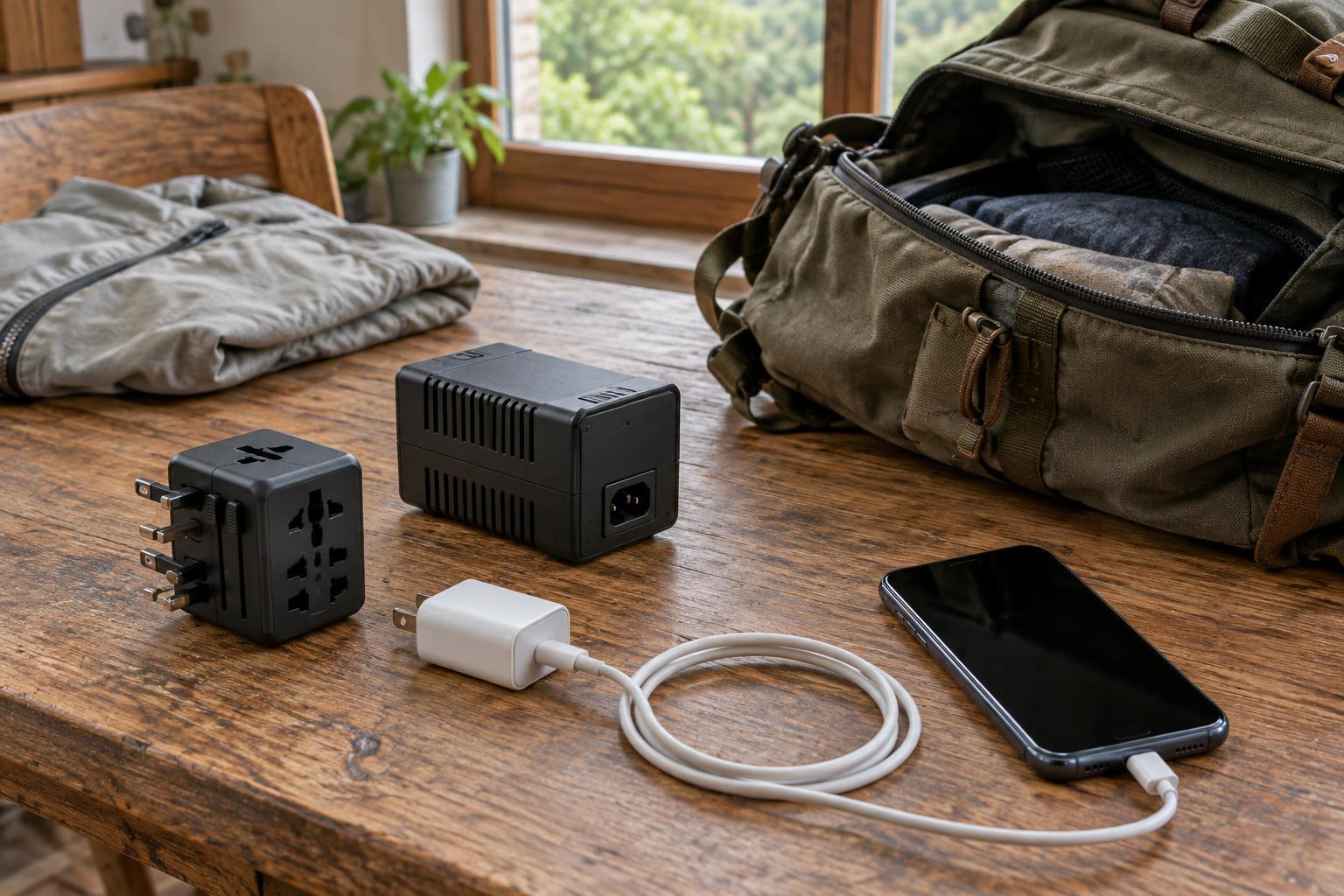
Make a short packing list that pairs each device with its cable and power source. If two devices use the same connector, one cable may be enough for a short day trip. For a longer trip, a spare for a frequently used device can be worthwhile. Test the complete combination at home, including any adapter, instead of discovering a mismatch when you need a charge.
Build a small, useful charging kit
Choose cable lengths for the places you are likely to charge. A short cable keeps a power bank and phone tidy inside a bag; a longer one can help when an outlet is awkwardly placed at your accommodation. Bring the lengths you will actually use rather than several near-identical backups. Remove damaged cables with exposed wiring, loose plugs or unreliable connections from your kit.
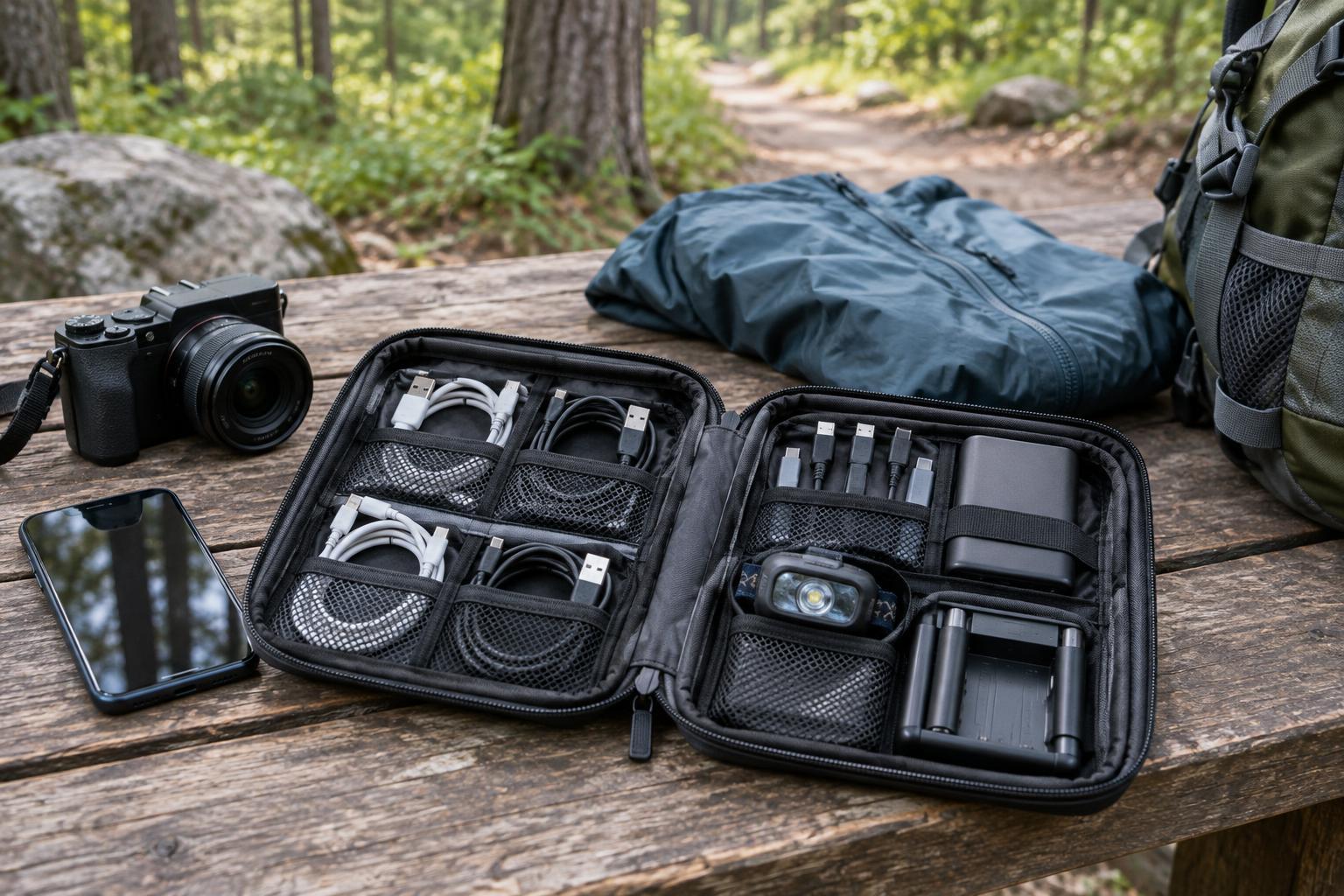
Keep wall plugs, charging cables and small adapters together in a pouch that is easy to transfer between bags. A pouch with two compartments helps separate larger items from tiny connectors. If your trip includes flights or charging away from home, check the applicable carrier rules and the requirements of your destination before packing power banks or relying on a particular outlet. Those details can vary.
Give every connector a place
Loose cables tend to knot around other gear and collect grit. Coil each cable gently, without sharply bending it where the wire meets the plug, and secure it with a reusable tie. Avoid wrapping a cable tightly around a charger: a little slack helps protect the ends. A label or a distinct tie color can make similar-looking cables easier to identify at a glance.
Tiny adapters are easiest to lose, so assign them one closed pocket or a small inner pouch. Keep any protective caps you already have, but do not depend on a cap alone to keep a connector clean. Place the charging kit in a consistent spot in your pack, separate from snacks, sunscreen and items you may need to pull out quickly. Knowing where it belongs makes both packing and repacking simpler.
Plan for damp bags and dusty stops
Outdoor travel can put a charging kit near wet clothing, spilled water or fine trail dust. A water-resistant pouch or a sealed bag can add a useful barrier inside your pack, but its protection depends on its condition and how carefully it is closed. Keep charging items away from a bottle that could leak, and do not store them with a damp jacket after a walk.
Before plugging anything in, check that the ports and connectors look clean and dry. If a cable gets wet, disconnect it and allow it to dry fully before using it. Do not push a dirty connector into a device or try to clear a port with a metal object. For device-specific cleaning or drying concerns, follow the manufacturer’s guidance.
Reset the kit after each trip
A charging pouch is most useful when it is ready for the next outing. Once home, empty it, brush away loose dirt from the pouch, and check cables for wear. Return borrowed adapters, replace anything that failed, and recharge the power bank if you intend to take it again. A quick reset prevents an otherwise organized kit from becoming a collection of unusable extras.
Keep your list with the kit or with your usual trip checklist. Adjust it when you change devices or realize you carried something you never used. The aim is not to pack every possible connector. It is to have a small, tested set that matches your gear and remains easy to find when daylight, patience or battery power is running low.