Start with the walks you actually take
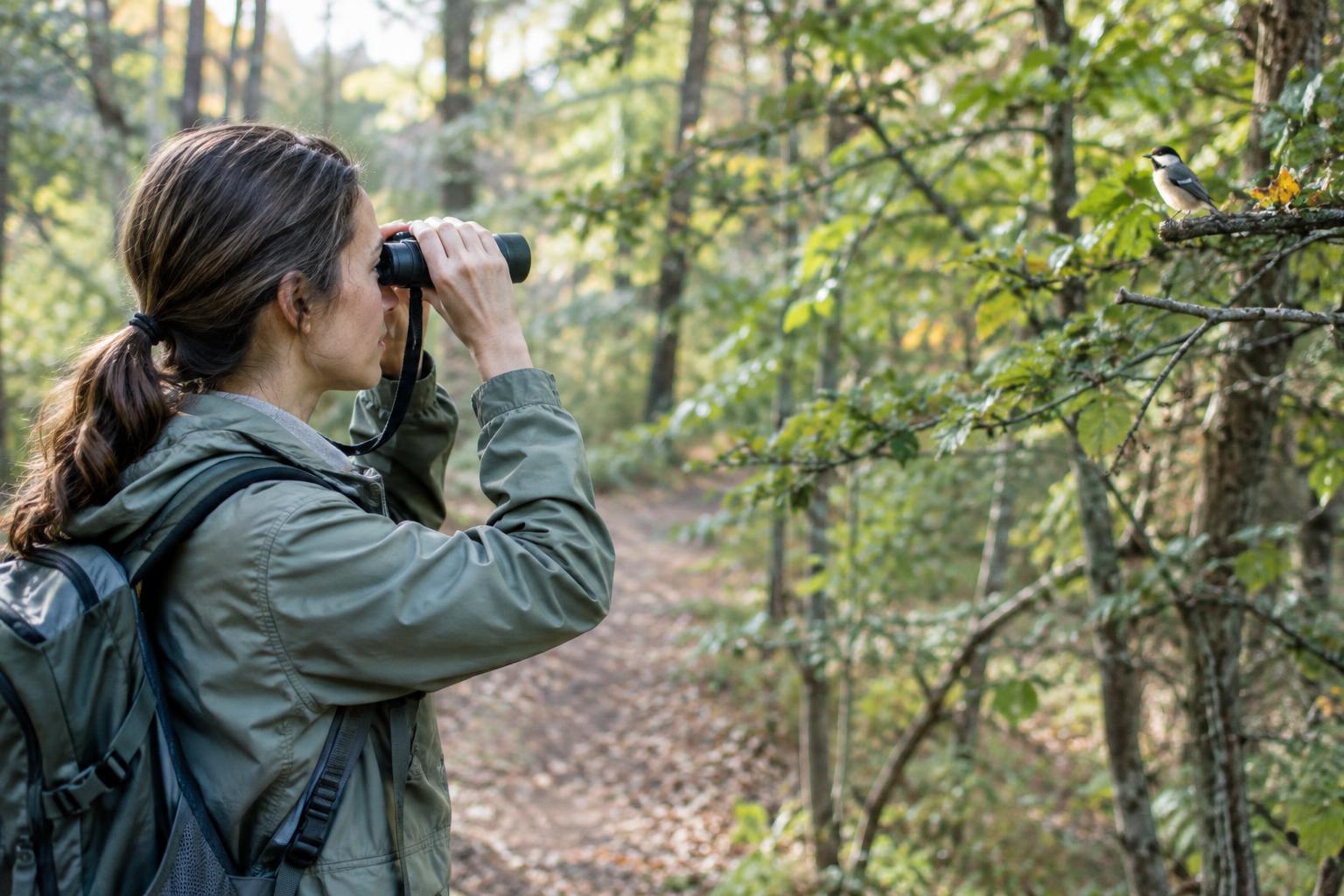
The best binoculars for a casual wildlife walk are the ones you will bring along and use. A small pair can help you watch a bird across a pond or identify movement at the edge of a meadow without adding much to your bag. Before comparing specifications, think about where you usually walk, how long you stay out and whether you prefer a pocket-sized pair or can carry something larger on a strap.
Compact binoculars are a trade-off. Smaller lenses and lighter bodies are convenient on a day trip, but they can be less comfortable to hold steady and may show a dimmer image in poor light. If most of your sightings happen in open spaces during the day, that may be a worthwhile exchange. If you often walk under dense trees or near dusk, consider a slightly larger pair as well.
Make sense of the numbers
Binoculars are commonly labeled with two numbers, such as 8x25. The first is magnification: an 8x pair makes a subject appear about eight times closer. The second is the diameter of each front lens in millimeters. Larger front lenses can gather more light, though lens quality also affects what you see.
For many casual walkers, 8x is a useful starting point. It provides a closer view while remaining relatively easy to hold steady and aim at a moving animal. A 10x pair offers more magnification, but small hand movements become more noticeable, and finding a bird among branches can take longer. Try both if possible rather than assuming more magnification is always better.
The front-lens number helps explain the difference between an 8x25 compact and a larger 8x32 pair. At the same magnification, the 8x32 will generally be more forgiving when light fades, but it will take up more space. Neither size is automatically right: choose the balance that suits your typical walk, not an imagined expedition.
Look beyond magnification
Field of view describes how much of the scene you can see at once. A wider view can make it easier to locate wildlife, particularly birds moving between trees. Close focus matters for nearby subjects such as butterflies; if that interests you, check the listed minimum focusing distance and see whether it feels useful in practice. Specifications are a starting point, but looking through a pair outdoors, if a shop allows it, is more revealing than reading the box.
Comfort deserves equal attention. Adjust the hinge until you see one clear circular image, then focus on a distant object and try following something moving. The focus wheel should turn smoothly without being so loose that it shifts by accident. Notice whether your fingers can grip the body securely and whether the eyecups sit comfortably against your face.
If you wear glasses while viewing, look for enough eye relief to see the full image with the eyecups folded or twisted down. Try the binoculars with your own glasses if you can. A pair that looks sharp but cuts off the edges of the view may become frustrating on a walk.
Choose protection you will appreciate on a trail
Wildlife walks bring drizzle, dust and the occasional bump. A grippy body and a secure strap can matter more in daily use than a small difference in advertised specifications. Water-resistant models may cope with light moisture, while binoculars described as waterproof are intended to offer more protection; check what the maker actually specifies before relying on them in heavy rain. Fog-resistant construction can also be helpful when conditions change.
Check the details you will handle often. Lens caps should stay put without slowing you down, and a case should be easy to open when a sighting is brief. If you intend to carry binoculars in a jacket pocket, test their folded size and weight there. If they feel awkward, a compact pair worn comfortably on a strap may be the better choice.
Try them carefully, then keep them ready
When comparing pairs, view the same distant sign or textured object through each one. Look for an image that is clear in the center, easy to bring into focus and comfortable to observe for more than a few seconds. Check whether you can raise the binoculars to your eyes and find the subject quickly. Those simple tests often tell you more about day-to-day usefulness than a long list of features.
Once you have a pair, keep the lenses protected when it is packed away. Remove loose grit with a blower or soft lens brush before wiping with a suitable lens cloth, since rubbing dirt across the glass can cause scratches. Let damp equipment dry before storing it in its case.
Binoculars are a way to enjoy wildlife from a distance, not a reason to get closer. Stay on permitted paths, give animals room to feed or rest, and put the binoculars down if your presence appears to disturb them. A comfortable, easy-to-carry pair makes that slower, more observant style of walking a pleasure.