Why dress in layers?
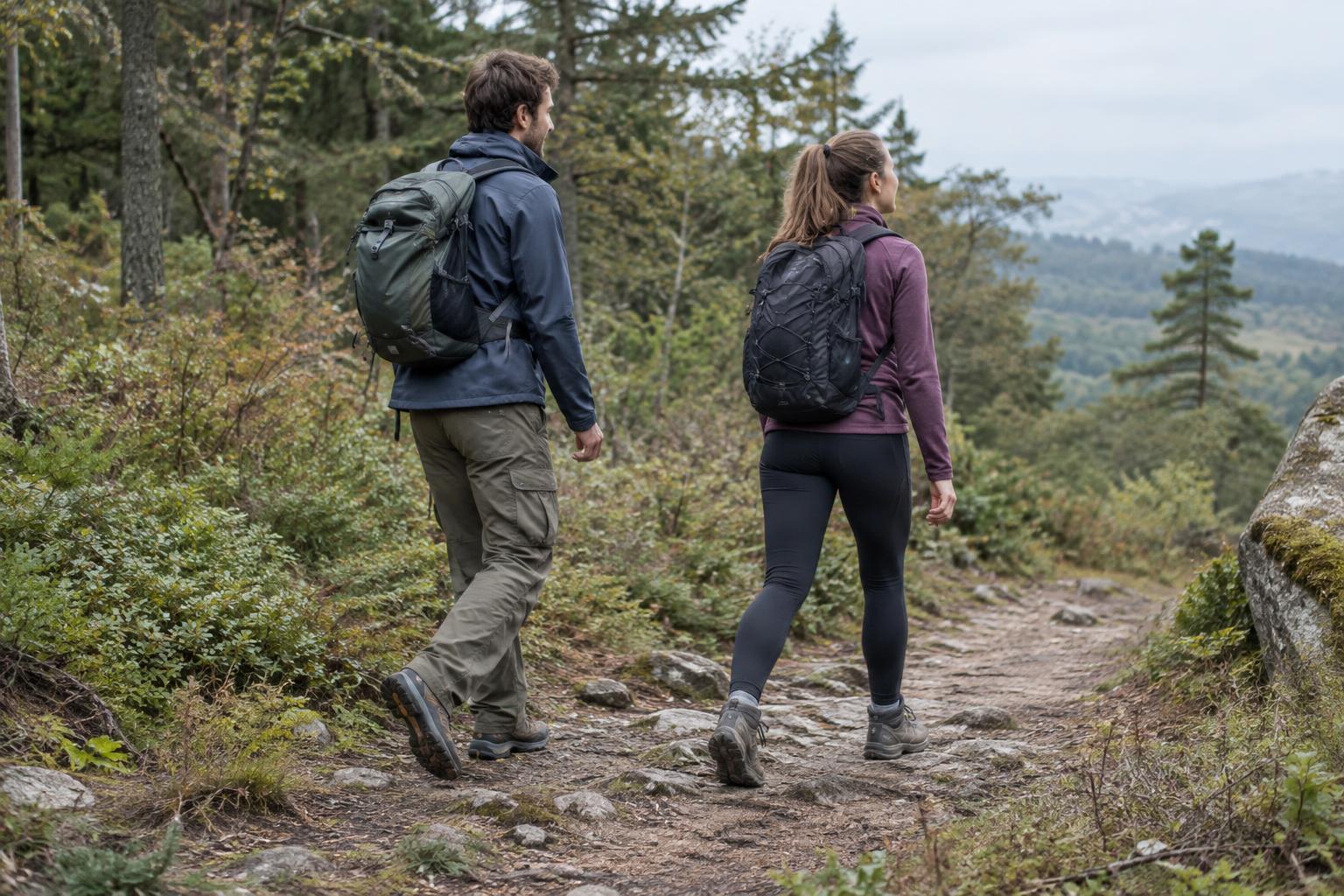
A day walk can begin in cool air, warm up on a climb and turn breezy when you stop for lunch. One heavy garment may feel right at the start but leave you too hot once you move. A three-layer system gives each piece a job: the layer next to your skin manages moisture, the middle layer provides insulation, and the outer layer protects you from wind and rain.
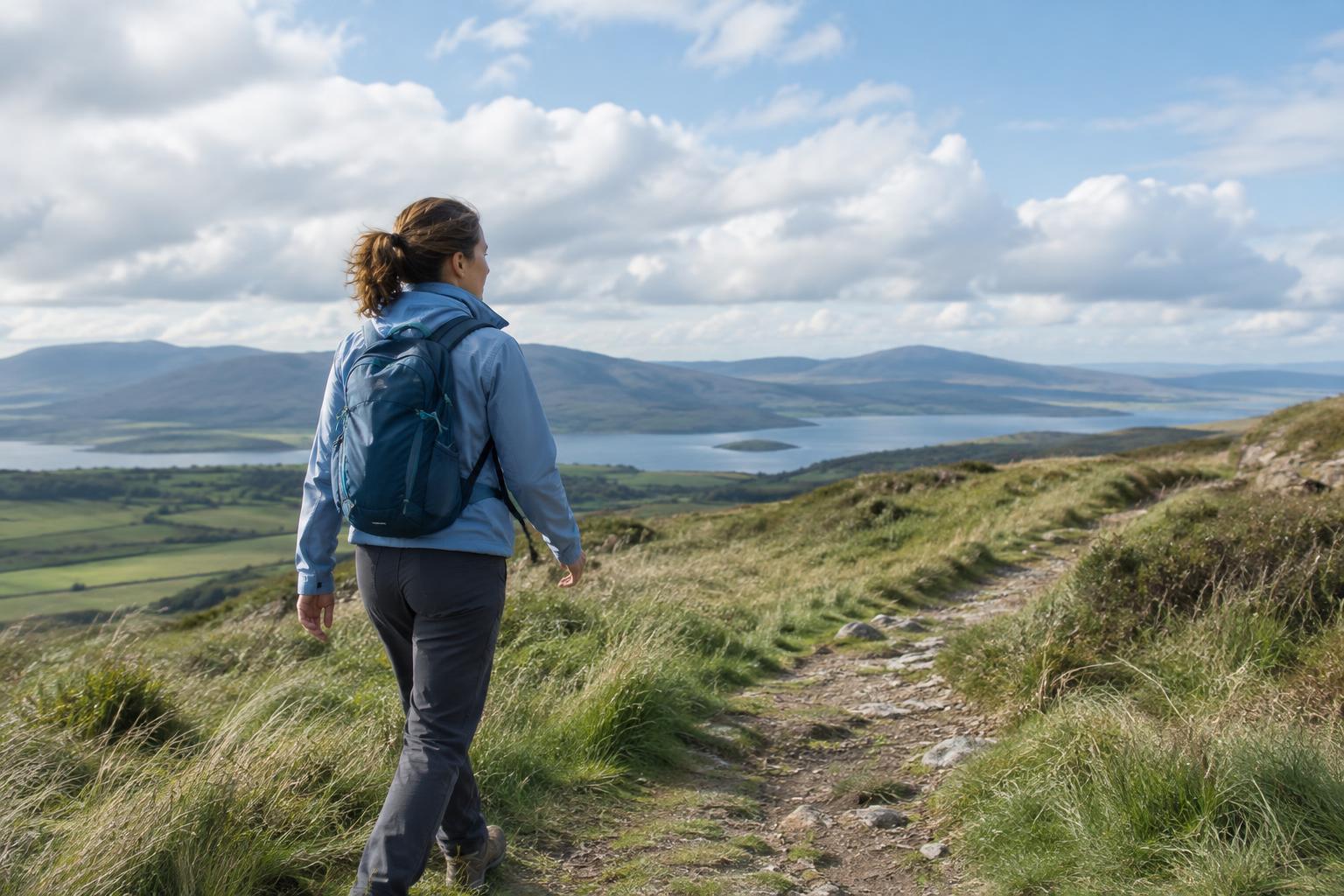
The system is a way to organize clothing, not a rule that says you must wear three garments at all times. On a mild, dry walk, a base layer may be enough while the other pieces stay in your pack. The useful habit is to adjust before you become uncomfortably hot or cold, rather than waiting until you need a complete change of clothes.
Base layer: manage moisture next to your skin
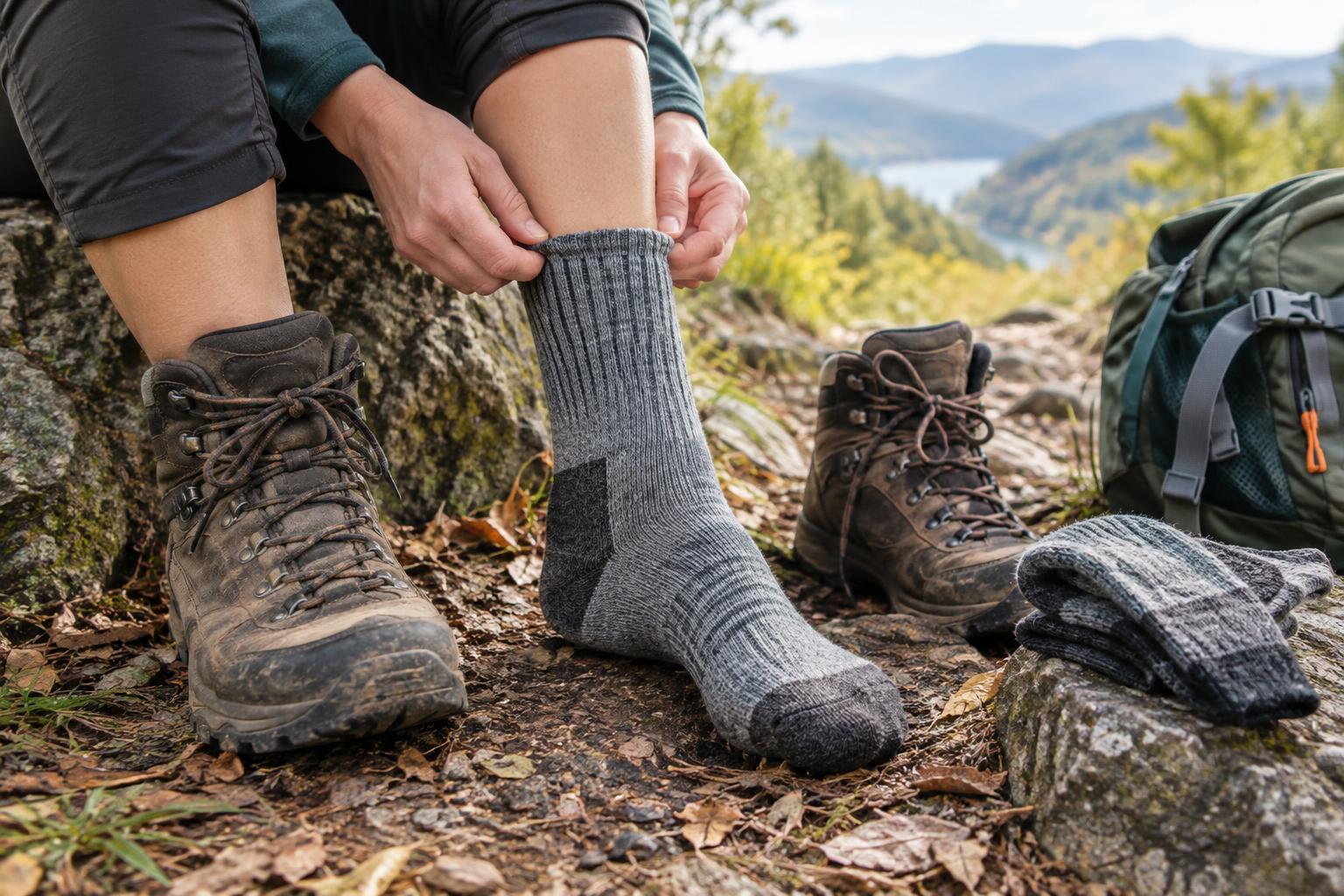
The base layer is the shirt worn against your skin. Its main task is to move perspiration away so the fabric feels more comfortable as you walk. A lightweight synthetic shirt often dries quickly and is easy to care for. Merino wool is another option that many walkers like for its feel across changing temperatures, though it may dry more slowly than some synthetics. Fit matters more than a technical label: choose something comfortable enough to move in and close enough to the body to work beneath other layers.
Cotton can feel pleasant on a short, warm stroll, but it tends to hold moisture longer than many walking fabrics. If you expect to sweat, encounter rain or spend time standing around in cool weather, that dampness can become uncomfortable. A long-sleeved base layer can also add sun coverage, while a short-sleeved one may suit a hotter route. Neither choice replaces the need to consider the forecast and your own comfort.
Middle layer: hold warmth when you need it
The middle layer traps some of the warmth your body produces. A fleece jacket is a versatile choice for day walks: it can be worn while moving on a cold morning and usually remains useful if conditions are a little damp. A lightweight insulated jacket may provide more warmth for its packed size, making it handy for breaks or slower walks. Insulated pieces vary, however, in how well they cope with moisture, so check the garment’s care and use guidance rather than assuming all fillings perform alike.
Choose warmth for the pace and conditions, not just the temperature at the trailhead. A steep climb may call for leaving the middle layer in your pack; a long pause on an exposed viewpoint may make you glad you brought it. It should fit over your base layer without restricting your arms and beneath your outer layer without feeling compressed. If the combination is too tight, it may be less comfortable and less effective at keeping you warm.
Outer layer: block weather, then adjust as you go
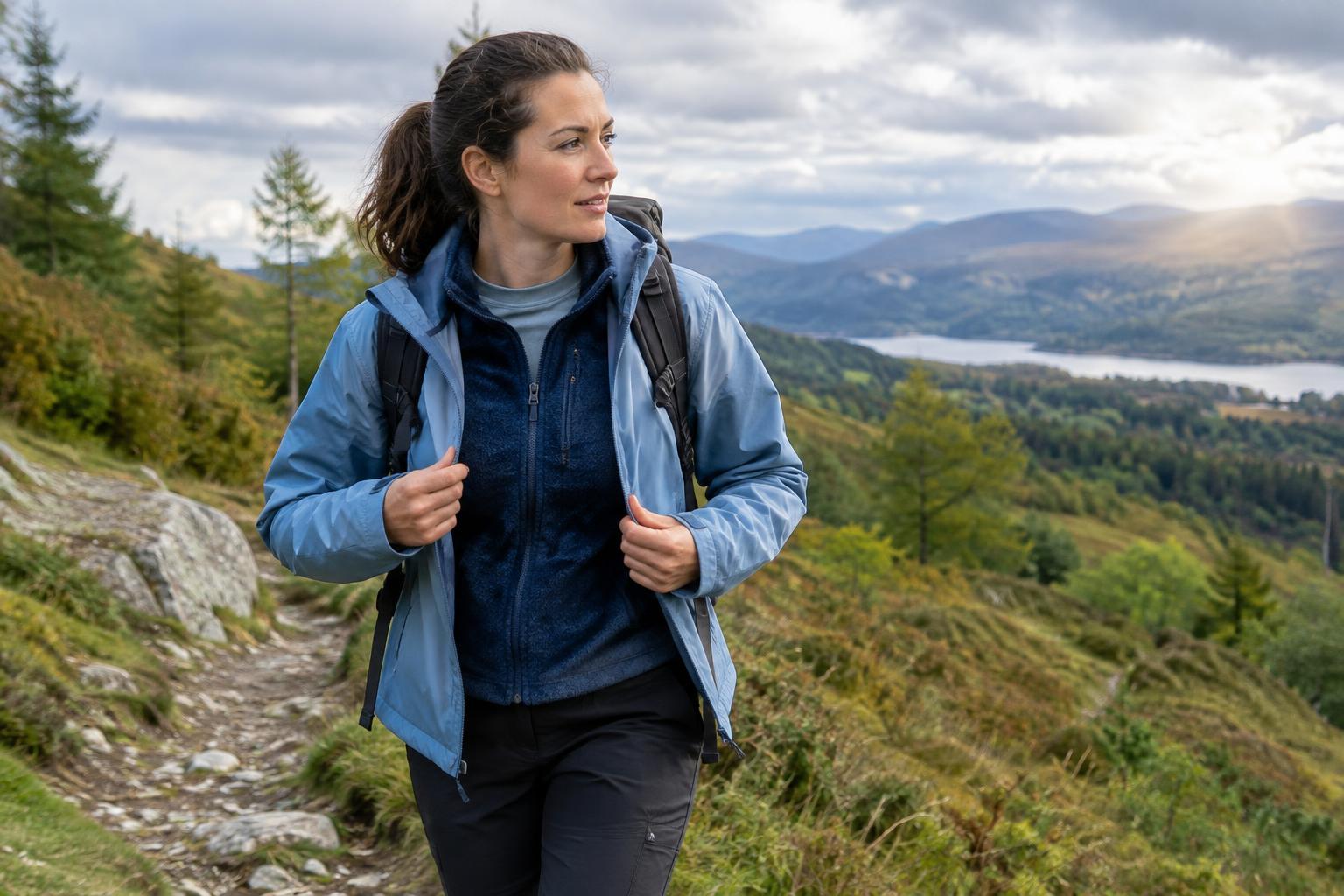
The outer layer is your barrier against wind and precipitation. A light wind shell can be useful on a dry, blustery day, while a waterproof jacket is the more practical choice when rain is likely. Look for a hood you can adjust, cuffs that sit comfortably and enough room to wear your middle layer underneath. Even a breathable rain jacket may feel clammy during a hard climb, because you can produce moisture faster than it escapes. Opening vents or the front zip when conditions allow can help.
Before setting out, think through how you will use the pieces rather than simply putting them all on. Start a little cool if you expect to warm up quickly. Remove or unzip a layer as soon as you begin to overheat, and put warmth back on before a long stop. Keep spare layers somewhere accessible and protected from rain in your pack; clothing cannot do its job well if it is soaked before you need it.
You do not need a matching set or the most technical version of every garment. Start with comfortable pieces you already own, then notice where they fall short: a shirt that stays damp, a fleece that is too bulky or a jacket that does not keep out rain. Those observations will help you choose the next useful layer for the walks you actually take.