The difference is the job each jacket does
A softshell is generally designed to feel comfortable during active movement. Its fabric is often stretchy, relatively quiet and able to let heat and moisture escape more readily than a waterproof shell. Many softshells shed a light shower, especially when their water-repellent finish is working well, but most are not intended to keep you dry through prolonged rain.
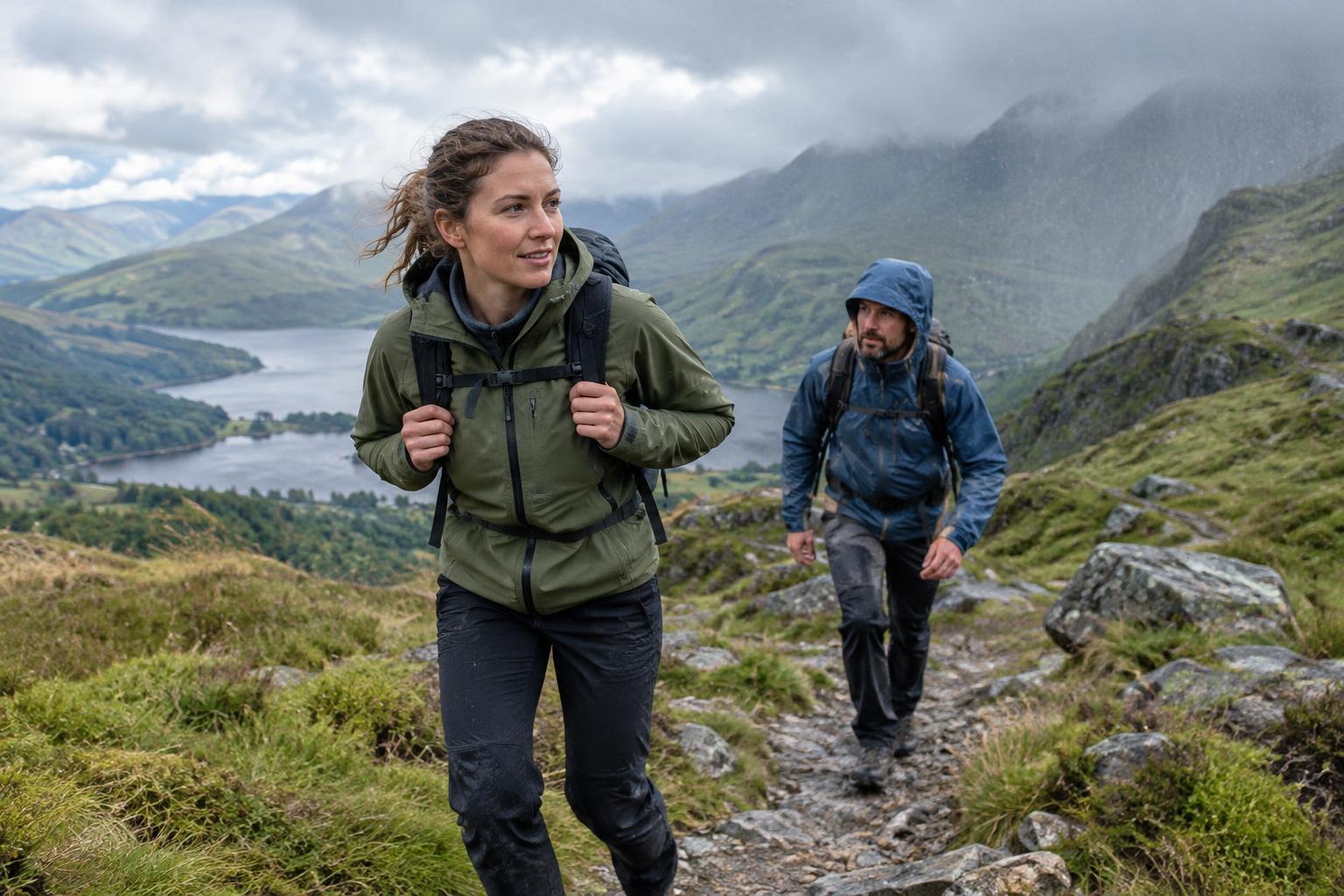
A hardshell puts weather protection first. A typical hardshell uses a waterproof fabric or membrane, a hood and sealed seams to block rain and wind. It may feel less flexible than a softshell, though designs vary. Waterproof fabric can allow some moisture vapor to pass through, but no jacket can eliminate sweat buildup when you are working hard. The useful question is not which type is better overall, but which trade-off suits the day.
Reach for a softshell on cool, active days
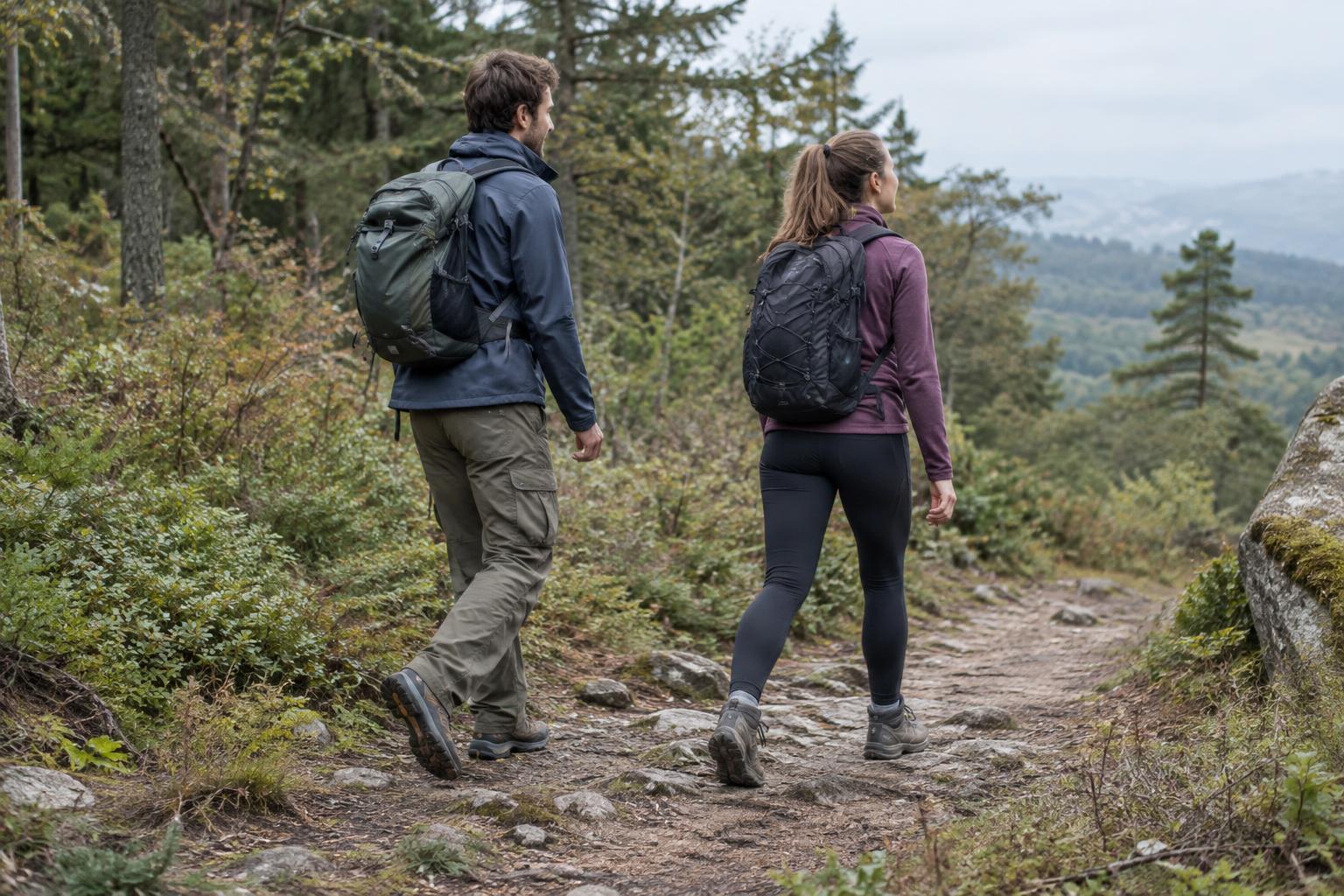
A softshell is a good choice when you expect to keep moving in cool, breezy or mostly dry conditions. Think of a brisk woodland walk, a climb with frequent changes of pace or a day spent stepping in and out of the wind. The fabric’s give makes it easy to reach, bend and wear a daypack, while its airflow can make temperature changes easier to manage.
It can also work well as an everyday outer layer when the forecast includes only brief drizzle. Water resistance differs from one jacket to another, however. A few drops rolling off the surface do not mean the jacket will stay dry after an hour of steady rain. If getting wet would make the rest of your walk unpleasant, carry a separate rain layer rather than relying on the softshell alone.
Choose a hardshell when staying dry matters
Bring a hardshell when sustained rain is likely, when the weather could change quickly or when exposed ground offers little shelter. It is also the more useful outer layer for a slow walk in cold wind and rain: at a lower pace, you may produce less body heat to offset damp clothing. For a day trip, a packable hardshell can serve as protection you put on only when conditions demand it.
Fit and details matter as much as the label. Check that the hood stays in place when you turn your head, the cuffs close comfortably and the hem covers your layers when you move. Try the jacket over the clothing you expect to wear beneath it. If you walk hard in mild rain, opening pit zips, cuffs or the front zip when conditions allow may help release heat. Condensation inside a jacket is not always a leak.
Make the decision before you leave
Start with three questions: How likely is sustained rain? How hard will you be moving? How easily can you change your plan? For a dry, cool route with a steady pace, a softshell may be the layer you wear all day. For a wet forecast or a route where turning back is inconvenient, prioritize a hardshell. On an uncertain day, a softshell worn for comfort with a lightweight hardshell in your pack can be a versatile combination.
Consider warmth separately. Neither jacket type is necessarily insulated. A thin base layer and an appropriate midlayer give you more control than expecting the outer jacket to do every job. If you wear both shells together, make sure the hardshell fits over the softshell without restricting your arms. On milder trips, carrying both may add unnecessary bulk; a breathable midlayer under a hardshell may be enough.
Keep either jacket working well
Dirt and body oils can affect how an outer fabric sheds water, so follow the garment’s care label and wash it when needed. If water stops beading on the surface, the durable water-repellent finish may need care or renewal according to the maker’s instructions. A wet-looking outer fabric does not automatically mean a hardshell’s waterproof layer has failed, but it can make the jacket feel less comfortable.
Before a trip, check zips, seams and the hood rather than discovering a problem in the rain. Dry jackets fully before storing them, and avoid leaving them compressed in a pack between outings. With the right expectations, a softshell becomes an easy layer for movement, while a hardshell remains the dependable option when the weather turns persistently wet.