Start with what needs to stay dry
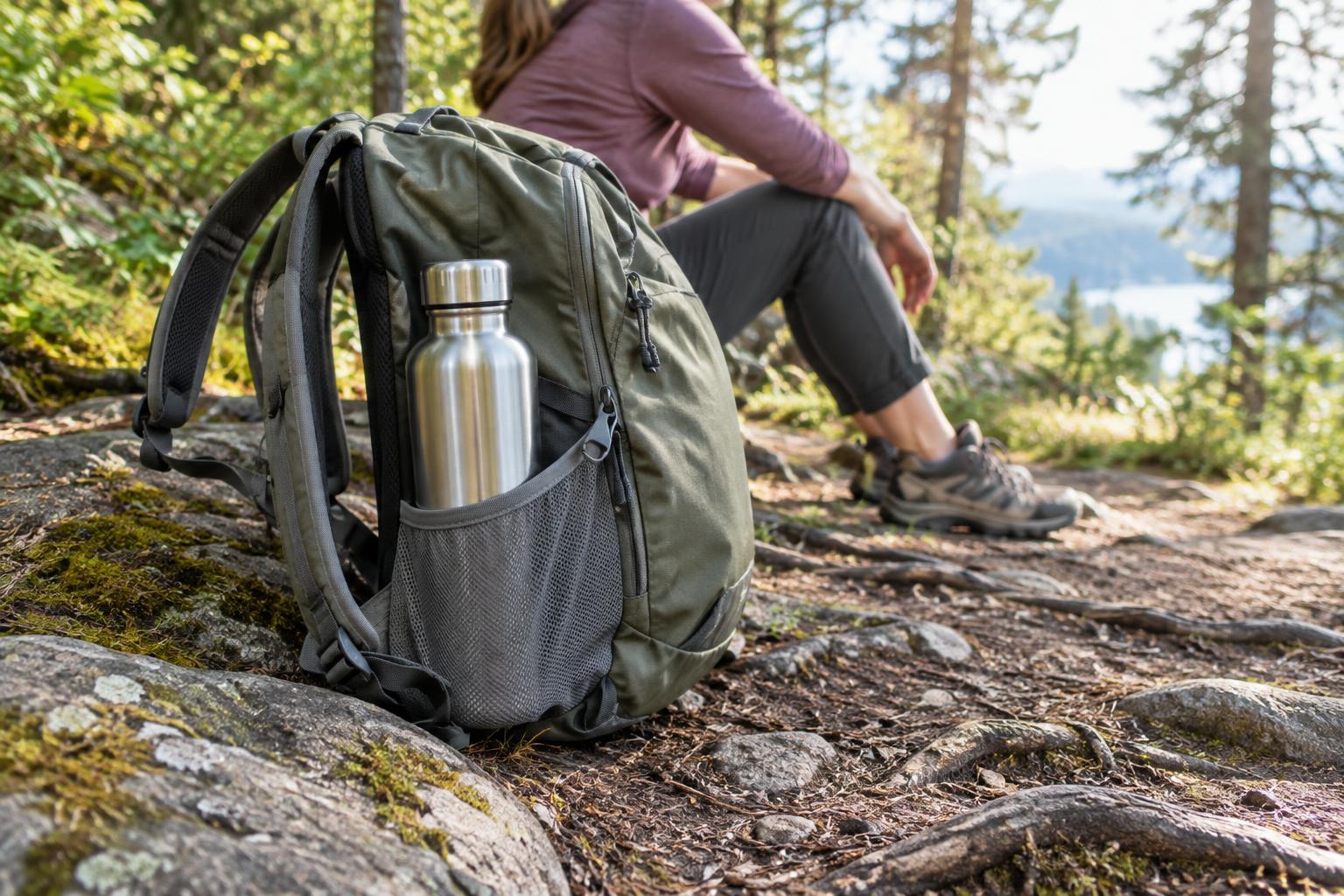
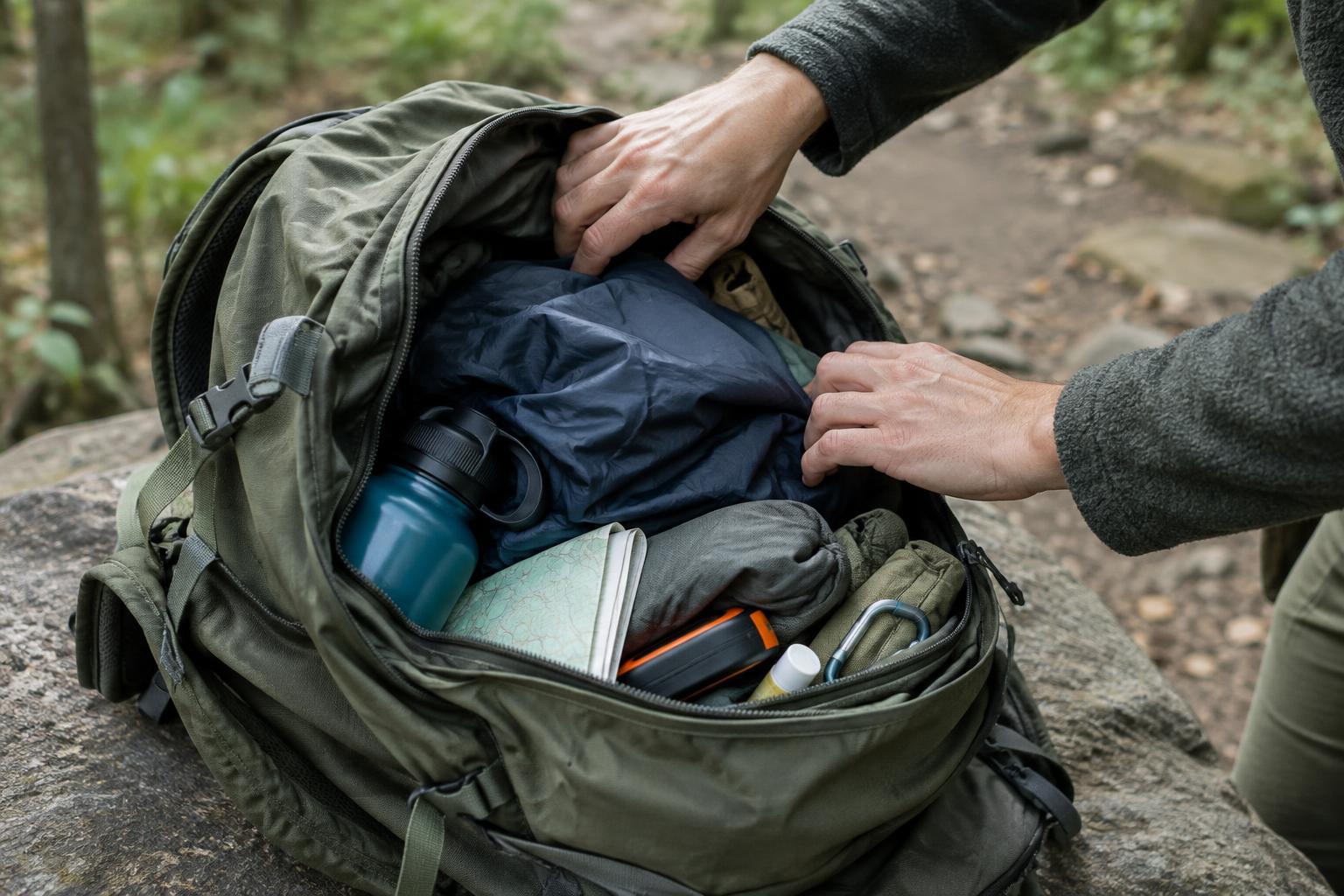
A day pack can look weather-resistant without being waterproof. Rain may enter around zips, seams or the top opening, while a pack set on wet ground can take on moisture from below. Before choosing protection, separate your contents into two groups: items that must stay dry, such as a spare warm layer, and items that can tolerate some dampness, such as a water bottle or a waterproof jacket.
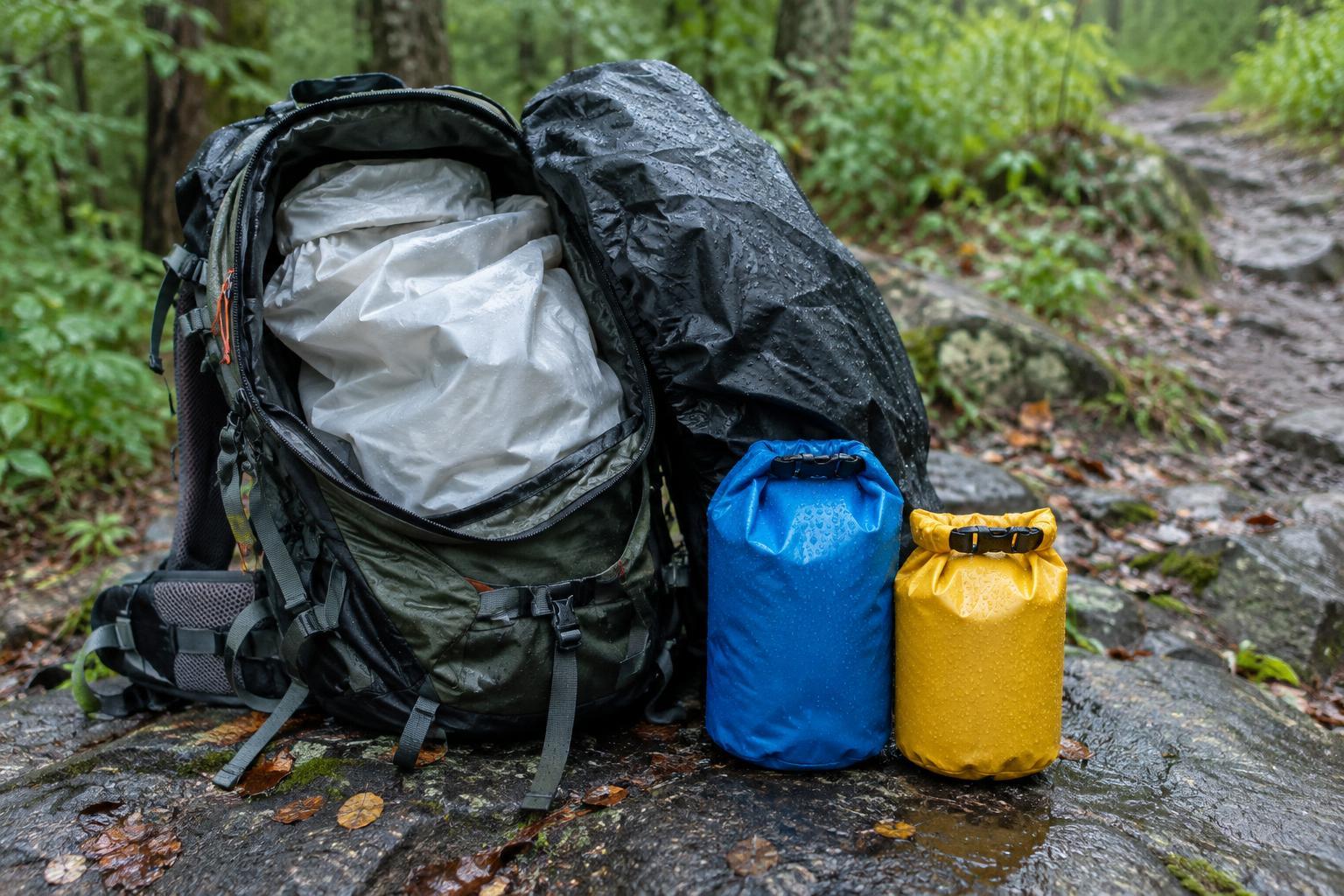
The simplest plan is to protect the contents first. A rain cover helps keep the pack’s exterior from getting soaked, but it does not seal the openings against water. A liner shields most of the contents inside the pack. Dry bags give smaller groups of gear their own protection. You can use any one of these for a mild, short outing, or combine them when prolonged rain is possible.
Pack liners protect the main compartment
A pack liner is a large waterproof bag placed inside the main compartment. Put dry gear into it, press out excess air and close the opening before fastening the pack. This creates a barrier even if the pack fabric becomes wet. It is especially useful for spare clothing and other bulky items that do not need to be reached while walking.
Choose a liner that fits without stretching tightly against sharp or awkward contents. A purpose-made liner may have a roll-top closure; a sturdy plastic bag can also work for an occasional trip if it is intact and closed securely. In either case, the opening matters as much as the material. Avoid leaving a loose top folded over once, where water could work its way inside.
A liner’s main drawback is access. Opening it in the rain exposes everything inside, and small objects can be hard to find in one large bag. Keep frequently used items in an accessible pocket or in smaller protected bags. Remember that a liner does not keep the pack itself dry: straps, padding and outer pockets may still become wet.
Rain covers shield the pack, with limits
A rain cover stretches over the outside of a pack and can reduce how much rain reaches its fabric, pockets and closures. It is quick to pull on during a shower and useful if you would rather not carry a saturated pack after the rain stops. Check that it fits over your pack when fully loaded, not just when empty, and that its fastening keeps it in place.
Covers are less reliable as the only defense for dry clothing or sensitive items. They usually leave some of the back panel and straps exposed, and wind can push rain toward those uncovered areas. Water may also reach the pack when you open it, rest it on wet ground or brush against soaked vegetation. A cover works best as an outer layer of protection, backed up by a liner or individual bags for anything important.
Dry bags organize the essentials
Dry bags let you separate contents by purpose. One might hold a spare insulating layer, another lunch, and a small one the items you want to find quickly. A contrasting color can make a bag easier to spot inside a dark pack. To close a roll-top bag, follow its instructions and leave enough space at the top to roll it properly; packing it to the brim can compromise the closure.
Dry bags take more time to open and close than an ordinary pocket, and several can add bulk. They are also not a substitute for careful handling: a worn seam, puncture or poorly closed top can let water in. For a phone or other electronics, use protection suited to the item and the conditions, and check the closure before setting out. If you expect immersion rather than rain, confirm that your chosen bag is designed for that use.
Build a practical day-trip setup
For a typical wet-weather walk, put a liner in the main compartment and close it around the gear that needs to stay dry. Use one or two smaller dry bags to organize essentials, especially those you may need while it is raining. Add a rain cover if you want to limit how wet the pack becomes. Keep your rain jacket near the top or in an accessible pocket so getting dressed does not mean unpacking everything in a downpour.
Before leaving, inspect bags and closures for damage and think through where each item will go after use. A wet jacket should not be pushed into the same sealed space as a dry spare layer. After the trip, empty the pack, let damp components dry and check whether any water got past your system. That small review will tell you more about what to change for the next walk than adding another layer of protection by default.