Start with the pack you plan to carry
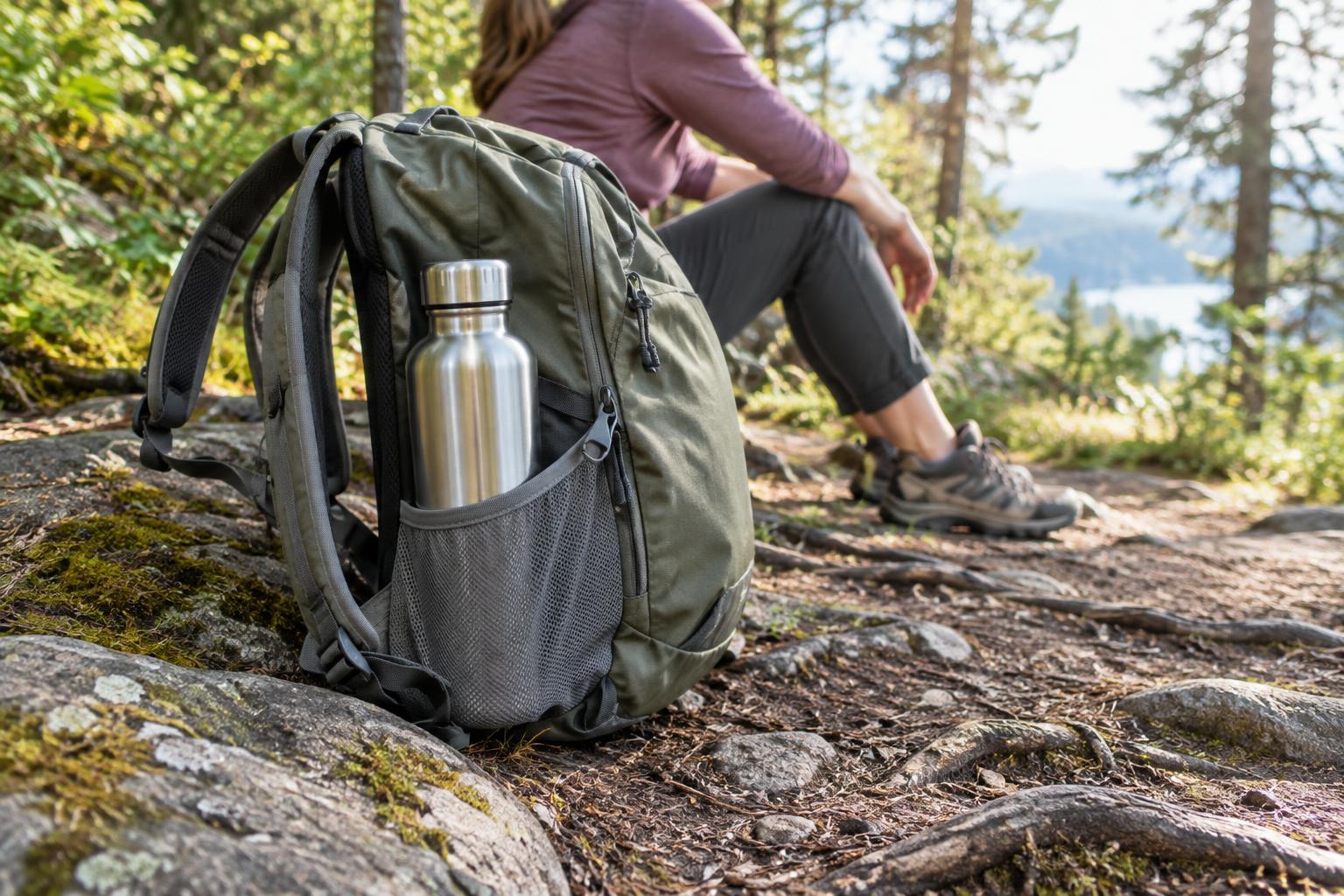
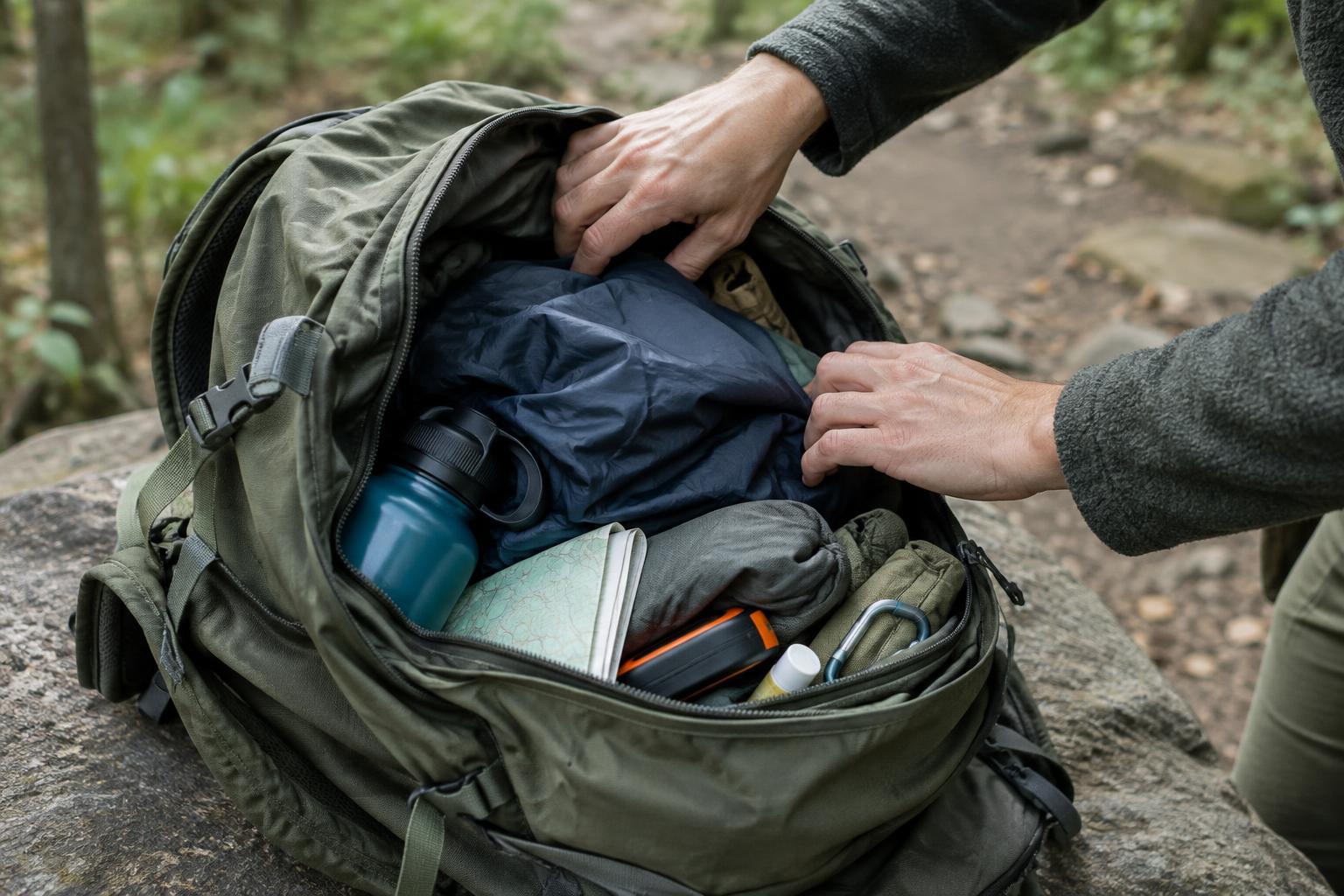
Adjust your daypack with your usual walking gear inside, rather than while it is empty. A water bottle, spare layer and other essentials change how the pack hangs. Put denser items close to your back and avoid leaving everything at the bottom. If the contents shift when you move, tighten any internal or side compression straps before judging the fit.
Loosen the shoulder straps, sternum strap and hip belt, if your pack has one. Put the pack on and stand naturally. The goal is a load that sits close to your body without forcing you to lean forward. You can make the first adjustments at home, but a short walk is the best way to notice rubbing, bouncing or pressure.
Set the hip belt, if there is one
On a daypack with a padded, load-bearing hip belt, position the padding around the top of your hip bones and fasten the buckle. Tighten it until it feels secure, not restrictive. It should help support the pack without digging in when you bend or take a deep breath. If the belt slides down as soon as you walk, check whether the pack is too loose, the belt is positioned too low or the load is poorly balanced.
Some small daypacks have only a narrow webbing waist strap. Its main job may be to limit side-to-side movement rather than carry much weight. Fasten it comfortably if it helps, but do not cinch it hard to compensate for a pack that does not fit.
Bring the shoulder straps snugly into place
Pull the shoulder-strap adjustment tails a little at a time, keeping the left and right sides even. The straps should follow your shoulders without large gaps, while the pack stays close to your upper back. Avoid hauling them so tight that the belt rides up or the straps press sharply into your neck and shoulders.
If you have set a padded hip belt, let it keep some of the load instead of shifting all the weight onto the shoulder straps. If your pack has no supportive belt, aim for a stable fit with enough room to move your arms freely. A little strap movement as you walk is normal; repeated bouncing or a feeling that you must hold the straps in place suggests another adjustment is needed.
Fine-tune the sternum strap and load lifters
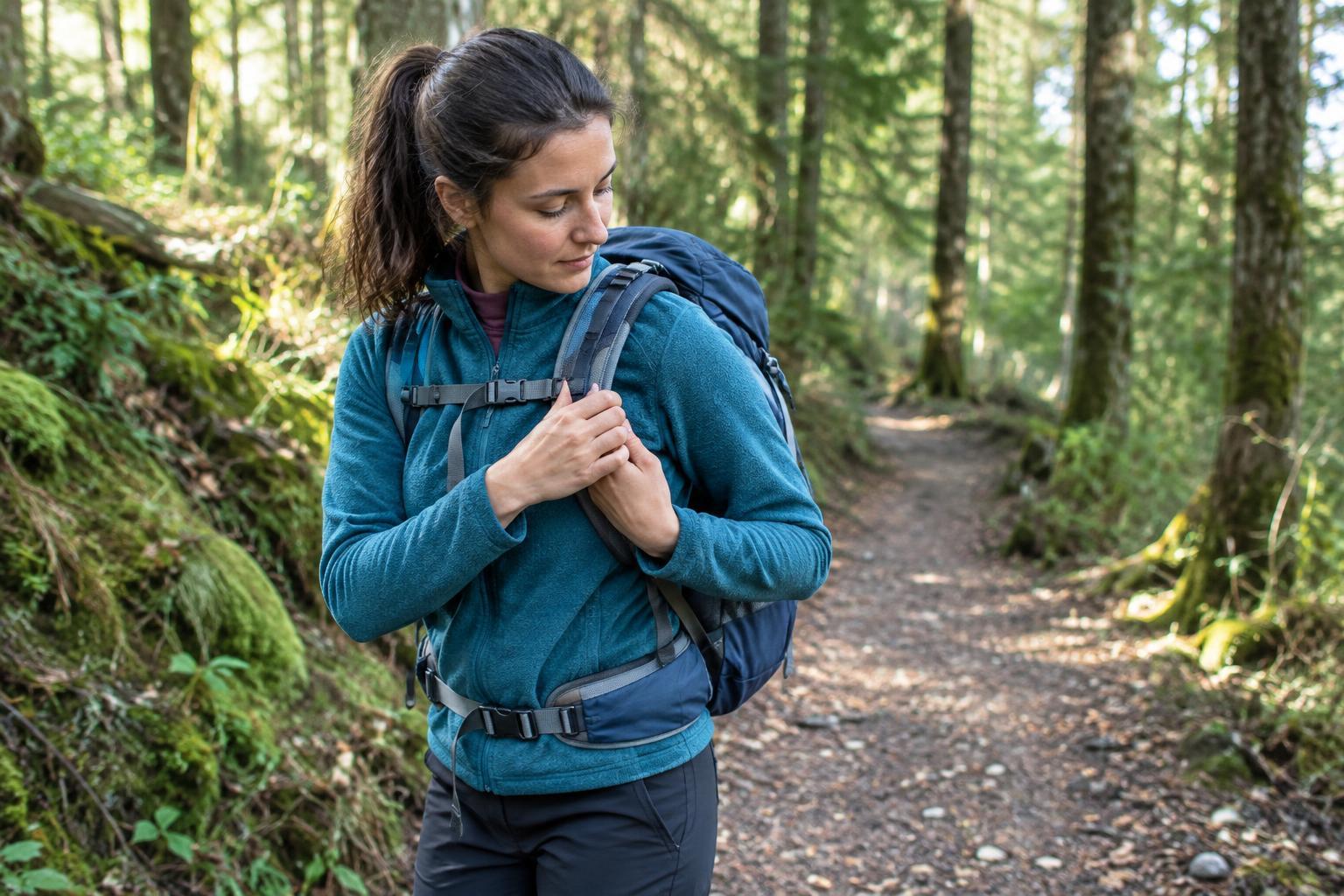
Clip the sternum strap across your chest at a height that feels comfortable, then tighten it just enough to keep the shoulder straps from drifting outward. It should not make breathing feel limited or pull the shoulder straps uncomfortably toward your neck. Many packs let you slide the sternum strap up or down; try a different position if it rubs or sits awkwardly.
Some daypacks also have small load-lifter straps running from the top of the shoulder straps toward the top of the pack. If yours does, pull them gently to bring the upper pack closer to your back. They need only light tension. Overtightening can lift the shoulder straps away from your shoulders or create pressure at the front of them. Not every daypack has these straps, and a well-fitting pack does not need them to feel comfortable.
Walk, check and readjust
Walk for several minutes, turn, step up onto a curb and reach for something in a side pocket. Notice whether the pack swings, the belt slips, or one shoulder carries more weight than the other. Make small changes one at a time so you can tell what helped. If a strap keeps loosening, check that its webbing is threaded correctly through the buckle and is not twisted.
Recheck the fit after adding water, removing a jacket or changing layers. Compression straps can help hold a partly filled pack steady, but they cannot make an unsuitable pack comfortable. If careful adjustments still leave persistent rubbing or concentrated pressure, the pack’s shape, size or load may be the issue. A comfortable daypack should let you pay attention to the walk, not to its straps.