Start with the walk, not the bottle
The best reusable water bottle is one you can comfortably carry and use throughout your walk. Before comparing designs, think about how long you expect to be out, the weather, the effort involved and whether you can reliably refill along the way. A short, easy route with a known refill point calls for a different setup than a long walk where you must carry all your water from the start.
Capacity is a trade-off: a larger bottle reduces the need to refill but weighs more when full and takes up more space. If one bottle cannot hold what you plan to carry, two smaller bottles may be easier to fit into a pack and let you see how much remains. Do not count on a stream, tap or café as a refill option unless you have checked that it is accessible and suitable for your trip.
Choose a material that suits your priorities
Plastic bottles are often light and available in shapes that fit pack pockets. A transparent or translucent one makes it easy to check the water level. Stainless steel tends to feel sturdy and may appeal if you want a bottle that stands up to frequent use, though it is usually heavier. Insulated steel can keep a drink cooler or warmer for longer, but the extra bulk may be unnecessary on a mild walk.
No material makes up for a bottle that is awkward to carry or difficult to maintain. Look for a bottle that feels secure in your hand, has a base that stands steadily when you set it down and can tolerate the kind of handling it will get in your bag. Follow the maker’s guidance on heat, dishwashers and cleaning products; those limits vary by bottle.
Pick a lid you can use on the move
A wide-mouth opening is convenient for filling and washing, but it may be harder to drink from while walking. A narrow opening, spout or straw can make quick sips easier. If you usually stop to drink, a simple screw cap may be enough. If you want one-handed access, try the opening mechanism before buying and consider whether it will still be comfortable with cold or wet hands.
Leaks are especially frustrating when a bottle rides beside clothing, a camera or other items that need to stay dry. Check that the lid closes firmly and that any seals sit properly. More complicated lids can have small parts that need regular cleaning, so choose a design you will actually take apart and wash. A loop or handle is useful for pulling a bottle from a pocket, but it should not be your only way to secure it.
Check the fit with your walking kit
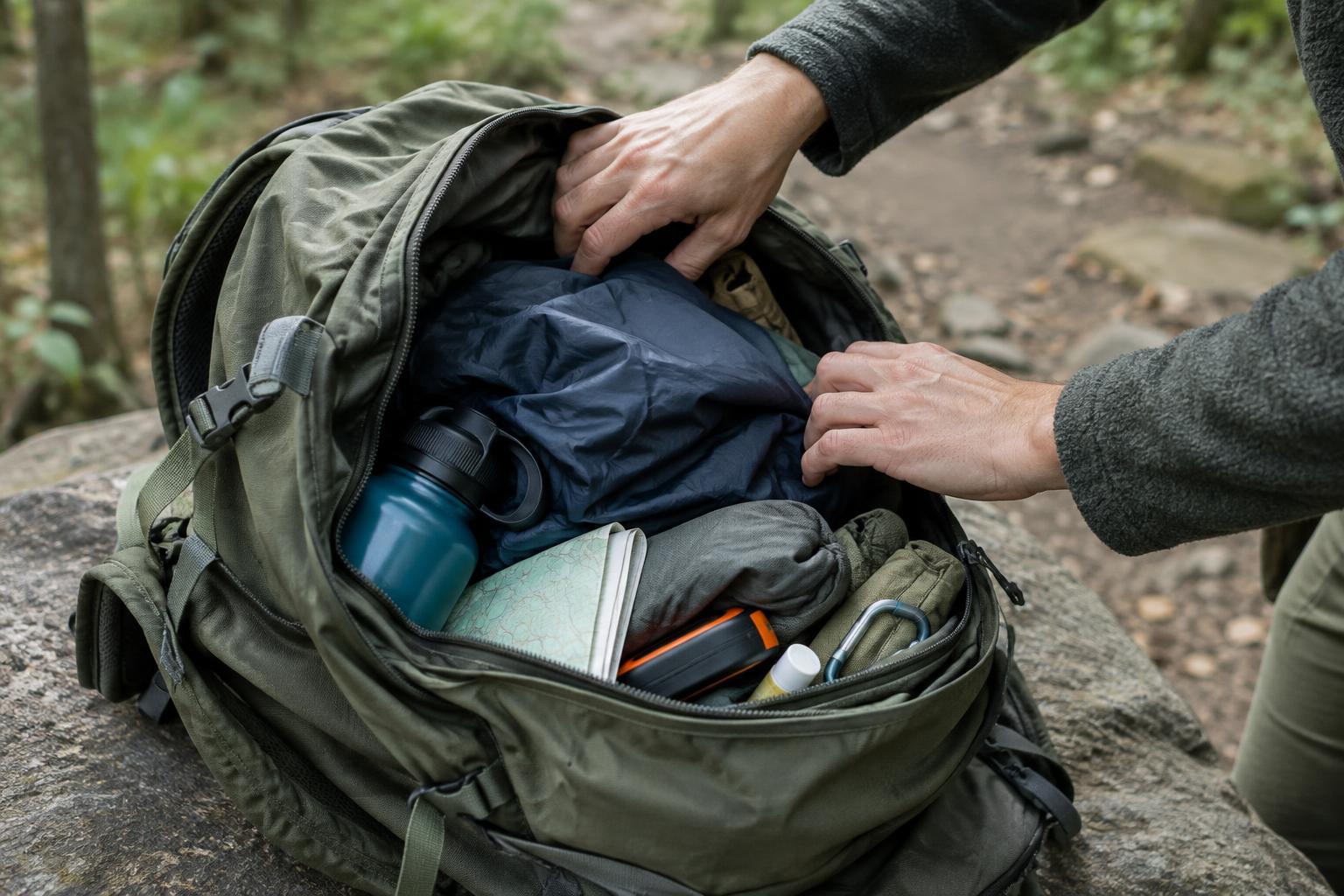
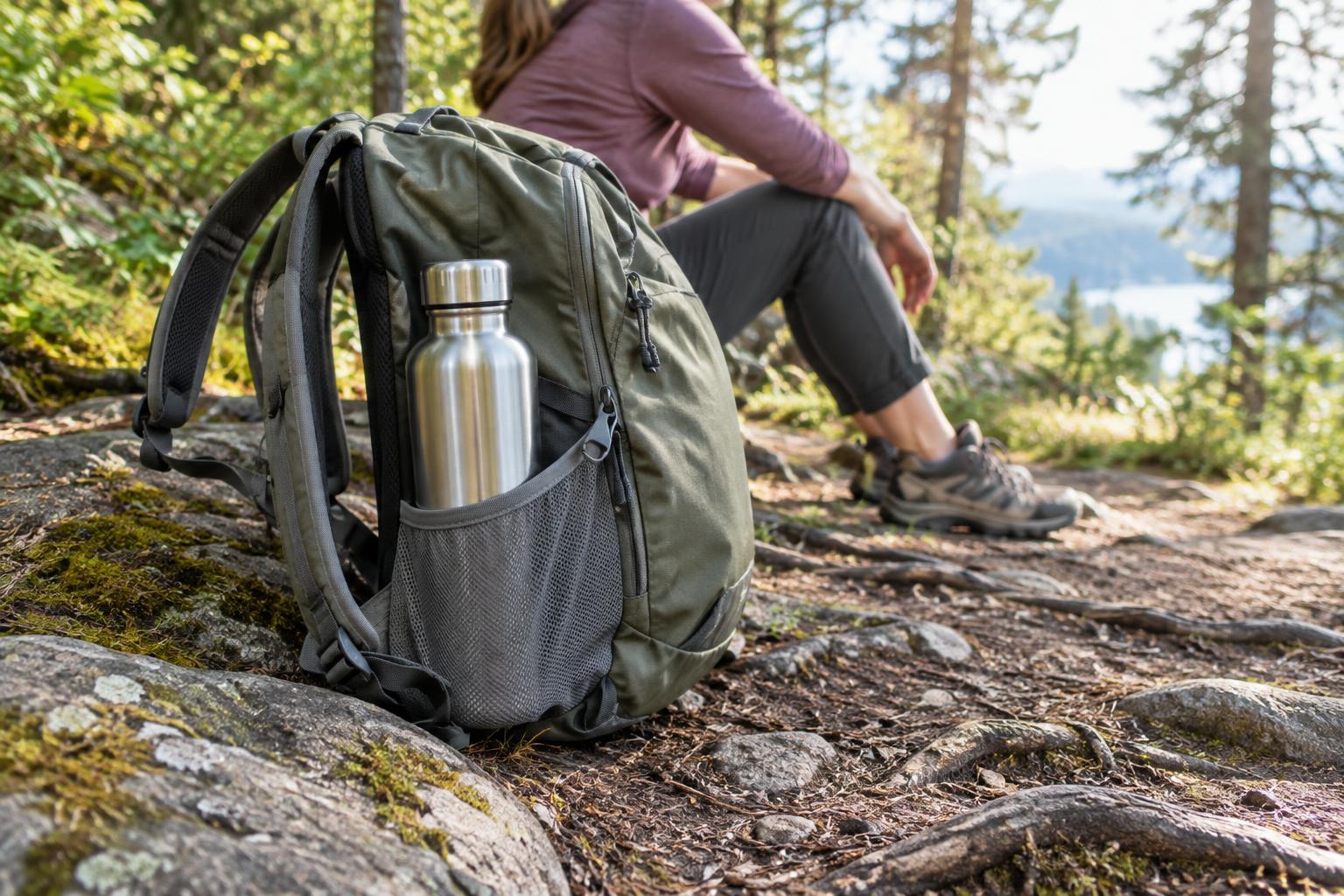
A bottle that looks ideal on a shelf may be too tall for a side pocket or too wide to pull out easily. Measure the pocket on your usual day pack, or bring the pack when shopping. Test whether the bottle stays put when you bend down and whether you can reach it without unpacking everything. If you plan to carry it inside the main compartment, give it a stable position and keep the cap tightly closed.
Think about balance as well as access. A heavy bottle on one side of a small pack can feel awkward, especially as you walk over uneven ground. Splitting water between two pockets may feel better. If you prefer a shoulder-strap holder or a bottle carried by hand, make sure it does not swing, slip or interfere with using walking poles.
Make cleaning and refilling part of the choice
The easiest bottle to live with is often the one you will clean promptly after every outing. An opening wide enough for a brush makes the inside easier to reach, while a lid with fewer hidden spaces is simpler to inspect. Wash and dry the bottle and lid according to the maker’s instructions, paying attention to seals and straws. Let the parts dry thoroughly before storing them to help prevent stale smells.
Before leaving, fill the bottle and check for leaks over a sink. Confirm that it fits your pack when full, not just when empty, and note where you intend to refill if your route depends on it. These small checks matter more than a long list of features: a dependable bottle is one that works with your walk, your bag and your habits.