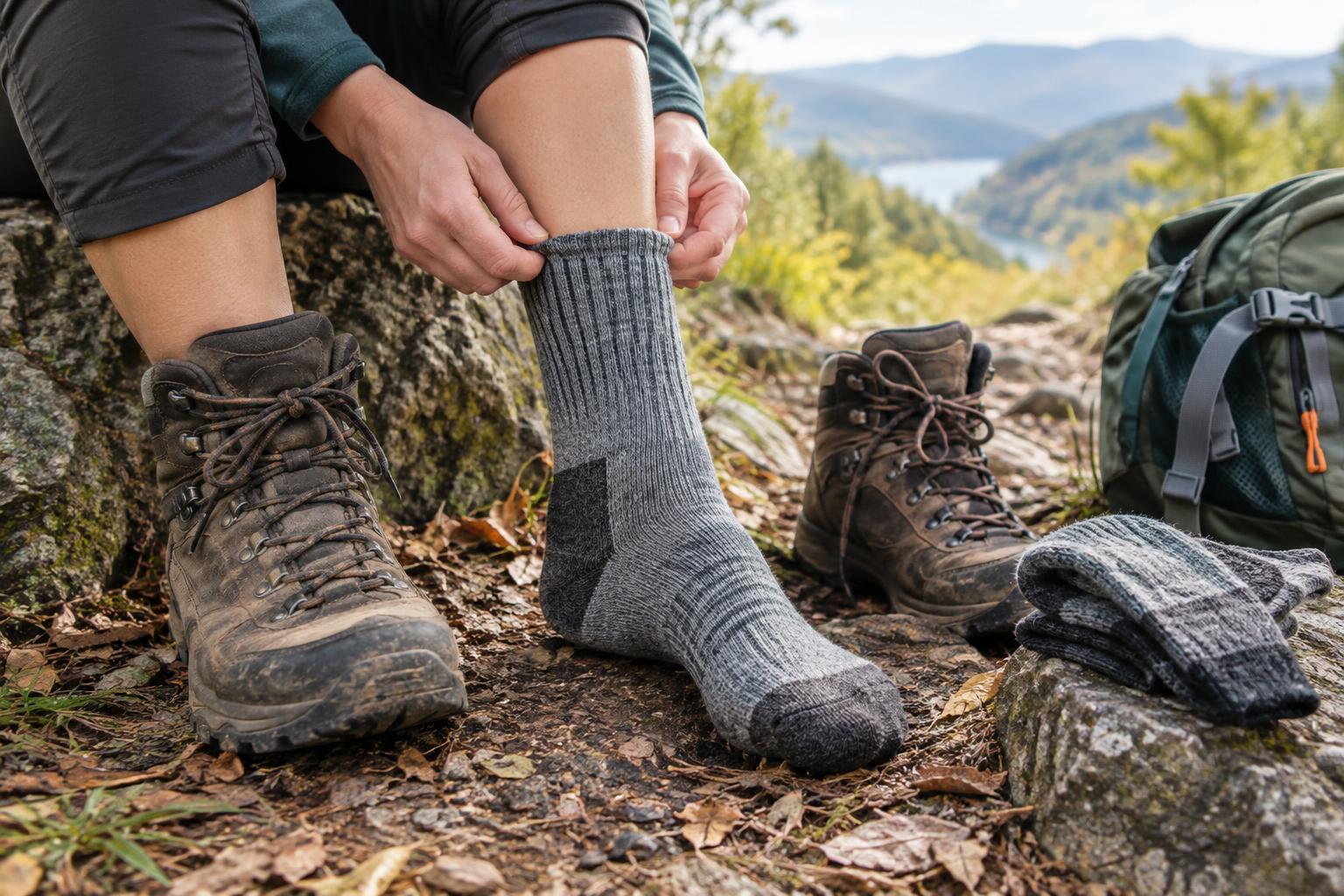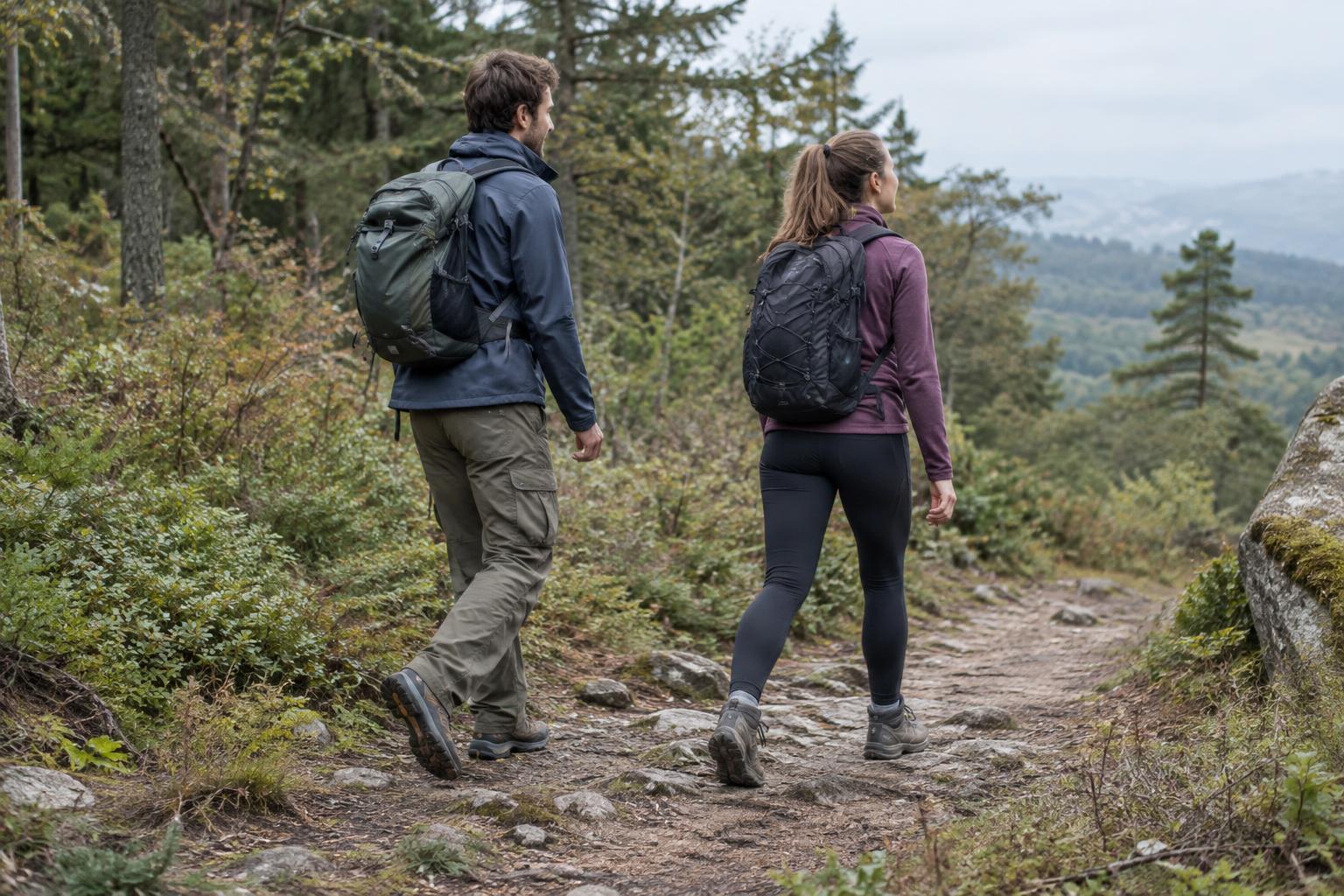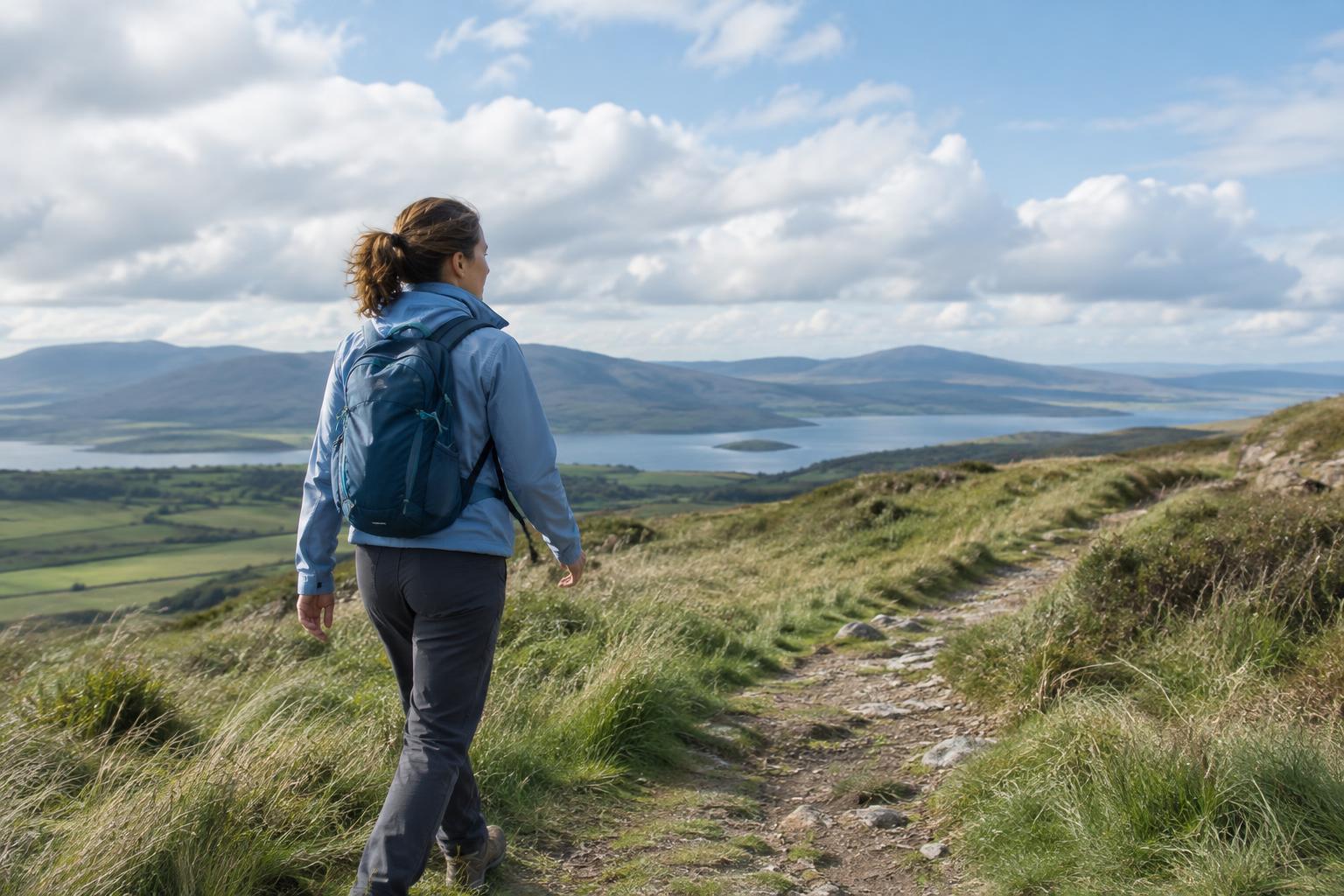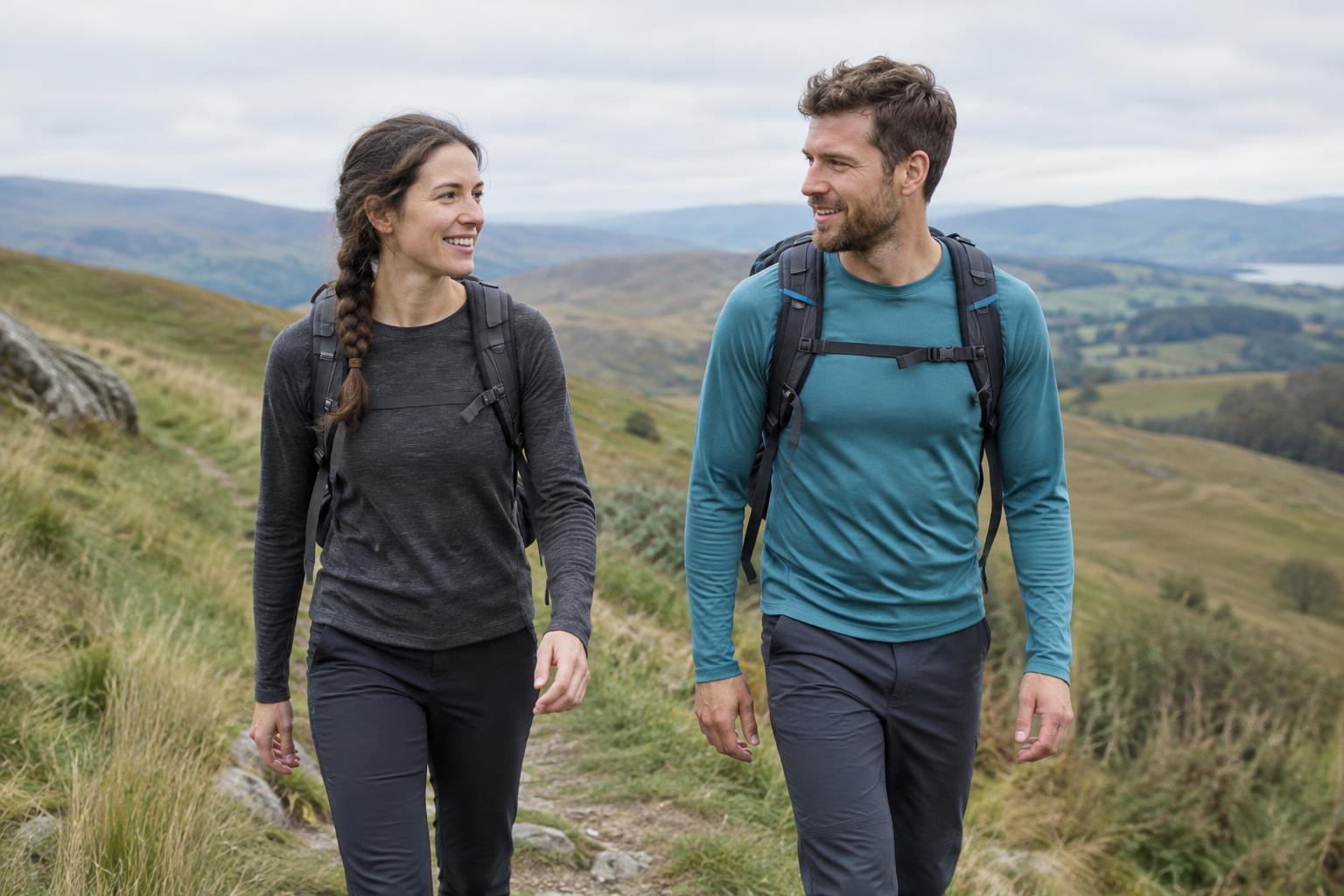
Start with what a base layer needs to do
A base layer sits next to your skin. Its main job is to help manage moisture so that you feel comfortable as your effort and the weather change. It is not a substitute for an insulating layer or a jacket that blocks wind and rain. On a walk, you might warm up on a climb, pause for a view and then feel cool on the descent. The fabric against your skin affects how those changes feel.
Merino wool and synthetic fabrics can both work well. Neither is automatically warmer or better for every trip. Fabric weight, knit, fit and the layers you wear over it all matter. Rather than choosing by fiber name alone, think about how hard you expect to walk, whether you can change into dry clothes afterward and how many times you hope to wear the top between washes.
When merino wool makes sense
Merino is often a comfortable choice for walks that mix movement with stops. It can absorb some moisture within its fibers while still feeling reasonably comfortable against the skin. Many walkers also like it for trips where laundry is inconvenient: merino commonly holds on to less noticeable odor than some synthetic fabrics. That makes one top more versatile for a gentle day walk followed by travel or a casual evening.
There are trade-offs. A merino top may take longer to dry after a wash or a particularly sweaty outing, especially if the fabric is thick. Fine wool can also wear through at high-friction points such as beneath pack straps or at the hips. Some people find wool itchy despite the softness of many merino garments, so it is worth trying a top against your skin before relying on it for a long walk. Check the garment label too: a merino blend may feel and wear differently from a top made entirely of wool.
When a synthetic layer has the edge
Synthetic base layers, often made with polyester or nylon, are useful when you expect sustained effort and plenty of sweat. Many are designed to move moisture across the fabric and dry quickly. If you wash a top in a sink during a trip, or finish a brisk walk and need it ready again soon, that quicker drying can be a practical advantage. Synthetic options also tend to tolerate repeated rubbing and frequent washing well, though construction and fabric quality still vary.
The drawback for some walkers is odor buildup. A synthetic top may need washing sooner than a comparable merino one, particularly after a warm, active day. It can also feel cool when damp during a long stop, even if it dries quickly once you start moving or change layers. If your route includes exposed viewpoints or leisurely breaks, carry a dry insulating layer and put it on before you become chilled; the base-layer fabric alone cannot solve that problem.
Match the fabric to your walk
For a relaxed walk with frequent stops, either fabric can work, but merino may appeal if comfort across changing activity levels and fewer washes are priorities. For a fast, hilly walk or a warm-weather outing, a lightweight synthetic top may be easier to manage when you sweat heavily. On a multi-day trip, consider your routine: merino can be convenient when you have limited spare clothing, while synthetic is helpful if you can wash a top and give it time to dry.
You do not have to commit to one fiber for every season. A lightweight merino-synthetic blend may balance some of the qualities of each, although the result depends on the particular garment. Sleeve length matters as well. A short-sleeved top may suit a mild day under a light outer layer, while long sleeves offer more coverage when temperatures drop or your pack rubs against bare skin. In colder conditions, choose a weight that works with your other layers rather than relying on a heavy base layer for all your warmth.
Fit and care matter as much as the label
A base layer should sit close enough to your skin to manage moisture without restricting your stride, shoulders or breathing. Look for seams that do not press under your pack and a hem that stays in place when you bend or reach. If possible, try it on with the trousers and pack you use for walking. A fabric you enjoy wearing is more valuable than an impressive feature list on a top that chafes.
Follow the care label to help either fabric last. Washing soon after a sweaty outing can limit lingering smells; gentle washing and avoiding unnecessary high heat can reduce wear. Let a garment dry fully before packing it away. If you are choosing your first dedicated walking base layer, start with the walks you do most often, not the most demanding walk you can imagine. Then notice when you feel damp, cold or uncomfortable. Your own walking routine will tell you whether your next layer should dry faster, feel softer or handle more days between washes.