Start with the shape of your day
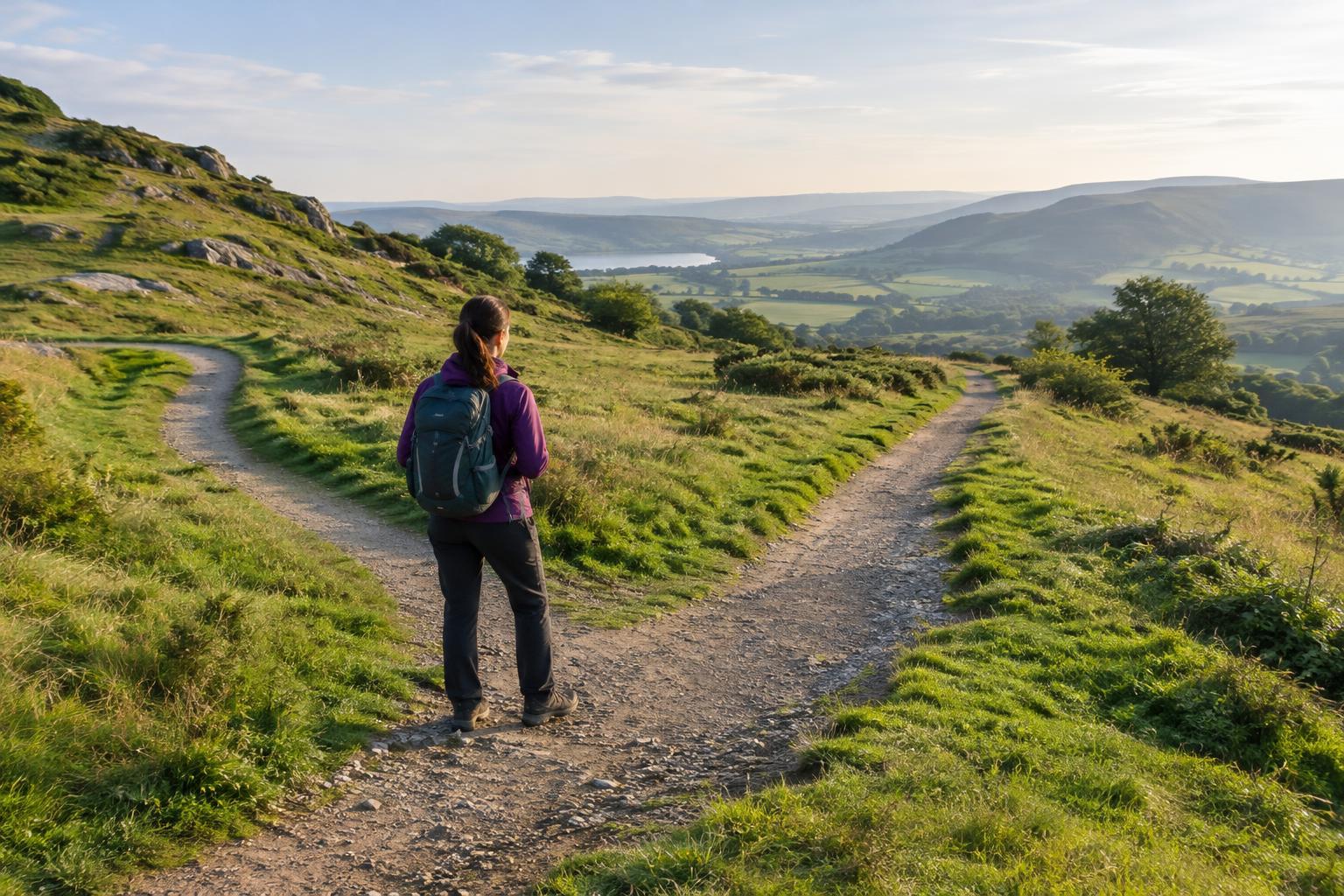
A route can look ideal on a map and still be awkward in practice. Before choosing a walk, decide how much time you have from leaving home to getting back, not just how long you want to spend on the trail. Include travel, breaks and a margin for slower ground or a missed turn. Then consider who is coming, how confident everyone feels about the distance, and whether you need to finish where you started.
Loop, out-and-back and point-to-point walks each solve a different problem. A loop returns to its starting place without retracing the whole route. An out-and-back follows the same path in both directions. A point-to-point begins and ends in different places. None is automatically better; the useful choice is the one that makes the day enjoyable without making the journey home complicated.
Choose a loop for variety and a simple return
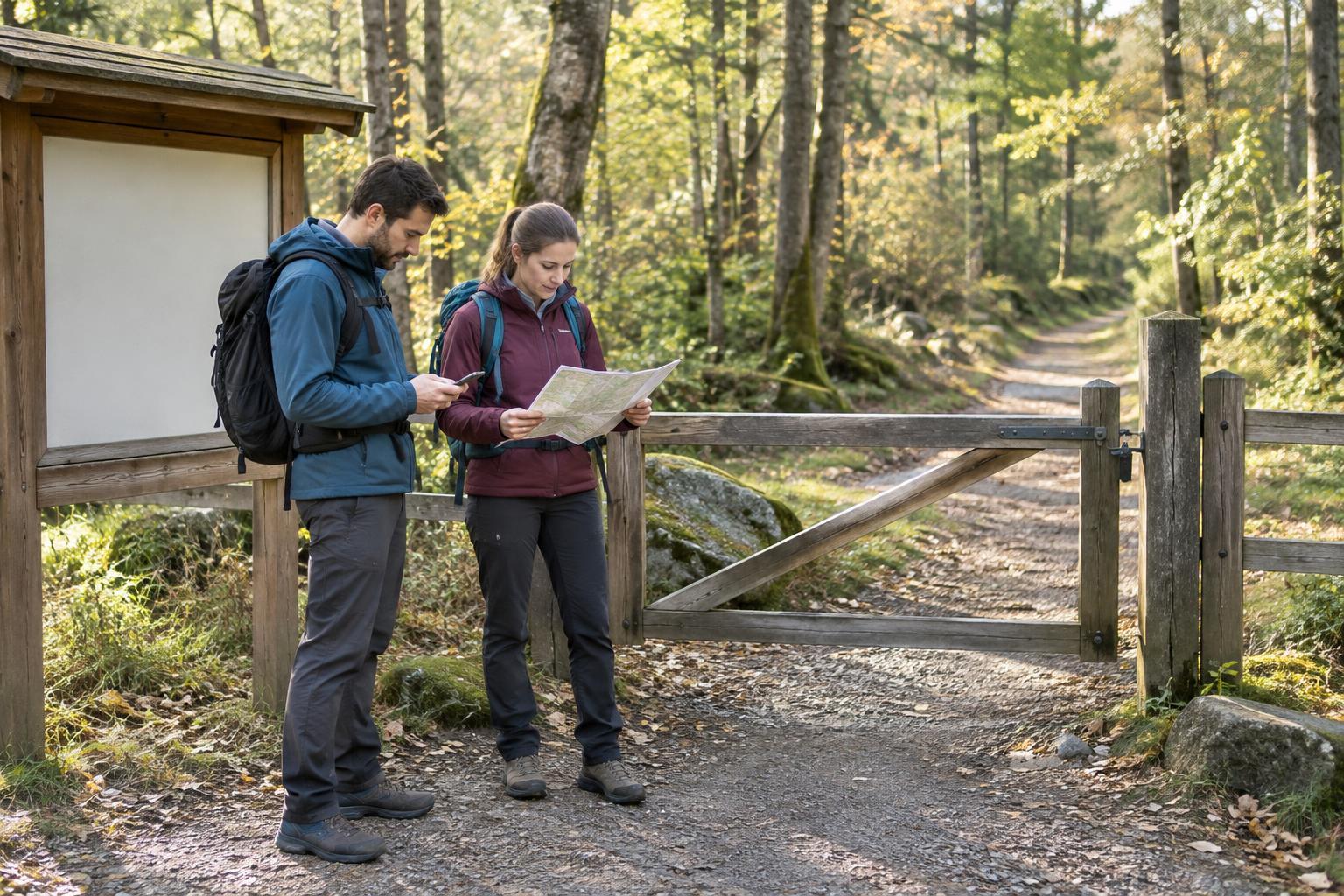
A loop is often a good fit when you want changing views but have only one place to park or meet your group. You can leave a bag in a vehicle, walk through a mix of settings and finish without arranging a pickup. Loops also make it easy to plan a clear start and finish for a group day trip.
The trade-off is that a loop may offer fewer straightforward ways to shorten the walk once you have committed to it. Check the full circuit rather than judging it by its distance alone: a short-looking return leg may have a steep climb, rougher surface or tricky junctions. Look at the direction of travel, too. You may prefer to tackle the main climb while fresh, or save an exposed stretch for a time when conditions are expected to be more comfortable. If the loop relies on a connecting path, confirm that it is a route you can use rather than assuming two nearby lines on a map join up.
Pick an out-and-back when flexibility matters
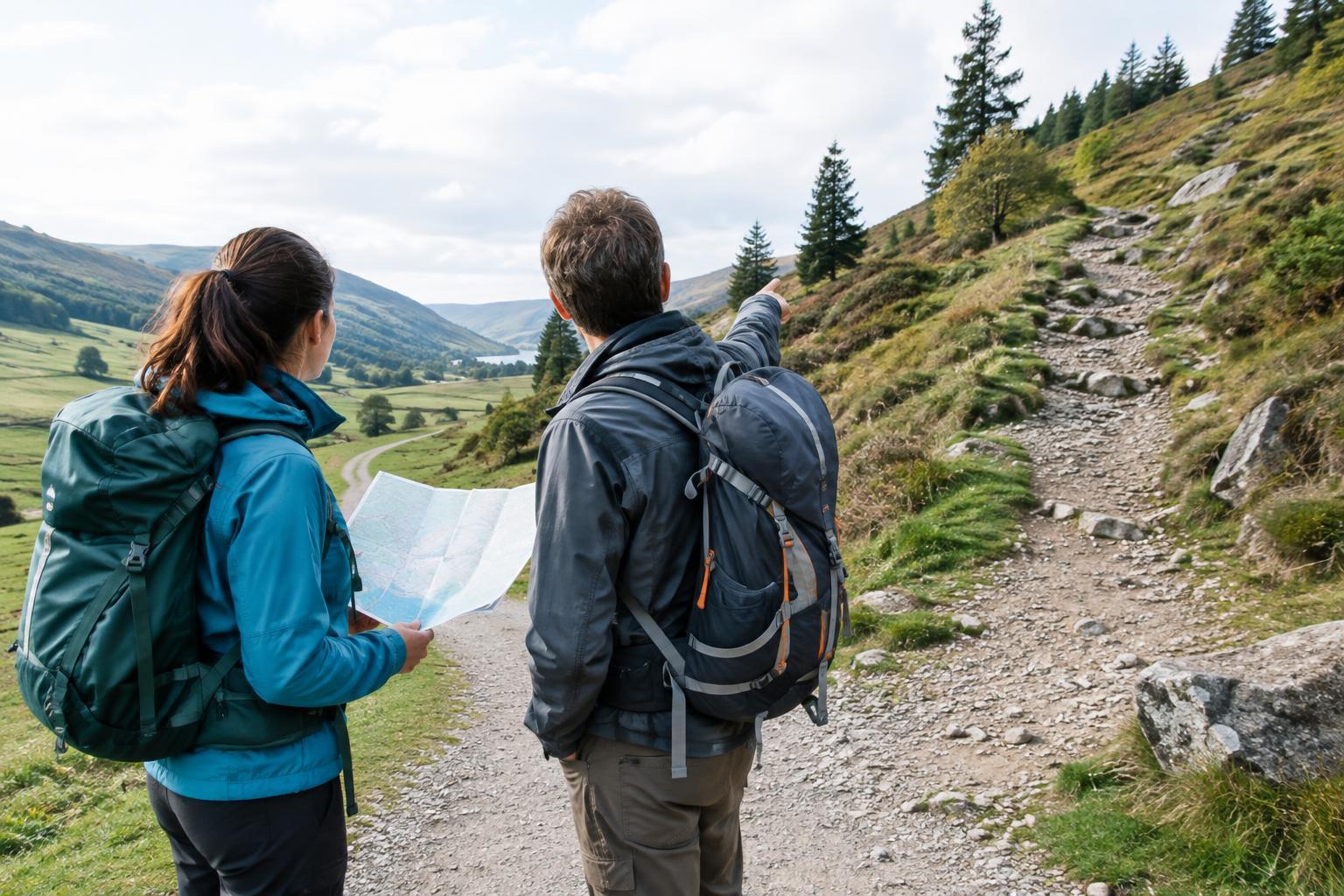
An out-and-back is the simplest shape for a day with an uncertain pace. You can set a turnaround time or choose a landmark, then return by the path you already know. That makes it useful for a first outing in unfamiliar terrain, a walk with mixed abilities, or a day when you would rather decide the distance as you go. Seeing the same place from the opposite direction can feel surprisingly different, especially as light and viewpoints change.
Do not treat the return as an afterthought. You still have to cover the distance back, and a route that descends gently on the way out may climb on the way home. Keep track of time as well as distance, particularly if the outward section is easy to extend. A practical rule is to turn around while you still have enough energy, daylight and supplies for the return, with some margin left over. If a section feels uncomfortable on the way out, remember that you will need to cross it again.
Use a point-to-point route for a sense of journey
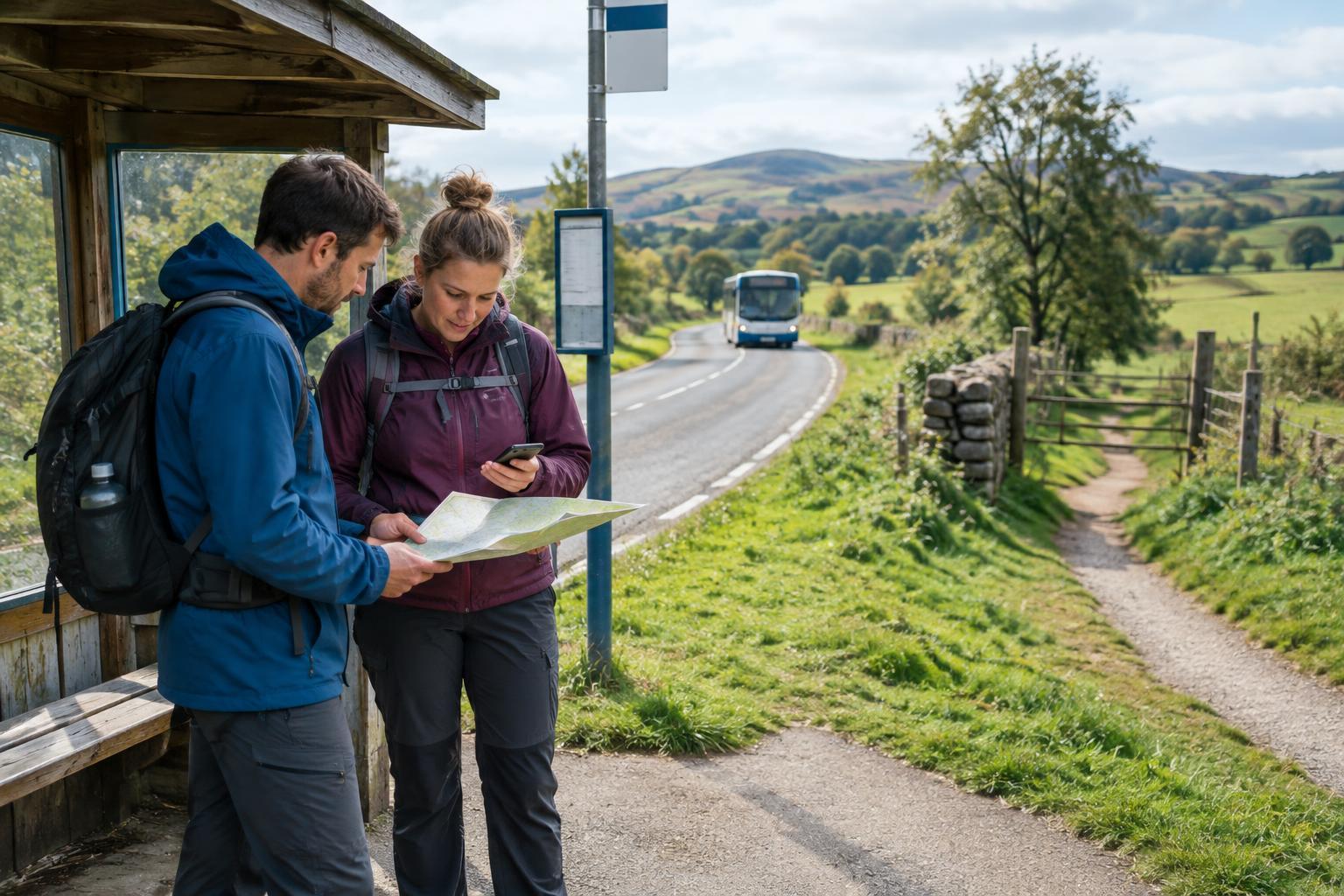
A point-to-point walk suits a day built around getting somewhere: from one village to another, between transport stops, or along a distinct stretch of trail. It lets you keep moving forward rather than doubling back and can open up routes that do not form a convenient circuit. It can be especially satisfying when the finish offers a natural place to rest before heading home.
Its main challenge is logistics. Work out how everyone will reach the start and leave the finish before you commit. If you plan to use public transport, check the timetable and identify what you would do if you arrived later than expected. If someone is collecting you, agree on a precise meeting place and allow for patchy phone reception. Also look for possible exit points along the way. A point-to-point route with no easy exits asks for a more realistic assessment of the group’s pace than one with several places to stop.
Make the final choice with a quick route check
Once you have a preferred shape, compare a few routes using the same questions. How much climbing is involved? What are the paths and surfaces like? Are there exposed, muddy or difficult sections? Are there places to pause, refill water where appropriate, or leave the route? Distance is only one part of effort, so choose a walk that leaves room for breaks and unexpected delays.
Take a map or saved route you can use without a signal, and know your starting point, finish and intended direction. Check access information and conditions close to departure, since paths and facilities can change. For a relaxed day with variety, try a loop. For maximum control over distance, choose an out-and-back. For a walk that feels like a small journey, plan a point-to-point route—and settle the return trip first.