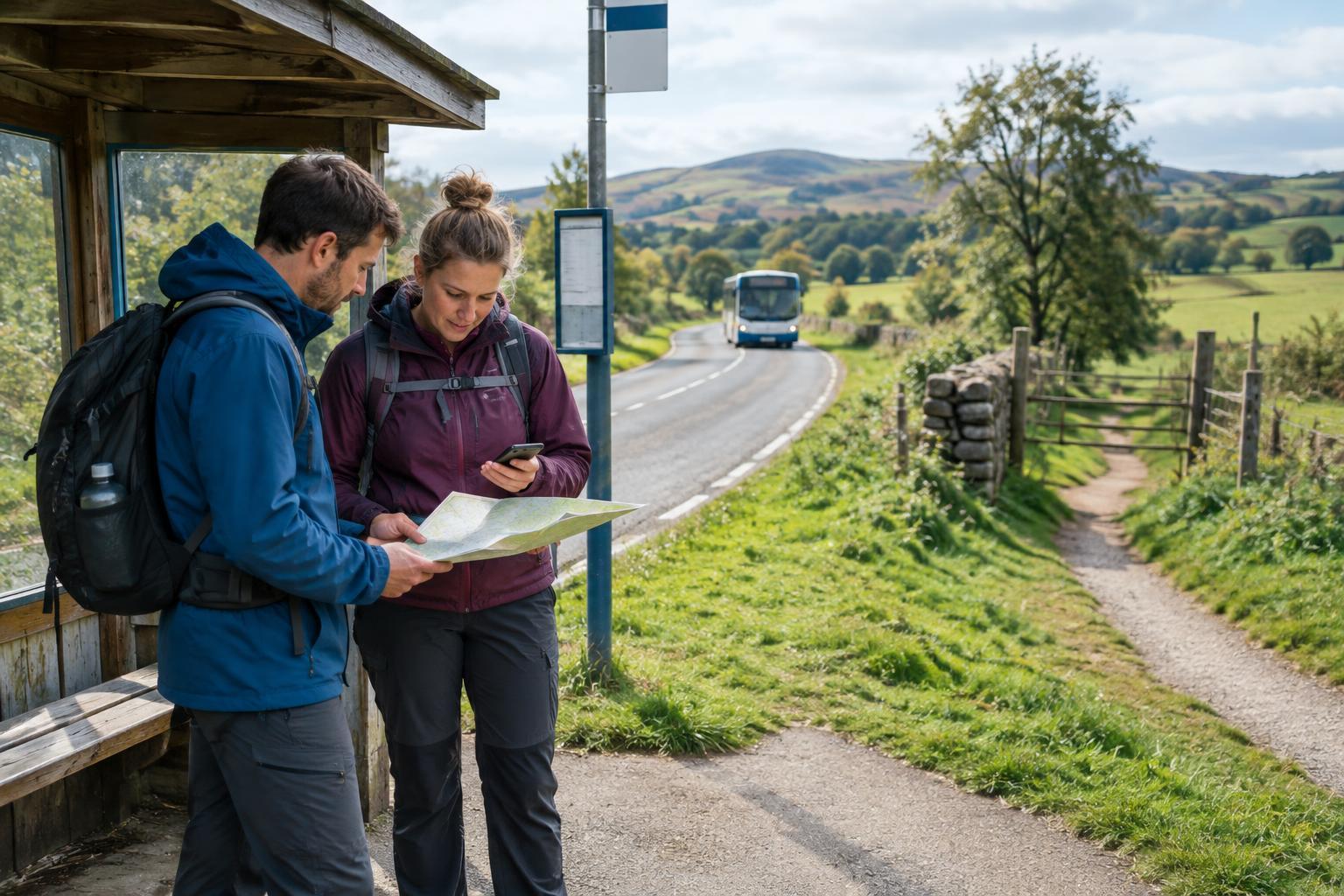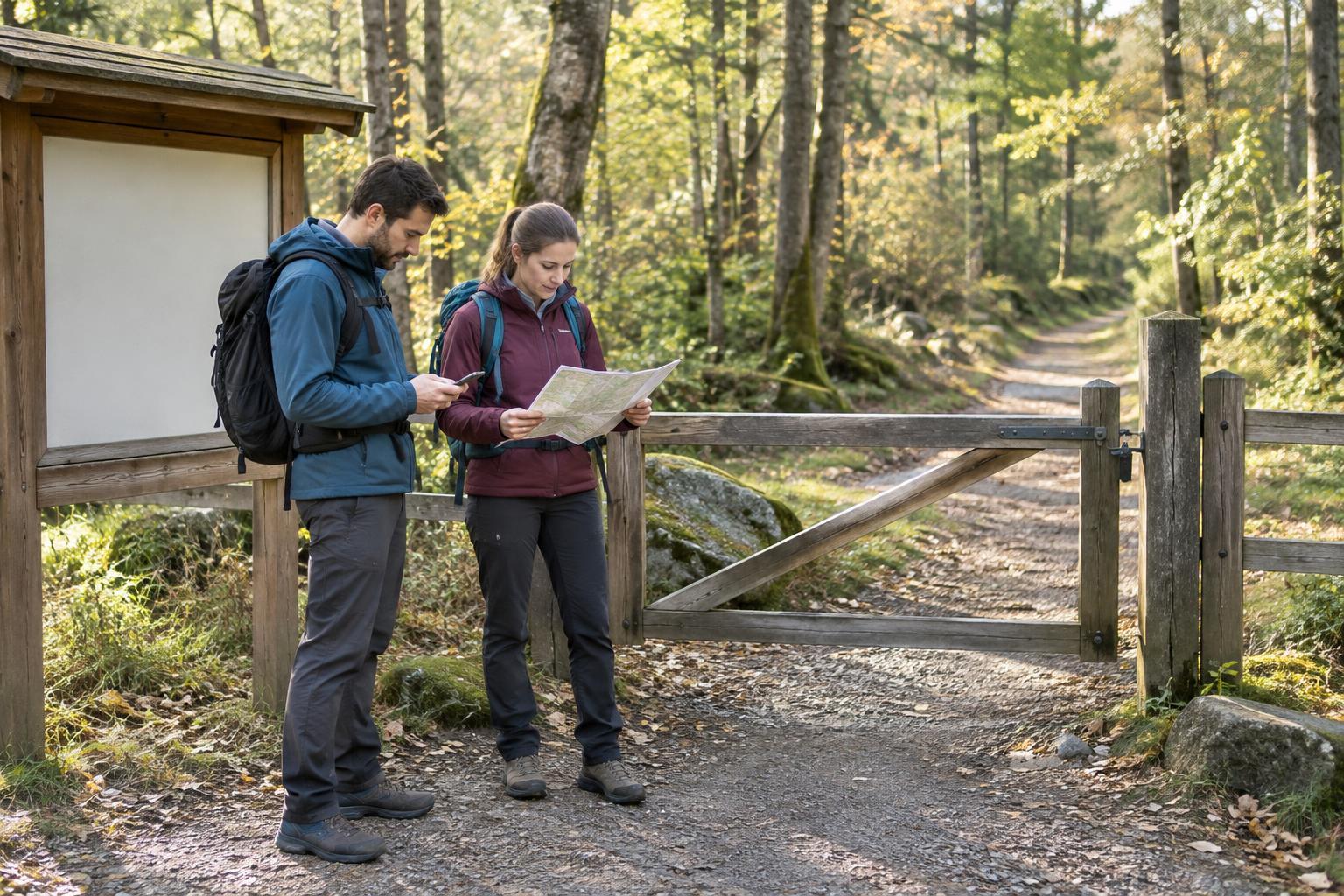
Identify who manages the route
Before planning around a trail description, work out who manages the land you will cross. A route may pass through a park, forest, nature reserve or privately managed property, and different sections may have different rules. Start with the managing authority’s visitor information, then match its trail names and entrances to the route on your map. A blog post or mapping app can help you discover a walk, but it may not reflect a changed gate, boundary or access rule.
Check the whole route, not just the named destination. Look for information about the trailhead, connecting paths, viewpoints and any roads or bridges needed to reach them. If a route crosses more than one managed area, check each one. When the available information is unclear, contact the relevant visitor office or land manager rather than assuming that a visible path is open to the public.
Separate trail access from parking and permits
An open trail does not necessarily mean that every way of reaching it is available. Read access notices for restrictions on particular entrances, trail sections, activities or days. Some routes require advance booking, an entry permit or a reservation for a specific time. Others allow walking without a permit but require a separate parking pass. Check what each document covers, who needs one and whether you must carry a copy or display it in a vehicle.
Also confirm the starting point attached to a booking. A permit for one entrance may not apply at another, and a parking reservation may not guarantee access to a trail that closes for conditions or maintenance. If places are limited, make the booking before committing to a long drive or non-refundable travel plans. Keep the confirmation somewhere you can reach without mobile service, while following any instructions about printed copies or identification.
Read opening hours as a return-time limit
Opening hours can refer to different things: a visitor center, an entrance gate, a parking area or the trail itself. Find out which hours apply to your planned start and finish points. Pay special attention to gates that close, last-entry times and rules against walking after dark. A trail may remain accessible while its facilities are shut, or a car park may close before you would comfortably finish a longer route.
Plan your turnaround time from the closing time, not just from the distance shown on a map. Allow for a slower pace, breaks, navigation and the walk back to your vehicle or transit stop. Daylight, weather and group ability also affect the margin you need. If your schedule only works when everything goes perfectly, choose a shorter route or an earlier start.
Check recent notices and local conditions
Even an established route can close temporarily because of maintenance, damaged infrastructure, weather or protection of sensitive areas. Check the managing authority’s alerts and trail notices shortly before leaving, especially if you planned the trip well in advance. Look for closures affecting the approach road as well as the path. A notice may apply to only one section, but that section could be essential to your intended loop.
If you find conflicting information, treat the more restrictive notice as a reason to verify the plan before setting out. Do not rely on an old photo of a sign or on comments that say people walked through anyway. On arrival, read posted notices and respect barriers, even if your downloaded map still shows the route. Access information can change after you last checked it.
Make a simple departure checklist and backup plan
The day before your walk, confirm five essentials: the route and trailhead are open; any permit or reservation is valid; parking or transit will be available when needed; your planned finish falls within the applicable hours; and there are no notices that change the route. Save the relevant details offline, along with a map that shows your intended path and a reasonable turnaround point.
Choose a backup walk before you leave, ideally one with simpler access and a suitable distance for your group. If you reach a closed gate or discover a permit requirement you missed, switch plans rather than searching for an unofficial way in. A little flexibility keeps a day trip enjoyable while respecting the people, places and rules that make public access possible.