Start with the journey home
A point-to-point walk begins in one place and ends in another. That can make for a satisfying day: you can follow a path through changing scenery without turning around or retracing your steps. It also means the finish is more than a destination on a map. It needs a workable way home.
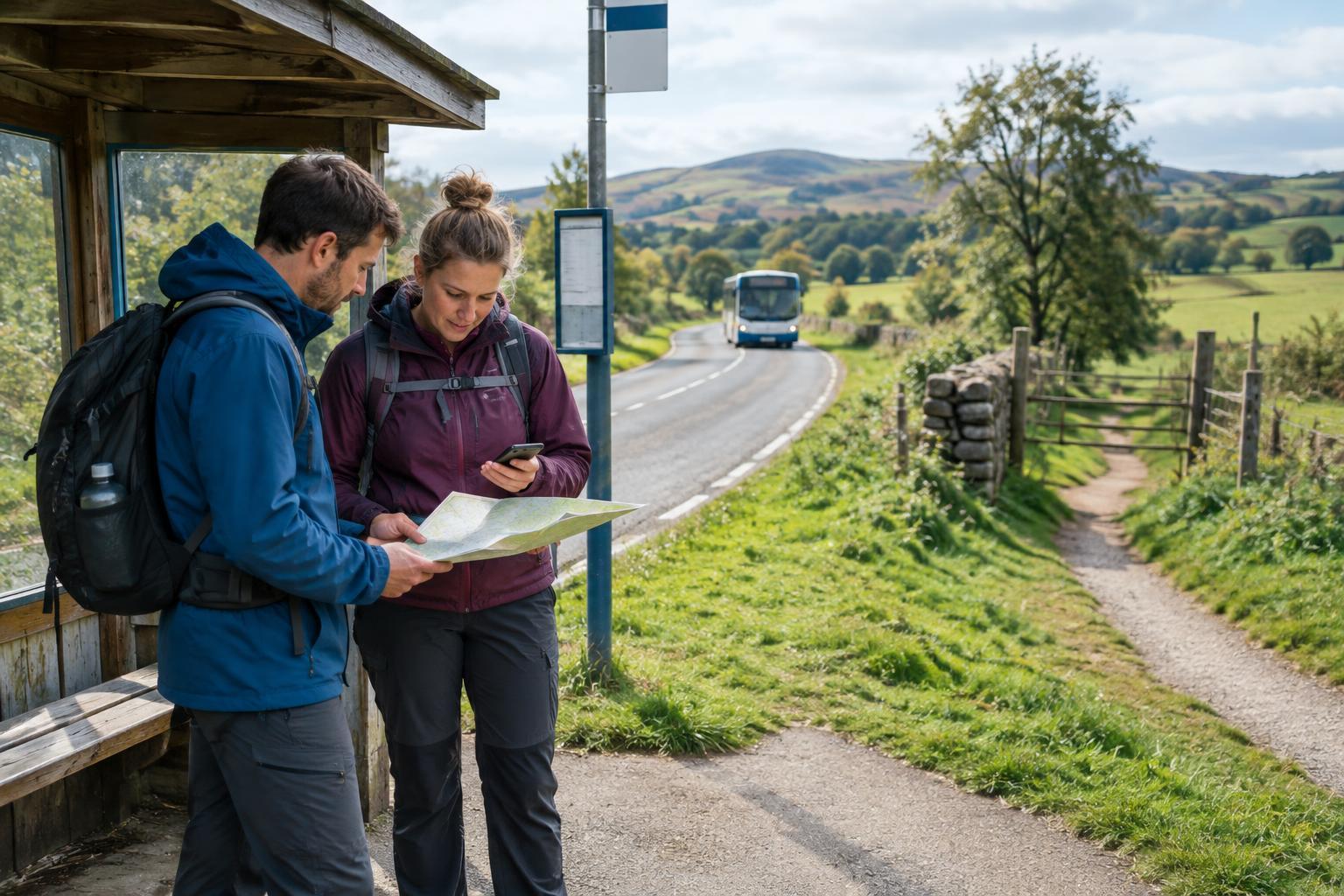
Before settling on a walking route, find the bus stops or rail stations near both ends. Pay particular attention to the finish. A frequent service near the start is little help if the only service at the end leaves before you are likely to arrive. Check how far the trailhead is from each stop, whether the connecting roads have pavements or suitable walking space, and whether the stop is easy to find from the path. A short-looking link on a map may feel less straightforward at the end of a long day.
Choose a direction that gives you options
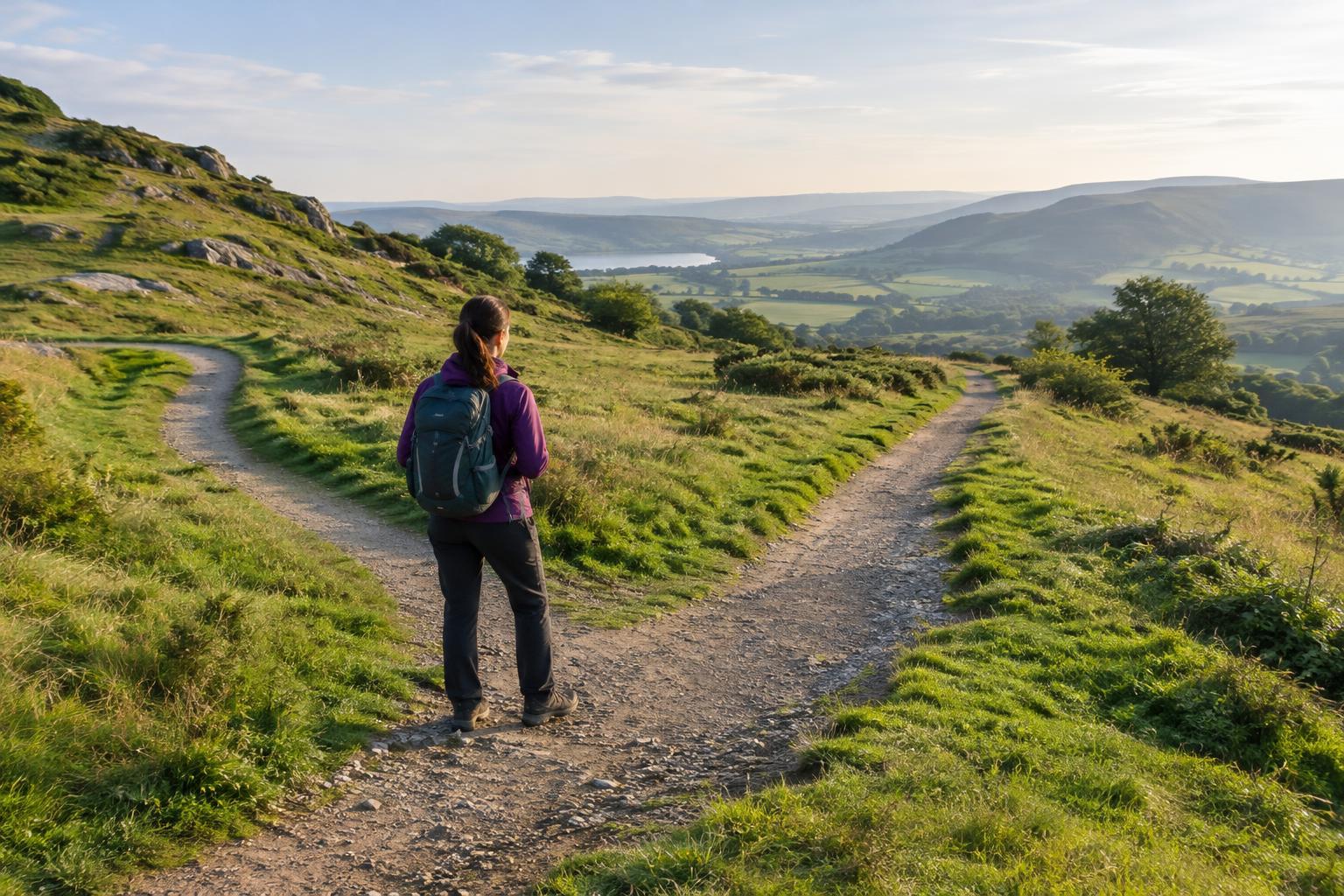
Many point-to-point walks can be done in either direction, but the transport plan may make one direction much easier. If one end has limited departures and the other has frequent connections, it may be better to travel to the limited end first and finish where you have more choices. You can then take the less flexible journey while you are fresh and less pressed for time.
Compare both directions before committing. Think about the first available service, likely waiting time, changes between services and the walk from the stop to the route. Also consider the walking itself: a steep climb, exposed section or awkward path near the finish may take longer when you are tired. The best direction balances a walk you want to do with a return journey you can manage comfortably.
Work backward from the last sensible departure
Check the timetable for the day you intend to walk, rather than assuming a familiar weekday pattern applies. Note the departure you hope to catch and an earlier or later option if one exists. If a service runs infrequently, check any required connections as well as the first bus or train; arriving at a station does not necessarily mean you can complete the journey home.
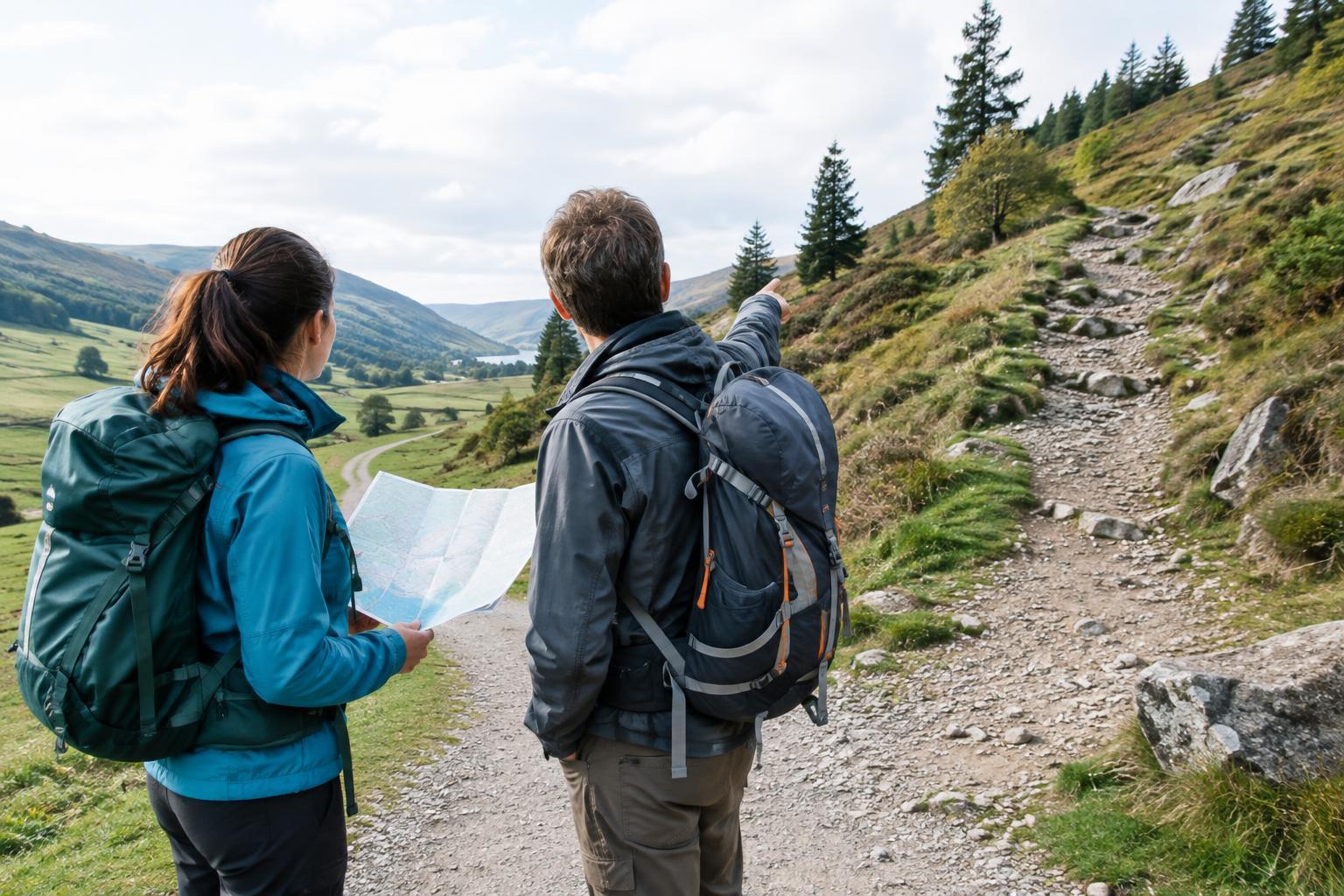
Next, estimate your walking time at a comfortable pace. Include time for stops, navigation, photographs and slower ground. Add the walk between the route and the departure point, then leave a buffer before your chosen service. Working backward gives you a latest sensible time to start and, just as importantly, a time by which you should reach a midpoint. Treat that midpoint as a prompt to reassess rather than a target to race toward. If you are well behind schedule, shortening the walk is usually more useful than trying to make up time on unfamiliar terrain.
Prepare a route you can change
Mark the main route, the transport stops and any practical places to leave the walk early. A village, staffed station or well-served road crossing may offer a useful alternative, but confirm that it actually has a service when you expect to be there. Keep the relevant stop names, service numbers and connection details together so you do not have to search for them while tired or in poor signal.
Save the route and transport information where you can access them offline, and carry enough battery for navigation and communication. A paper map or written notes can provide another way to find your way if your phone becomes unavailable. Tell someone your intended route and expected return time, particularly if you will be walking alone. Your backup does not have to preserve the perfect day out; it only has to provide a clear, manageable way to finish.
Keep checking the plan as you walk
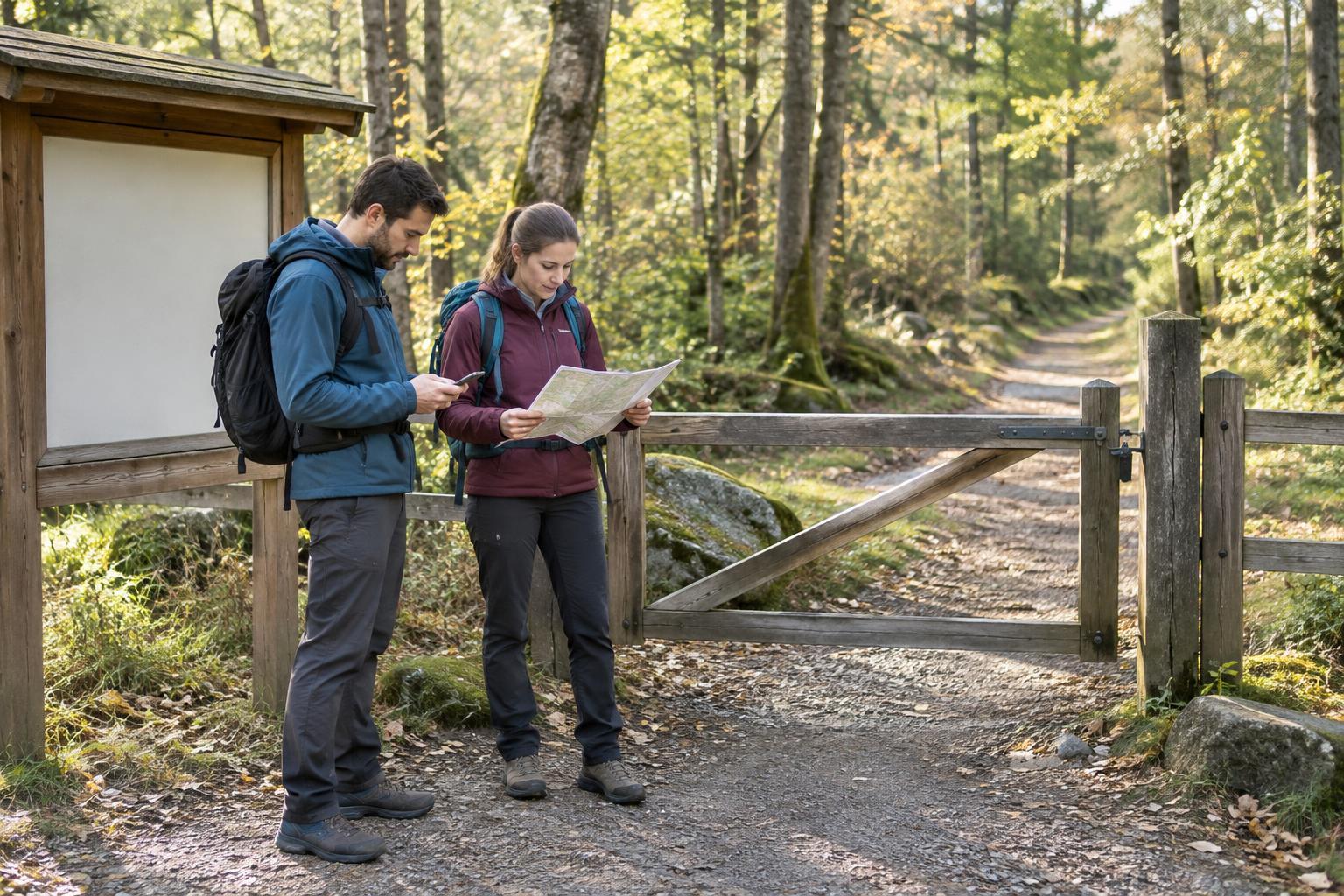
On the day, check for service changes before leaving home and again before setting off from the start. Make sure you have the fare or ticket you need and know which side of the road or station entrance serves your return direction. At the trailhead, confirm that you are following the planned route rather than a nearby path with a similar name.
During the walk, compare your progress with the time available at natural decision points. Weather, path conditions and energy levels can all change the pace of a day trip. If you decide to use an early exit, stop long enough to check the onward journey before leaving the main route. Aim to reach your final stop with time to spare, then use any wait to rest, change a damp layer or have a snack. With the journey home planned as carefully as the path, a point-to-point walk can feel pleasantly open-ended without leaving your return to chance.