Check the pack before adding water
Mud on a backpack is easy to notice, but sweat on shoulder straps and crumbs in pockets can cause trouble over time. Cleaning helps keep odors down and prevents grit from wearing against fabric and zippers. The gentlest effective method is usually the best one: spot-clean when you can, and wash the whole pack only when it needs it.
Start with the care label or manufacturer’s instructions, especially if the pack has a frame, removable parts or a waterproof treatment. Many backpacks use a water-resistant coating on the inside of the fabric, a durable water-repellent finish on the outside, or both. These treatments do different jobs, but harsh chemicals, vigorous scrubbing and excessive heat can be hard on either. Seam tape and printed details may also need a light touch.
Empty every pocket, including small hip-belt and lid compartments. Shake out loose dirt, then use a soft brush or a vacuum attachment to remove grit from seams and pocket corners. If the pack has a removable frame sheet or stays, take them out only if its instructions say you can. Close zippers and loosen straps so you can reach the padded areas without twisting them.
Choose mild cleaning supplies
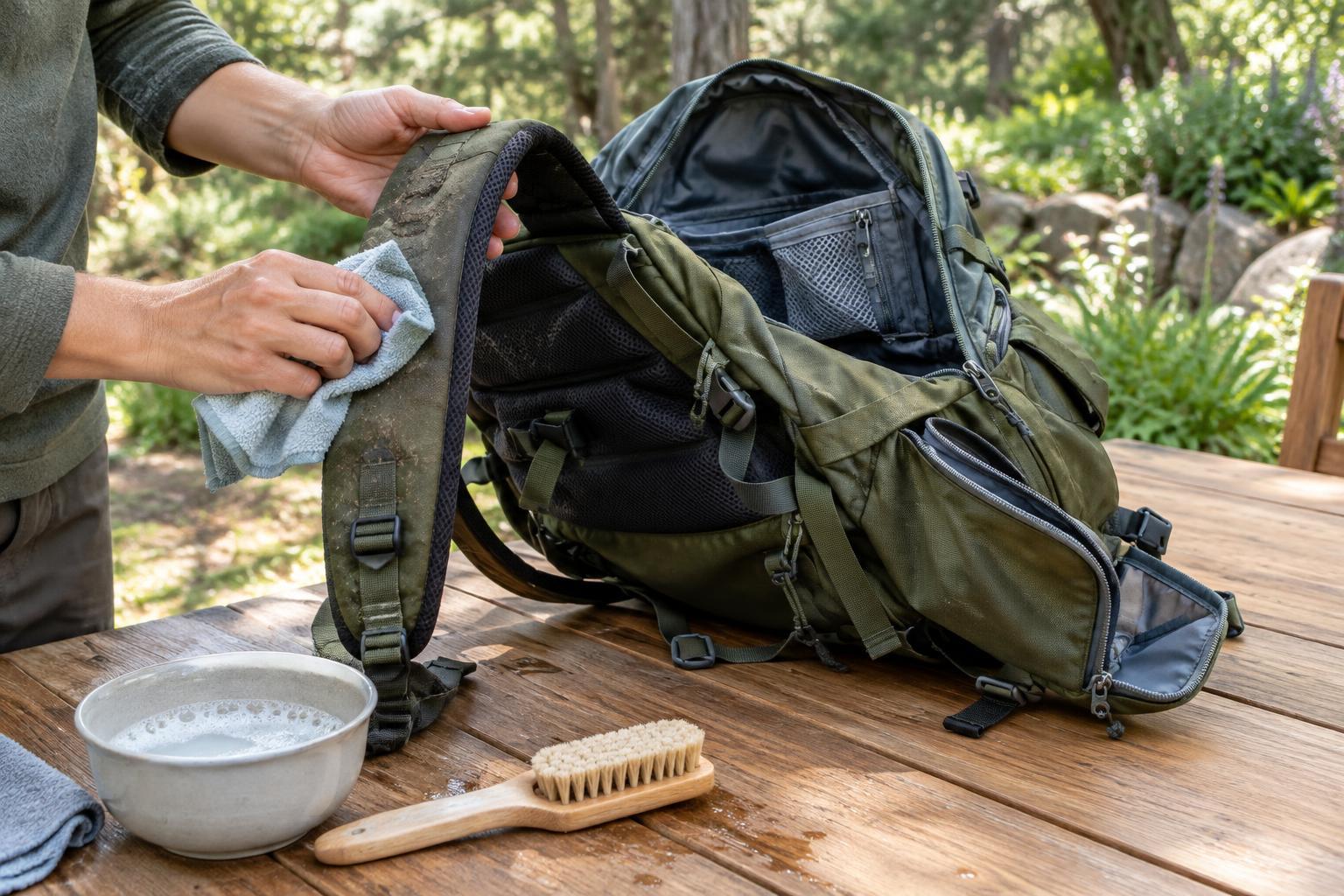
For most routine cleaning, use lukewarm water, a soft cloth or sponge, and a small amount of mild liquid soap. A cleaner made for technical outdoor gear may also be suitable if its directions include backpacks. Use only enough soap to lift the dirt: leftover cleaner is difficult to rinse from thick padding and may leave the fabric feeling stiff.
Skip bleach, fabric softener, strong stain removers and solvents. They may affect coatings, adhesives, buckles or fabric finishes. Avoid abrasive brushes and scouring pads, even on stubborn marks. Before treating a visible stain, test your chosen cleaner on an inconspicuous area and let it dry so you can check for discoloration.
Wash by hand, focusing on the dirtiest areas
Spot-cleaning is often enough after a day trip. Dampen the dirty area, gently work in a little diluted soap, and wipe it away with a clean, damp cloth. Pay particular attention to shoulder straps, the back panel and the hip belt, where body oils and sweat collect. Blot rather than grind at dirt, especially on fabric with a tacky or flaky inner coating.
If the whole pack needs washing and its instructions allow it, use a bathtub, large sink or basin. Wet the pack with lukewarm water and clean it by hand, using a sponge to reach the main compartment and pockets. You do not need to leave it soaking for a long time. Support the pack as you move it so a wet, heavy body does not pull unnecessarily on straps or seams. A washing machine can put more stress on padding, frame parts and hardware than hand washing, so use one only if the manufacturer specifically permits it.
Rinse with clean water until no soap remains. Run water through pockets and gently press padded areas to release suds; avoid forcefully wringing the pack. If a mark remains, another gentle pass is safer than escalating to a harsh product. Cleaning will not repair a peeling inner coating or loose seam tape, and aggressive scrubbing can make either problem worse.
Air-dry every pocket and padded section
After rinsing, let excess water drain, then blot the pack with a towel. Hang or prop it where air can move around it, with compartments open and zippers unfastened. Position the pack so water does not collect in the bottom of pockets. If the shoulder straps or back panel are thick, turn the pack occasionally to expose both sides to airflow.
Choose a shaded, ventilated place rather than a radiator, tumble dryer, hair dryer or prolonged direct sun. High heat can damage coatings and plastic components, while strong sunlight may fade fabric over time. Drying may take longer than it appears from the outside: feel inside pockets, under the lid and along padded seams before putting the pack away. Storing it while damp can encourage musty odors and mildew.
Check the finish and store it ready for next time
Once the pack is fully dry, check that zippers move freely and that straps, buckles and seams are in good condition. If water no longer beads on the outer fabric, cleaning may have removed dirt that interfered with its finish, but it cannot restore a worn-out treatment by itself. If you decide to apply a water-repellent product, choose one intended for the pack’s fabric and follow both the product and pack instructions. An outer treatment does not make an ordinary backpack reliably waterproof; a liner or dry bag remains useful for items that must stay dry.
Store the clean pack loosely, with pockets open if practical, in a dry place away from sustained heat. Between deeper washes, empty it after each trip, brush off dried mud and wipe sweaty straps. Small cleaning habits reduce the need for repeated full washes and are kinder to the materials that help your backpack last.