Decide whether it needs a full wash
A sleeping bag does not need a full wash after every trip. If it smells fresh and has only a few marks, spot cleaning is usually the gentler choice. Wipe dirt from the outer fabric with a damp cloth, using a small amount of cleaner suitable for the bag if needed. Pay particular attention to the hood and collar, where skin oils tend to collect. Let the cleaned areas dry fully before packing the bag away.
For a bag that smells stale, feels grimy throughout or has noticeably lost loft, a full wash may help. First, read its care label. The label is your guide to water temperature, permitted detergents and drying methods; the steps below should never override it. Check for loose stitching or small tears, too. Washing can put extra strain on damaged fabric, so repair what you can before starting.
Choose a gentle cleaner and a roomy washer
Down and synthetic insulation have different care needs. If the label allows machine washing, choose a cleaner intended for the bag’s insulation type and follow its dosing directions. Avoid bleach and fabric softener unless the manufacturer specifically permits them. Too much detergent can be difficult to rinse out, so adding extra is not a shortcut to a cleaner bag.
A large front-loading washer, or another machine without a central agitator, gives the bag room to move without winding it tightly around a post. If your home machine is too small, consider a larger suitable machine rather than forcing the bag inside. Close zippers and fasten any hook-and-loop tabs so they are less likely to catch on the fabric. Use the gentle cycle and the water temperature specified on the care label.
Wash and rinse without twisting
If machine washing is allowed, run the selected cycle and consider an extra rinse when permitted, especially if you can still see suds. Handle the bag carefully when the cycle ends: wet insulation and fabric can be surprisingly heavy. Support the bag from underneath with both arms or a laundry basket instead of pulling it by the hood, zipper or one corner.
Hand washing is an option only if you have a clean tub, enough space and a practical way to dry the bag afterward. Fill the tub according to the care instructions, mix in the appropriate cleaner and gently press water through the bag. Drain, refill and press again until the rinse water is clear. Do not wring or twist it. Press out excess water while supporting the bag; a heavy, dripping bag is harder to move and may strain its seams.
Dry it completely and restore its loft
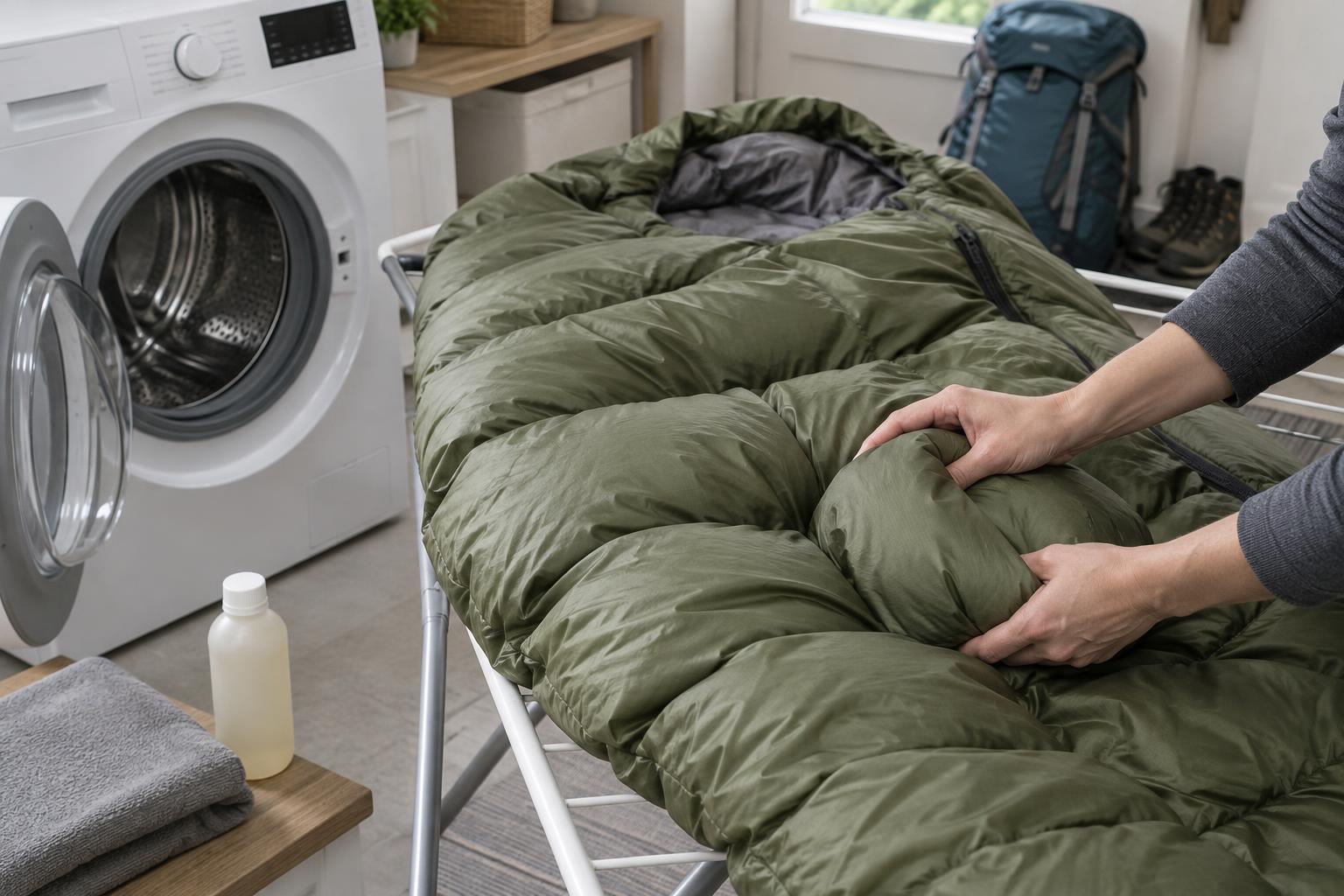
Drying deserves as much attention as washing. If the care label permits tumble drying, use a roomy dryer on the recommended setting, often low heat, and check the bag regularly. Gently separate any clumps you can feel. If appropriate for the bag and dryer, clean dryer balls can help loosen insulation as it tumbles. Avoid high heat as a way to speed things up; some shell fabrics and components may be sensitive to it.
A bag can feel dry on the outside while its insulation remains damp. Before putting it away, check the thickest areas and seams by touch, and make sure the filling feels evenly distributed. Down in particular may need repeated drying and checking before its loft returns. If the label calls for air drying, lay the bag flat where air can circulate, turn it periodically and allow ample time. Never store it while any part still feels damp.
Keep the next wash further away
Small habits can reduce the need for frequent deep cleaning. Air the bag out after trips, shake loose grit from the interior and let any condensation dry before storage. Clean clothing or a washable sleeping bag liner can also limit contact between skin oils and the bag. Spot-clean new marks before they become harder to remove.
For long-term storage, follow the maker’s guidance. Many bags benefit from being kept loose rather than compressed into a tight stuff sack, provided the storage space is clean and dry. On your next trip, compress the bag for travel and unpack it when you reach camp. Gentle cleaning, thorough drying and sensible storage all help the insulation keep doing its job.