Set your pace before the path gets steep
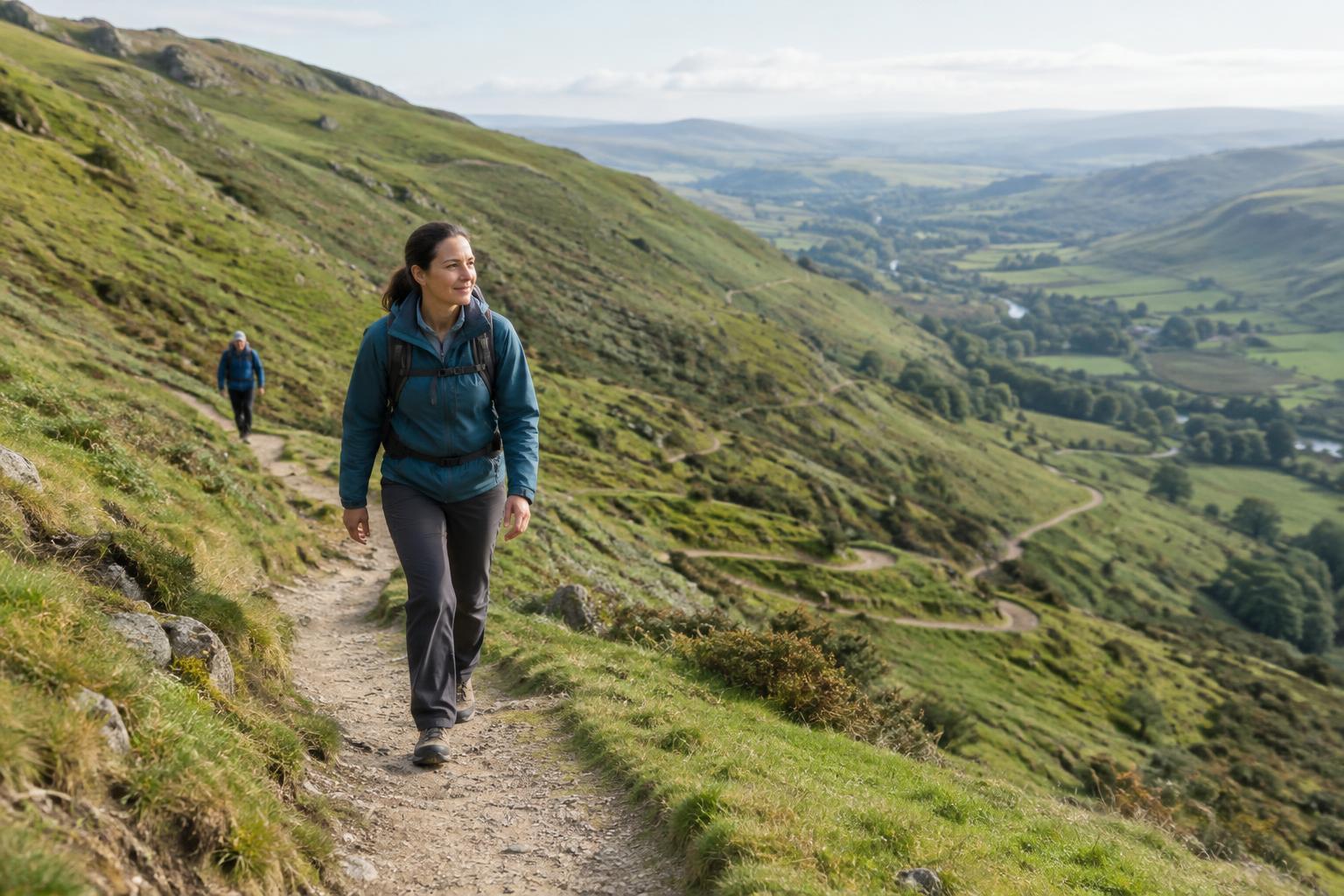
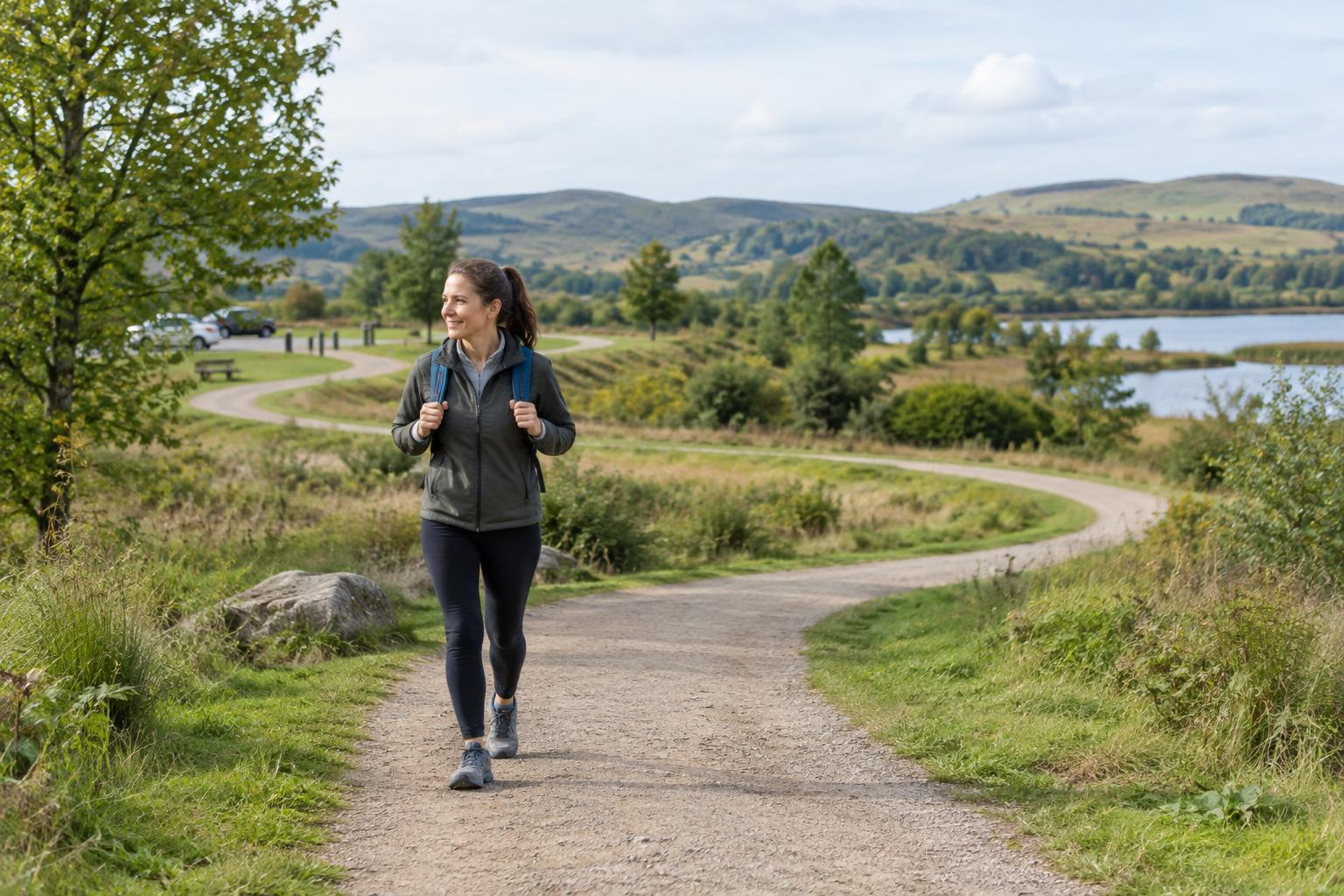
A comfortable descent starts before your first steep step. Pause where the ground is level, look ahead and notice whether the path is firm, muddy, rocky or covered in loose gravel. Check where it bends and whether there is room to stop safely. If the slope looks more demanding than expected, slow down early rather than waiting until momentum makes it difficult to do so.
Shorter steps usually give you more control than long strides. Keep your knees relaxed and aim to place each foot deliberately, with your weight balanced over it. Avoid leaning far back: although it may feel reassuring, it can make your feet slide forward and turn each step into a jolt. A slight forward position from the ankles, without pitching your upper body down the slope, often feels steadier. Let the terrain set your speed, not the pace you kept on flatter ground.
Choose a stable line and place your feet carefully
Look a few steps ahead to choose a line, then glance down as needed to check each foothold. On a worn path, the middle may be polished, rutted or covered with loose stones; a firmer edge can sometimes offer better footing. Stay on the established trail, though, rather than cutting across vegetation to avoid a difficult patch. If the route has built steps, use them at a pace that lets you land without dropping heavily onto the next one.
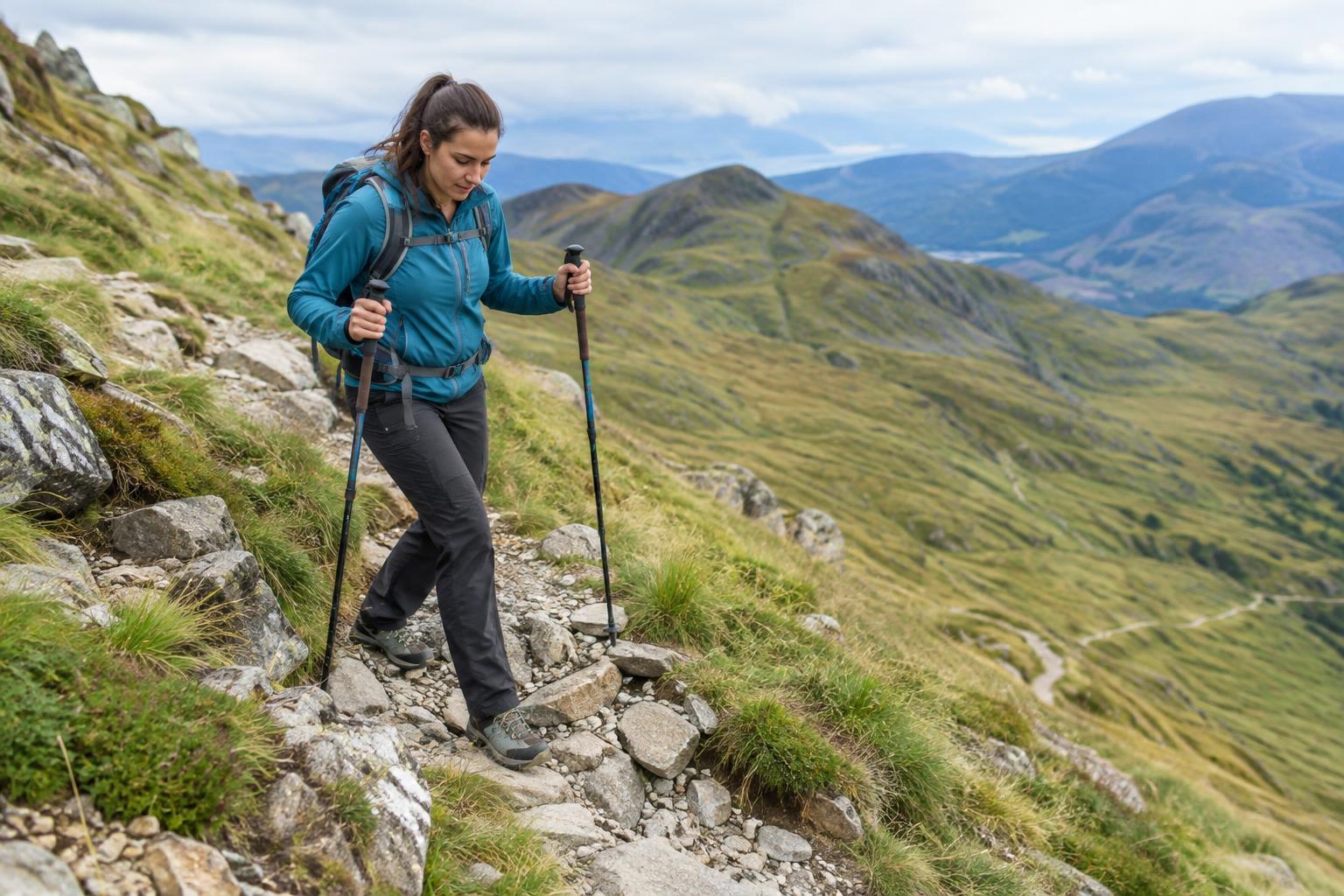
Try to put your whole foot on secure ground instead of reaching downhill with only your toe or heel. On uneven rock, test a foothold before fully committing your weight. Loose gravel calls for especially small steps: assume individual stones may move, and avoid sudden changes of direction. Where the path allows it, a gentle zigzag can reduce the angle of descent. On narrow trails, sharp bends or exposed ground, follow the safe walking line rather than forcing a zigzag.
Use your body and equipment to reduce strain
Keep your arms free enough to help with balance. If you carry a daypack, tighten its straps so it sits close to your back instead of swaying with each step. Check that your footwear is laced securely, particularly around the midfoot and heel, while leaving enough room for your toes. Feet that slide forward inside a boot or shoe can become uncomfortable quickly on a long descent.
Trekking poles can provide extra points of contact, especially on sustained slopes, but they work best when you place them deliberately rather than leaning your full weight onto them. Shorten them if their usual length makes planting them awkward downhill, and keep their tips clear of cracks where they could catch. On terrain where you need your hands for a handhold, put the poles away. No piece of equipment replaces a pace and route that feel manageable underfoot.
Break a long descent into smaller efforts
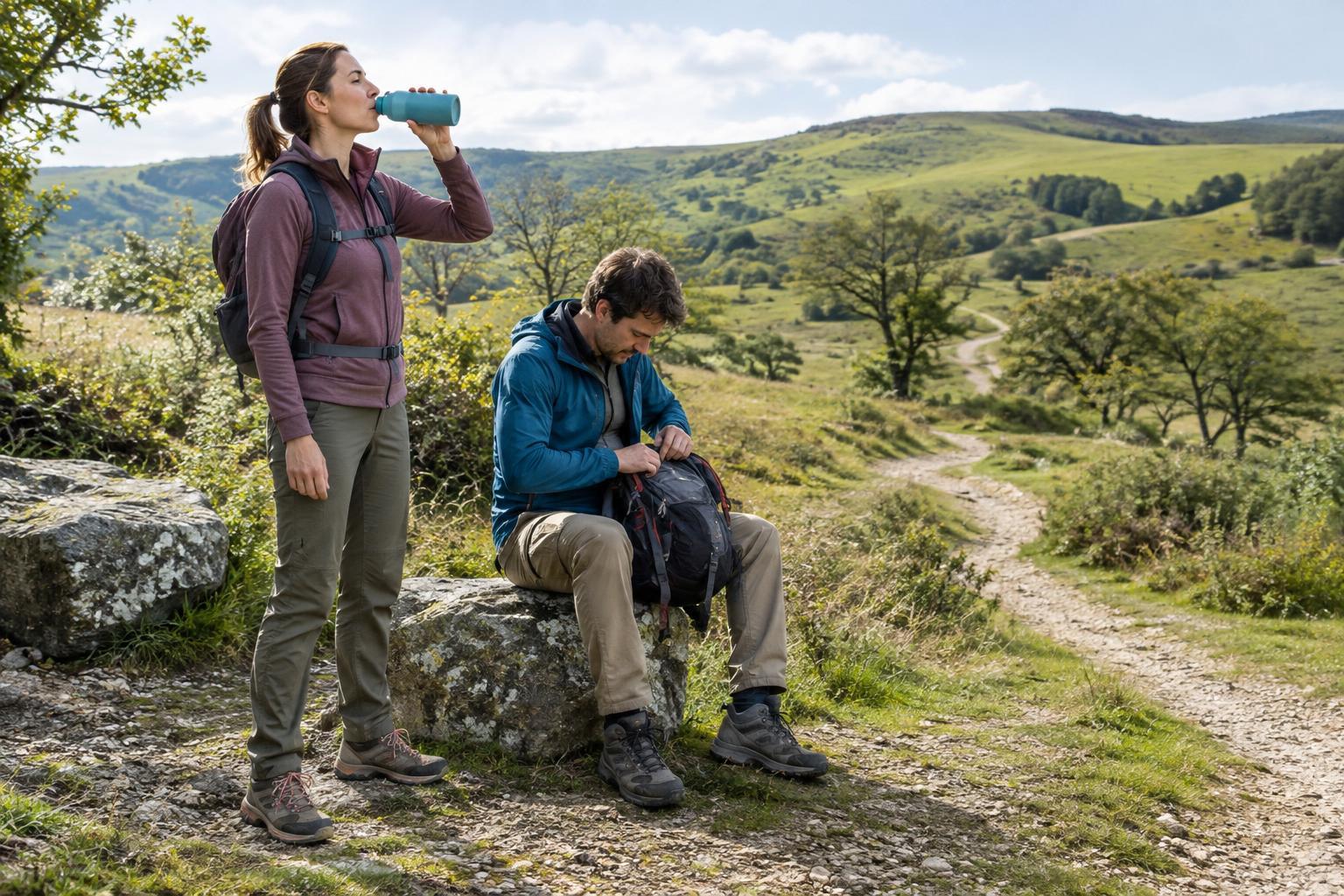
Descending uses your legs differently from walking uphill, and fatigue can make careful foot placement harder. Take brief pauses on broad, stable sections of trail, ideally before your legs feel unsteady. Use the stop to loosen your stance, drink some water and reassess what lies ahead. Avoid stopping in the middle of a narrow or slippery section if you can reach a safer spot without rushing.
If one part of the slope feels particularly steep, focus on reaching the next secure place to stand rather than thinking about the entire descent. Give walkers ahead room so you are not pressured to match their speed or forced to brake suddenly. If others are behind you, let them pass where the trail is wide and safe. A steady rhythm with planned pauses is often more comfortable than alternating between hurried steps and abrupt stops.
Know when to change the plan
Conditions can change how a familiar descent feels. Wet roots, mud, fallen leaves and loose stones may hide reliable footholds, while poor visibility makes it harder to read the path. If you cannot see a safe next step, stop somewhere secure and take another look. It is reasonable to turn back, choose an easier trail or wait for a companion rather than pushing down a slope that feels beyond your footing.
For future walks, note which surfaces and gradients felt comfortable and which demanded more time. Plan routes with enough daylight and energy for the return journey, not just the outward walk. With practice, a steep path becomes less about fighting gravity and more about making a series of small, balanced decisions—one secure step at a time.