Plan for climbing, not just distance
A hilly route asks more of you than its distance alone suggests. Before setting out, look at the route’s total ascent, where the steep sections fall, and whether the return follows the same path. A long climb near the start may feel very different from one after several hours of walking. Rough ground, steps, mud and exposed paths can also slow progress, so treat any estimated walking time as a guide rather than a deadline.
Choose a route that leaves room for pauses and a comfortable return before daylight fades. Check the forecast and note places where you could shorten the walk if needed. If you are walking with others, plan around the person who is likely to need the most time. A shared pace makes the day more enjoyable than repeatedly rushing to catch up.
Start easier than you think you need to
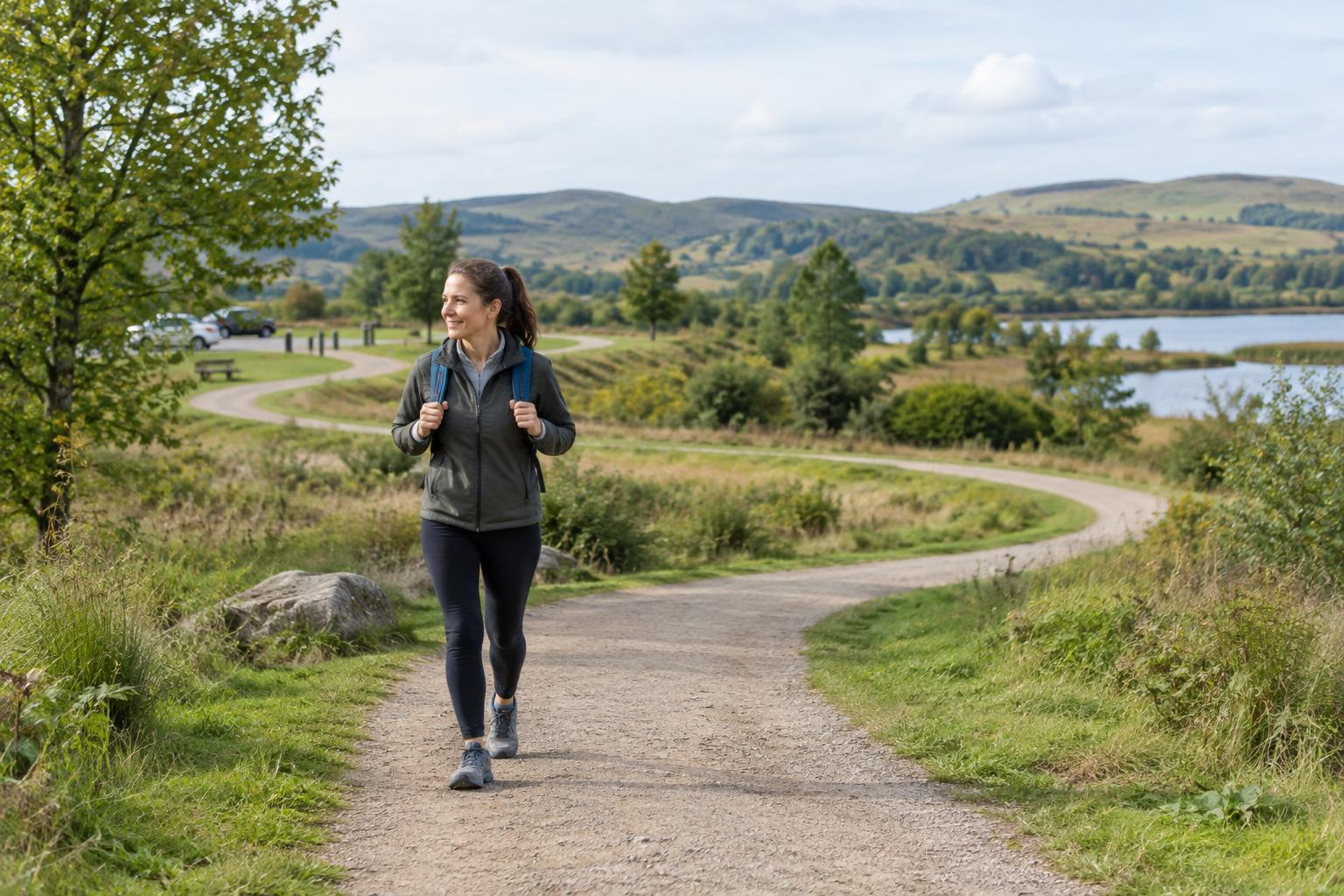
The beginning of a walk is a useful time to settle in, not to prove how fast you can go. On gentle ground, walk at a pace that lets you talk comfortably. When the path rises, shorten your stride and keep your steps regular. You may move much more slowly uphill than on the flat; that is normal. Trying to hold the same speed often makes a climb feel harder than it needs to.
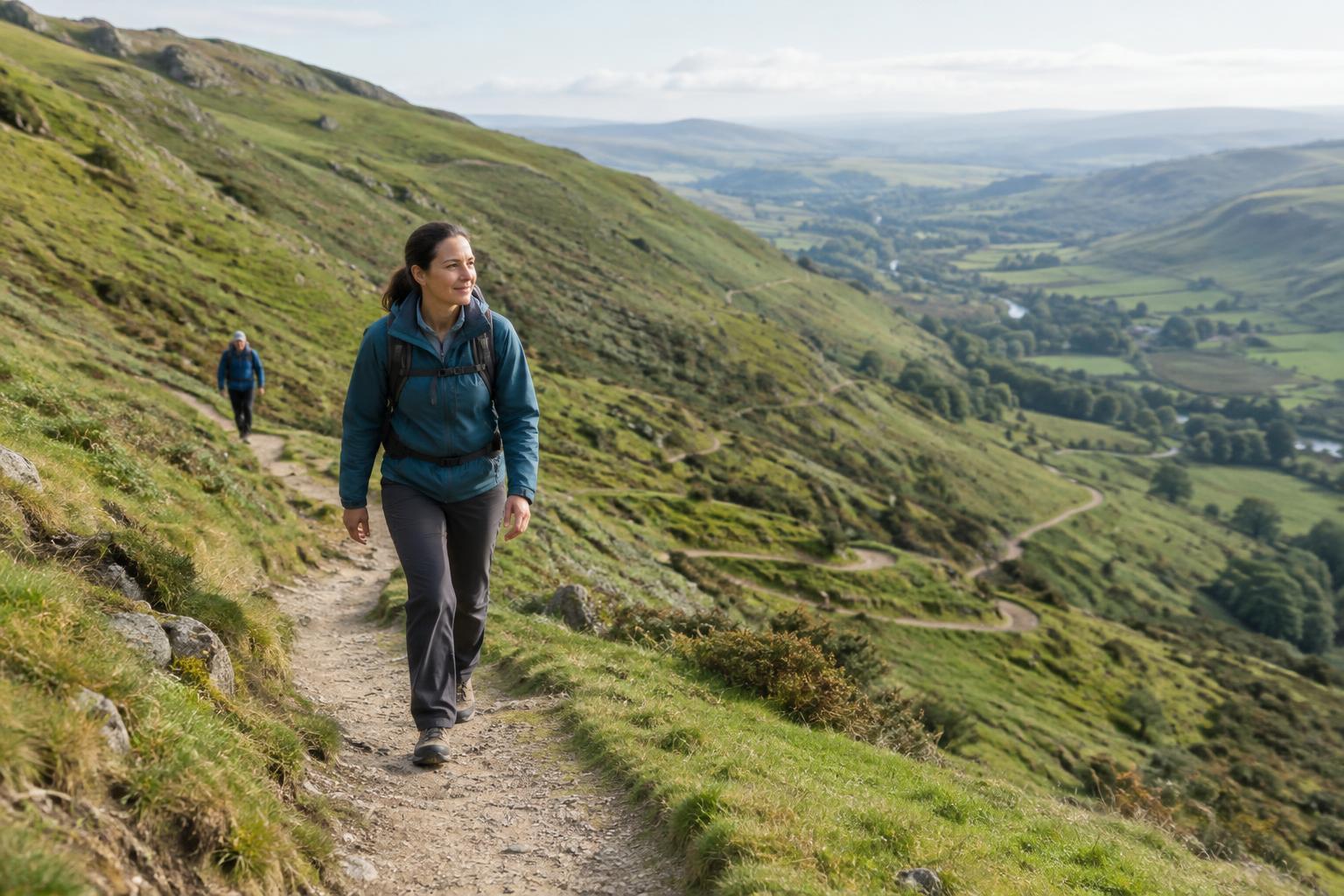
On a sustained ascent, aim for an effort you can maintain rather than alternating between a fast push and a long recovery. If you are breathing too hard to speak in short sentences, ease off. A brief pause to look around or adjust a layer can help, but you do not need to stop at every bend. Give yourself time to find a rhythm before deciding whether the climb is too demanding.
Use breaks to stay comfortable
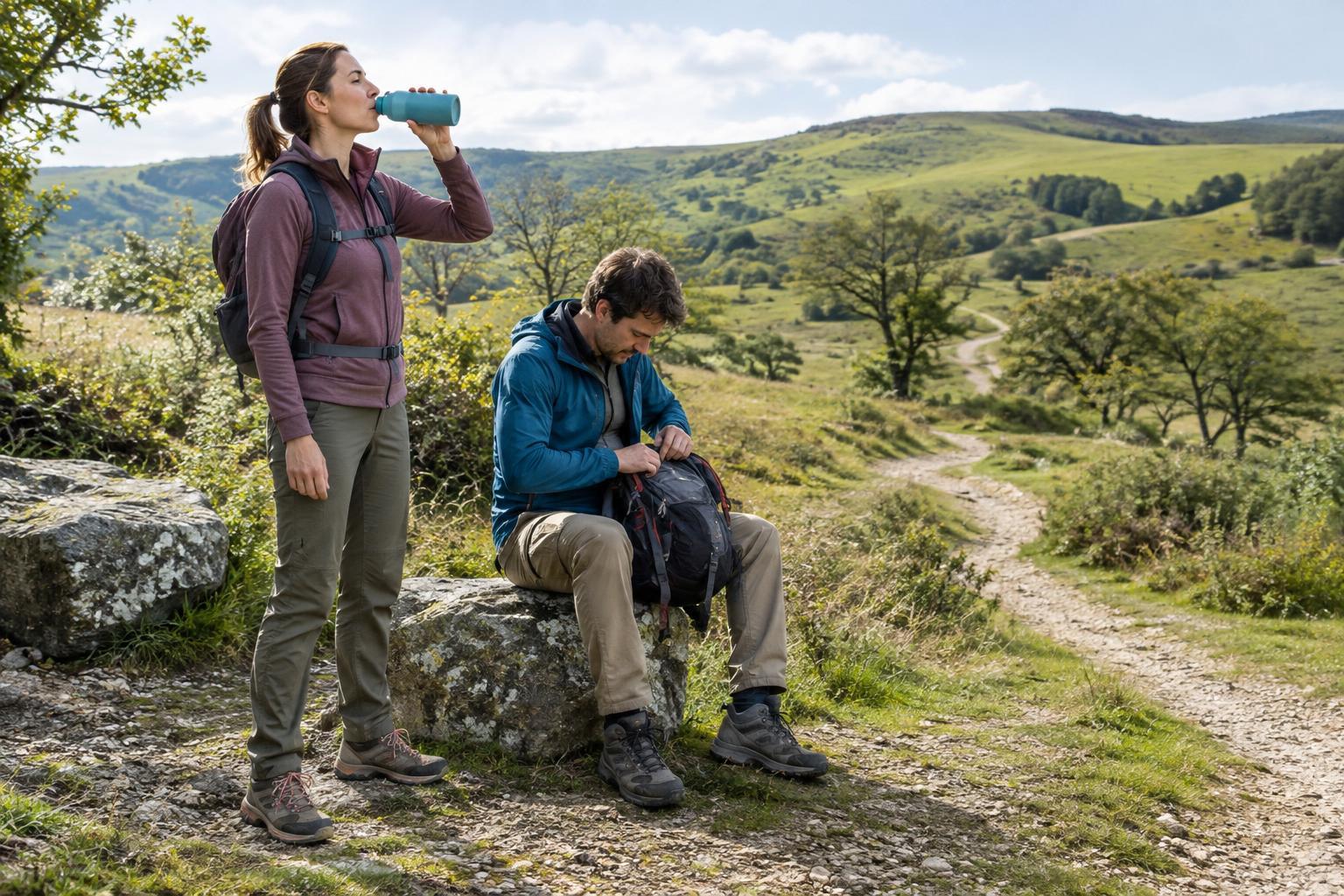
Small, well-timed breaks can be more useful than waiting until you feel exhausted. Stop somewhere safe and clear of the path to drink, have a snack, check the route or deal with a rubbing shoe. If you are getting warm on the climb, adjust a layer before you become uncomfortably sweaty; put it back on when you stop or reach a windy spot. These simple changes can make it easier to keep moving steadily.
Breaks also offer a chance to reassess the day. Notice how everyone is feeling, how quickly you are moving and what still lies ahead. If progress is slower than expected, shorten the route or turn back while you still have energy to spare. Reaching a planned viewpoint is satisfying, but it is not worth turning the walk home into a struggle.
Save energy for the way down
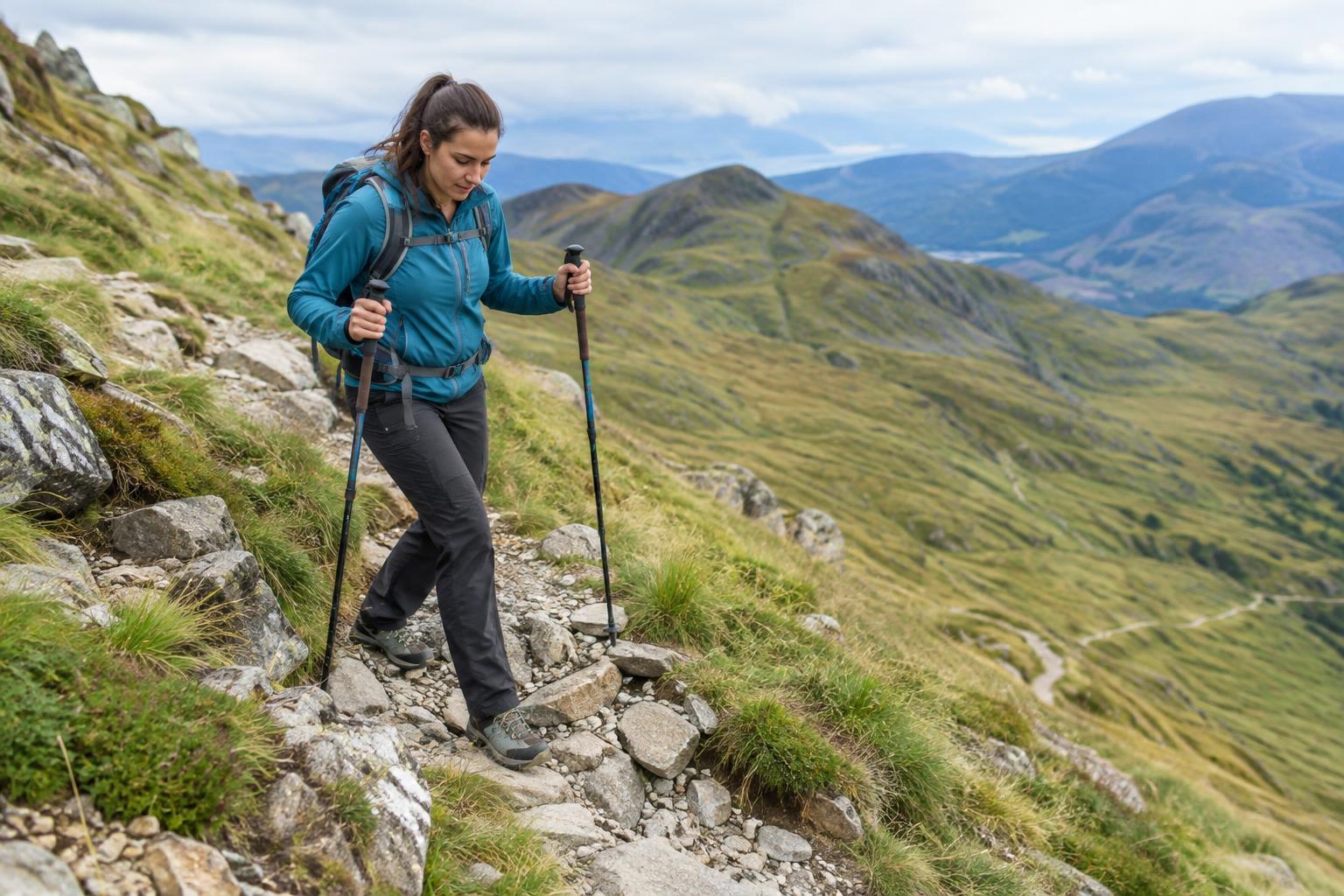
A summit or high point is often only the halfway point of the effort. Descending can be tiring, especially on loose stones, wet grass or repeated steps. Resist the urge to rush simply because the path points downhill. Take controlled steps, keep your attention on the ground ahead and slow down where footing is uncertain. If you use walking poles, practise adjusting and placing them before relying on them on a steep section.
Continue drinking and eating as suits the length of your walk, rather than treating the descent as an afterthought. Take a short pause if your legs feel shaky or your concentration is fading. The pace that gets you home comfortably is a better measure of the day than the time it took to reach the top.
Let the route set the rhythm
Pacing is not about maintaining one speed from start to finish. It means adapting to the slope, surface, weather and people with you while keeping enough in reserve. Move easily on straightforward sections, give climbs the time they require and take particular care on descents. If conditions change, change the plan rather than trying to make up lost time.
After the walk, think about where you felt comfortable and where you began to tire. That experience can help you choose a suitable route and start at a better pace next time. With a flexible plan and a steady approach, a hilly day walk can feel like an enjoyable journey rather than a race to the top.