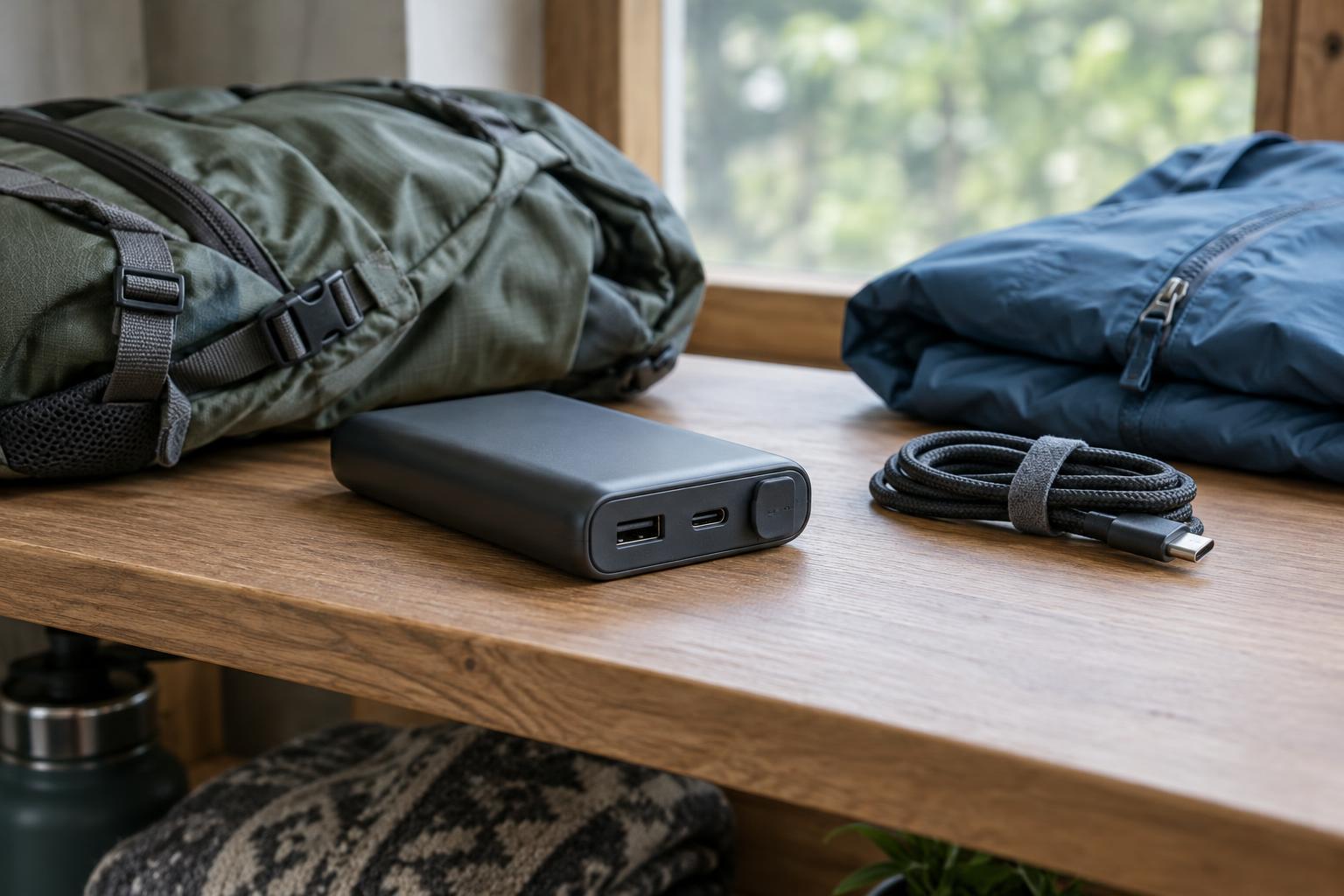
Put it away partly charged
When you get home from a trip, resist the urge to leave your power bank empty until you need it again. Rechargeable batteries gradually lose charge while stored, and a bank left nearly empty for a long time may not be ready when you reach for it. Storing it at 100 percent charge for months is not ideal either, particularly if it will also be exposed to heat.
For many lithium-ion power banks, a charge around the middle of the displayed range is a practical starting point for storage. You do not need to measure it precisely: roughly half charged is a useful rule of thumb. If your power bank’s instructions give a different storage recommendation, follow those instead. Switch it off if it has a power switch, and disconnect phones, lamps and other devices so they cannot quietly drain it.
Choose a cool, dry place
A shelf or drawer inside your home is usually a better long-term spot than a car, garage or windowsill. Heat can be hard on batteries, while very cold conditions can temporarily reduce how much power they deliver. Cars and outbuildings may experience wide temperature swings even when they seem convenient for storing trip gear. Keep the power bank out of direct sunlight and away from radiators or other heat sources.
Dry storage matters too. Do not put a damp power bank straight into a sealed pouch after a rainy walk. Wipe its exterior with a dry cloth and let the ports and case dry thoroughly before storing it. Avoid placing it in a refrigerator or freezer to keep it cool; condensation when it warms up can introduce moisture where you do not want it.
Protect the ports and prevent damage
Store the power bank where it will not be crushed under boots, cookware or other heavy equipment. A small pouch can keep grit out of the ports and protect the case from scratches. If you carry it alongside loose metal objects such as keys or coins, use a separate pocket or pouch so the connectors are less likely to be damaged or accidentally bridged.
Before putting it away, unplug the charging cable and check both ends for bent connectors, fraying or dirt. Coil the cable loosely rather than winding it tightly around the power bank. If a port needs cleaning, follow the manufacturer’s guidance; pushing a metal object into a connector can cause damage. Keeping a known-good cable with your trip kit is helpful, but storing it separately from the power bank avoids pressure on the port.
Check it occasionally, then prepare for departure
A power bank does not need constant attention in storage, but it should not disappear into a bag indefinitely. Check its charge indicator every few months, and recharge it toward the middle of its range if it has dropped low. The right interval depends on the model and storage conditions, so treat this as a reminder rather than a strict schedule. If the indicator is unclear, a short test with a device can help confirm that the bank still supplies power.
Before a trip, charge the bank to the level you expect to need and test your cable and charging ports. Give yourself enough time to notice a problem rather than discovering it at the trailhead. If you plan to fly, check your airline’s current rules for carrying power banks; requirements can differ, and they may need to travel in cabin baggage.
Know when to stop using it
Storage habits cannot fix a damaged battery. If the case swells, splits, leaks or develops an unusual smell, stop using and charging the power bank. The same caution applies if it becomes unusually hot during ordinary use or charging. Keep it away from flammable items and seek the manufacturer’s advice or a suitable local battery recycling service for safe handling. Do not put a damaged power bank in household trash.
For an undamaged power bank, the routine is simple: leave it partly charged, store it indoors in a dry spot, protect its ports and check on it now and then. That small amount of care makes it easier to pack with confidence when the next day trip comes around.