Start with the time you want to be back
A turnaround time is the latest time you will stop moving away from your starting point and head back. It is useful on an out-and-back trail, where there may be no natural endpoint, but the same idea helps when you are deciding whether to continue toward a viewpoint or take an optional side path. Set the time before you start, rather than waiting until the walk feels half finished.
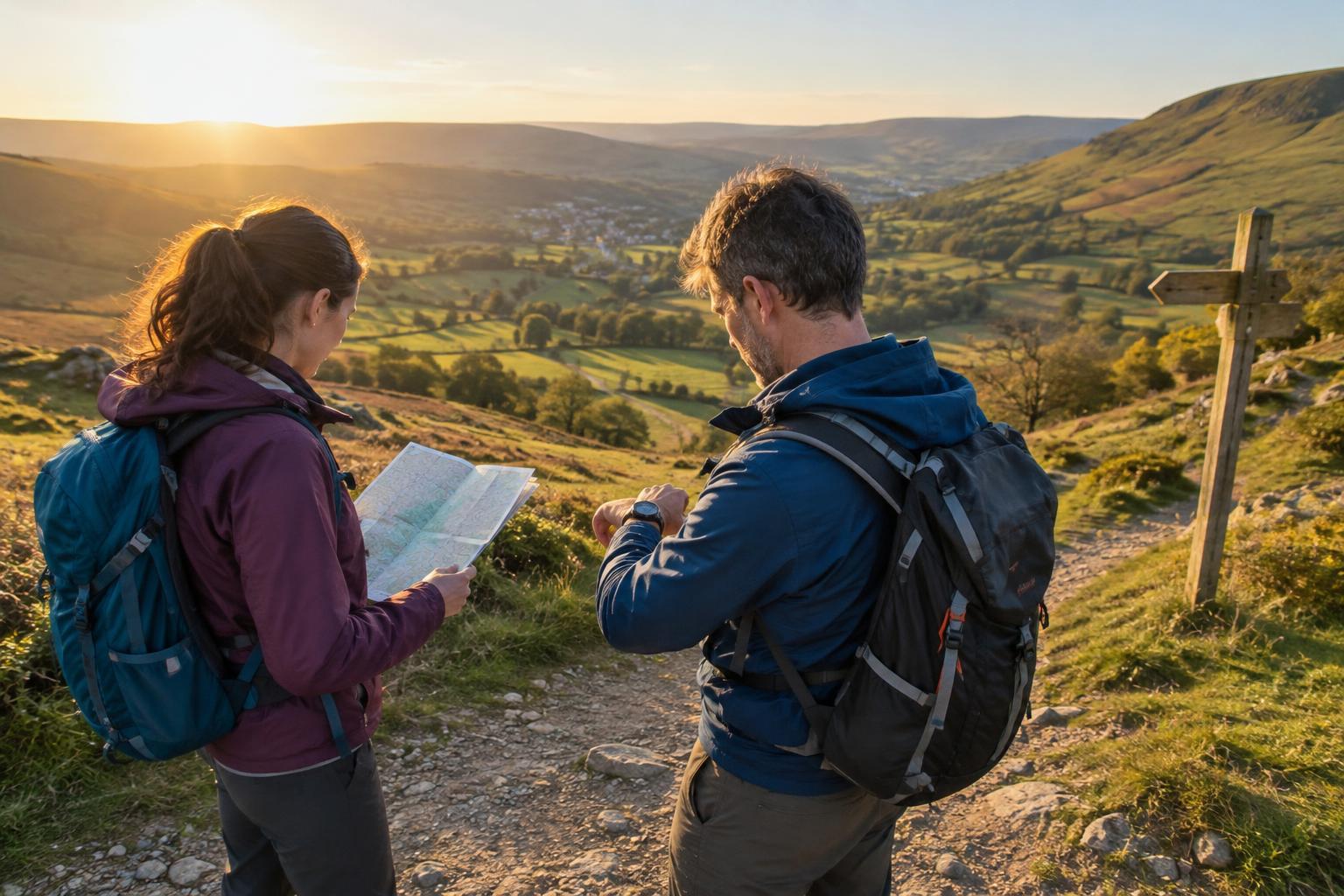
Check the sunset time for the place and date of your walk, then choose a target arrival time that is comfortably earlier. Sunset is not a good deadline for reaching the car or trailhead: a shaded path, woodland or valley may become difficult to see sooner than an open hilltop. Leave extra daylight for finding the trail, dealing with a delay and finishing without a rush. The amount of margin depends on the route, your group and the conditions, but it should be a deliberate part of the plan.
Work backward from your return journey
Estimate how long the walk back will take from the farthest point you expect to reach. Distance matters, but so do steep ground, uneven surfaces, stream crossings, navigation decisions and tired legs. A downhill return is not always faster, especially where loose or slippery footing calls for care. If you have walked the route before, your own experience is more useful than a pace borrowed from someone else.
Subtract your estimated return time from your target arrival time. The result is your turnaround time. For example, if you aim to finish by 5 p.m. and expect the return to take two hours, turn back no later than 3 p.m. If you have not allowed for breaks, add that time to your return estimate or plan to take them before the turnaround. Treat the calculation as a limit, not a promise that you will reach a particular landmark.
Check your estimate while you walk
A plan made at home is only a starting point. Note when you leave and check your progress at useful landmarks, such as a junction or bridge. If the first section takes longer than expected, revise the rest of the walk rather than assuming you will make up time later. Poor visibility, muddy ground, frequent stops or a group member who needs a slower pace are all reasons to turn around earlier.
It helps to set a second limit for a destination you would like to reach. For instance, decide that you will continue toward the viewpoint only if you reach a particular junction by a chosen time. Otherwise, enjoy the section you have walked and head back. This makes the decision easier in the moment, when a destination that seems close can be tempting to chase.
Make the return easy to follow
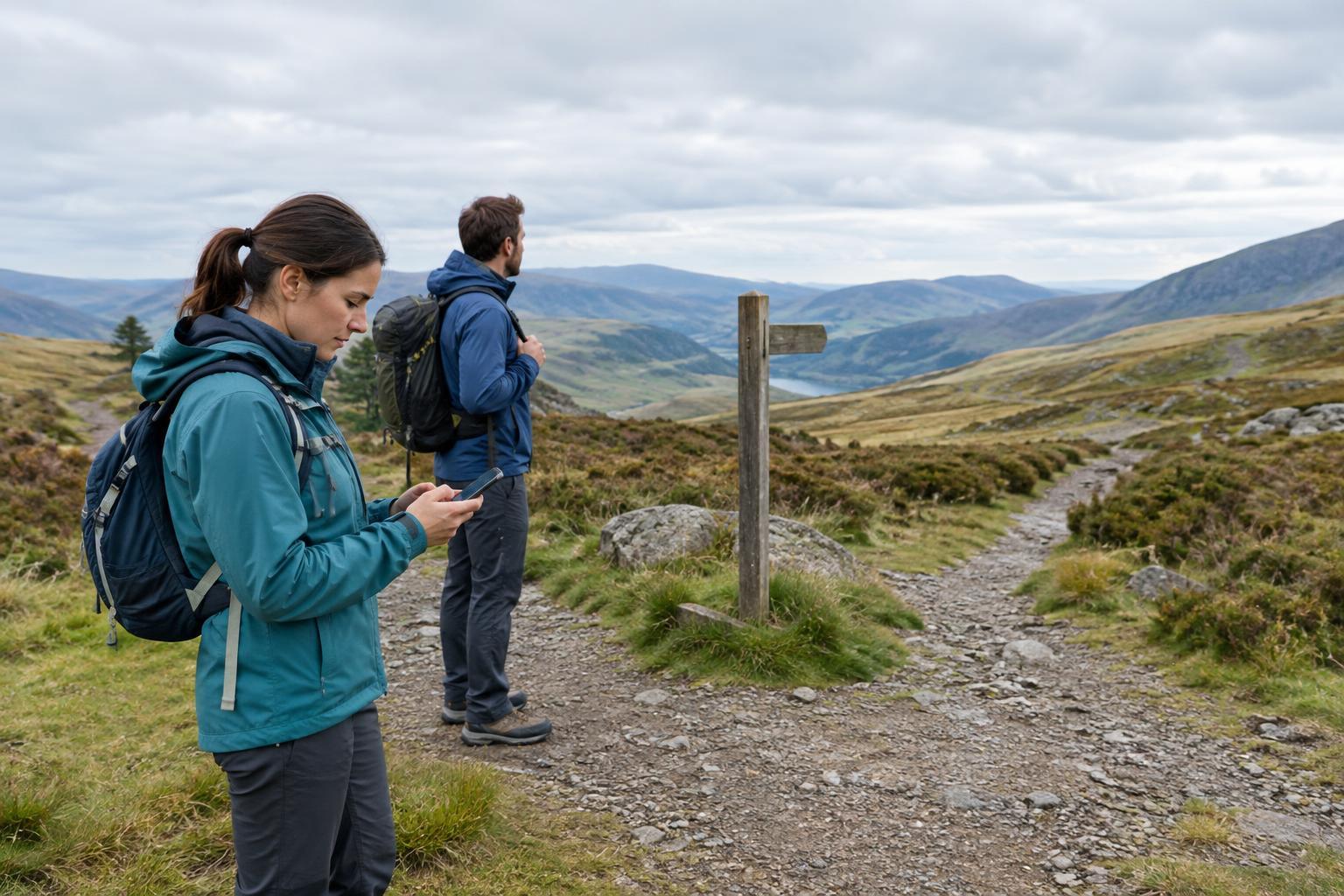
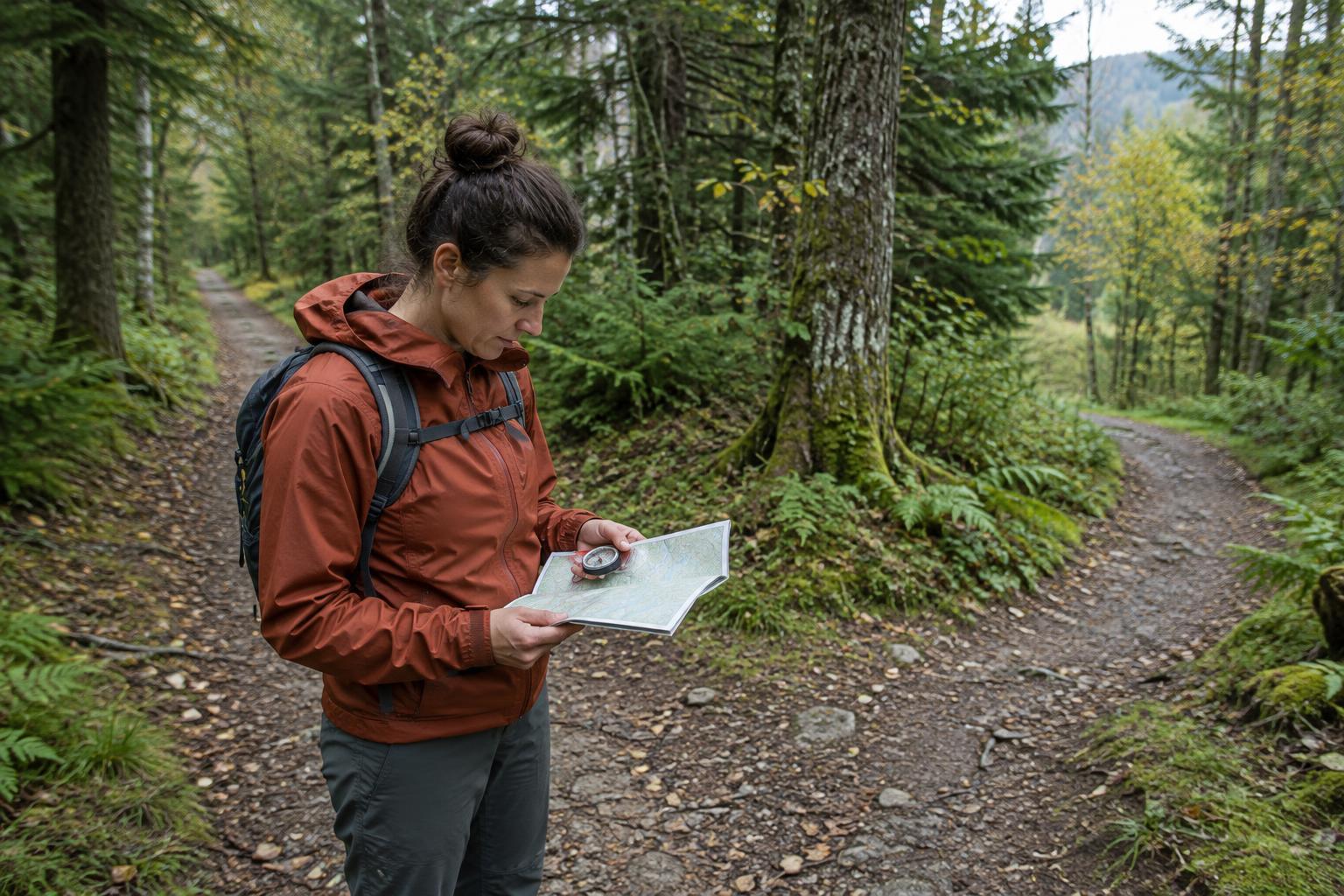
Before setting out, look over the full route, including the way back. An out-and-back walk can still be confusing where paths split or a trail looks different from the opposite direction. Carry a suitable map or downloaded route and know how to use it; do not rely on a phone having power or signal throughout the day. Notice junctions as you pass them, and pause to confirm the return route when needed.
Take a headlamp or other dependable light even when you expect to finish in daylight. It is a backup for an unexpected delay, not a reason to extend the walk. Clothing suited to changing conditions, water and a way to keep your phone charged can also make a slower-than-planned return more manageable. Let someone know your intended route and expected finish time when appropriate.
Be willing to turn around early
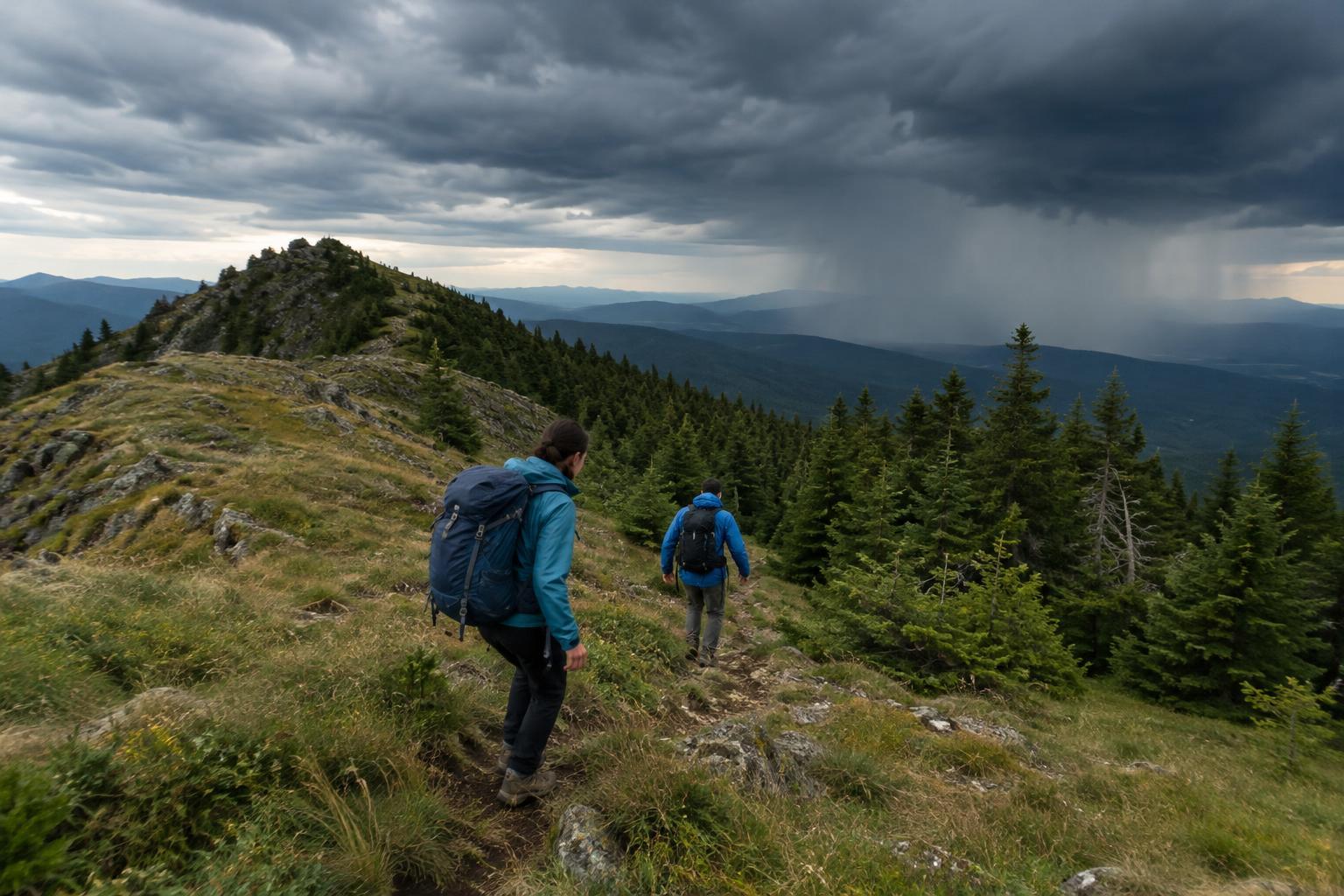
The turnaround time is the latest sensible point to head back, not a goal to reach at all costs. Turn around sooner if the route is harder to follow than expected, the weather worsens, someone feels unwell or the group is using daylight faster than planned. If you are already behind schedule, stop and reassess promptly instead of pressing on to the next landmark.
A satisfying walk does not depend on reaching the farthest possible point. Choosing a comfortable finish leaves room to enjoy the return and makes it easier to plan another outing with a better sense of your pace. The simple habit is to decide when you need to be back, allow enough time for the return, and keep checking whether the day still matches the plan.