Why a walk can turn cold faster than expected
Hypothermia occurs when the body becomes dangerously cold. It is not limited to snowy days or remote mountains. A wet jacket, a strong wind, a long pause or a slower-than-planned return can make an ordinary walk harder to manage. Someone who is tired, hungry or wearing damp clothing may have less capacity to stay warm.
The useful question on a walk is not whether the weather seems cold enough for hypothermia. It is whether a person is getting colder and beginning to act differently. Notice how companions look and speak as well as how they feel, particularly after rain, a stream crossing or a stop in an exposed place.
Notice the first changes
Shivering is a common warning sign. A walker may also say they feel unusually cold, complain of numb fingers or struggle with simple tasks such as closing a zip, handling a map or putting on gloves. Their pace may slow, and they may become clumsy or unusually quiet.
Changes in thinking and mood deserve attention too. A person who is normally decisive may seem distracted, irritable or confused about the route. They might give short answers or insist they are fine while having trouble following a simple plan. These signs can have other causes, but on a cold or wet walk, it is safer to treat them as a reason to stop and check.
Do not rely on shivering alone. As a person becomes more seriously cold, shivering may weaken or stop. Increasing confusion, marked drowsiness, slurred speech, poor coordination or difficulty walking are urgent warning signs.
Respond while the person is still alert
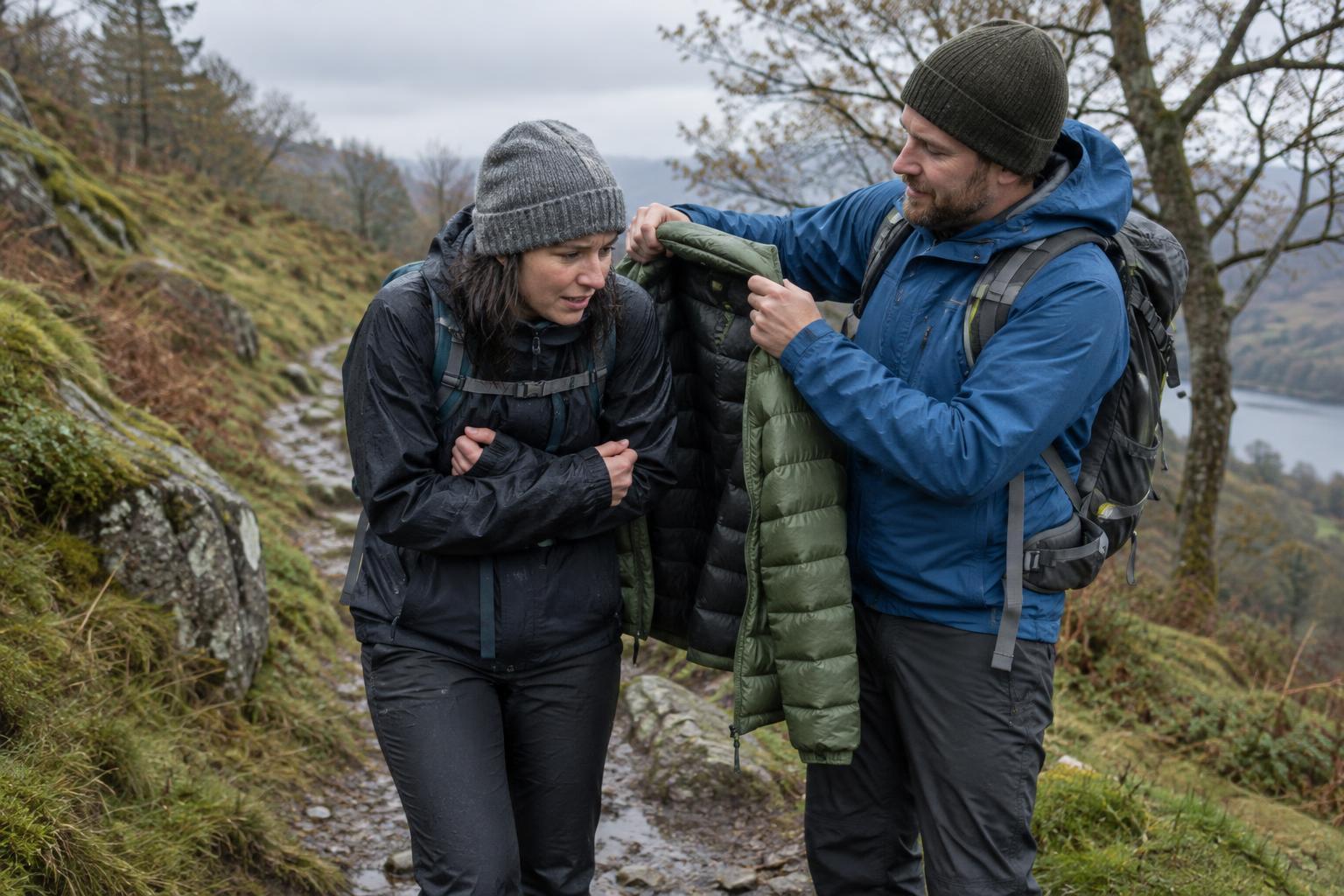
Stop in a sheltered spot rather than pushing on to the next viewpoint or hoping movement will solve the problem. Get out of wind and rain if you can do so safely. Replace wet layers with dry ones, add insulation around the head and body, and put a barrier between the person and cold ground. A spare fleece, waterproof layer or packed clothing can help reduce further heat loss.
If the person is fully alert and can swallow normally, offer a warm, non-alcoholic drink and a snack if available. Help them warm up gradually. Avoid alcohol and do not rub cold skin or put intense heat directly against it. Check whether anyone else in the group is getting chilled while you decide on the safest way back.
Keep observing the person. If they do not improve, cannot manage the walk out or show signs of worsening confusion or coordination, seek help rather than attempting a difficult return unaided.
Know when to get emergency help
Call local emergency services if someone is confused, very drowsy, unable to walk steadily, no longer shivering despite being cold, or difficult to wake. Follow the dispatcher’s instructions. If you have no signal, use your group’s agreed emergency plan and seek a connection without leaving the person alone if that can be avoided.
While waiting for help, shelter the person and limit further cooling. Handle them gently, keep them as still as practical and do not give food or drink to someone who is drowsy, confused or unable to swallow safely. If they are unresponsive or not breathing normally, tell emergency services immediately and follow their guidance on first aid.
These signs are a guide for recognizing danger, not a way to diagnose how severe someone’s condition is. When you are unsure, asking for emergency advice is safer than waiting for unmistakable symptoms.
Make early recognition part of your walking routine
Before setting out, pack for the conditions you could meet on the return journey, not just those at the start. Carry a dry insulating layer and a windproof or waterproof outer layer where appropriate. Keep spare clothing protected from rain inside your bag, and plan a shorter route or turnaround point if the weather deteriorates.
During the walk, check in with companions at stops: Are they warm enough? Are their hands working normally? Can everyone follow the route and keep a comfortable pace? Small changes are easier to address before someone becomes exhausted. Recognizing a problem early gives the group more options: add a layer, find shelter, turn back or call for help.