Start with the two jobs a rain jacket has to do
A rain jacket needs to keep liquid water out while allowing some of the moisture produced by your body to escape. These are related but separate jobs. A fabric can resist rain well and still feel clammy during a brisk uphill walk. Conversely, a fabric that releases moisture readily may not be the best choice for hours of wind-driven rain.
Labels often present a pair of figures, such as a waterproof rating followed by a breathability rating. Treat them as starting points for comparison, not guarantees of comfort. Your pace, the weather, the layers underneath and details such as vents can change how a jacket feels more than a small difference between two printed numbers.
What a waterproof rating in millimetres means
A waterproof rating is commonly expressed as a hydrostatic head in millimetres. In a laboratory test, water pressure is applied to a fabric sample until water passes through it. The millimetre figure represents the height of a water column associated with that pressure. In general, a higher figure indicates that the tested fabric can withstand more pressure before leaking.
That pressure matters outdoors. Rain is not the only force against your jacket: shoulder straps press wet fabric against you, and sitting or kneeling can add pressure too. A higher rating can be useful for sustained rain or trips with a loaded pack. For occasional short showers, construction, comfort and whether you will actually carry the jacket may matter just as much.
Check what the number describes. A fabric rating does not automatically cover the finished garment. Water can enter through untaped seams, poorly protected zips, loose cuffs or a hood that does not stay in place. A jacket intended to be fully waterproof should have its seams sealed, and its closures should be designed to shed or block rain.
How to interpret breathability figures
Breathability describes how readily water vapour moves through a material. One common rating is MVTR, usually shown as grams per square metre per 24 hours (g/m²/24h). It estimates how much moisture vapour passes through a measured area of fabric over that period. Within the same test method, a higher MVTR generally suggests greater vapour transfer.
You may also see RET, a measure of resistance to evaporative heat transfer. RET works in the opposite direction: a lower number indicates less resistance to moisture escaping. An MVTR number and a RET number cannot be compared directly, and even two MVTR figures may have been produced using different test procedures. If a brand does not name its method, avoid making a fine distinction between jackets based on breathability numbers alone.
Breathable fabric is not an air conditioner. Moisture moves less effectively when conditions inside and outside the jacket are similar, as they may be on a warm, humid day. If you are working hard, you can also produce sweat faster than a fabric can release it. Underarm zips, adjustable cuffs, a two-way front zip or a roomy cut can let you vent heat before condensation builds up.
Look beyond the ratings on the label
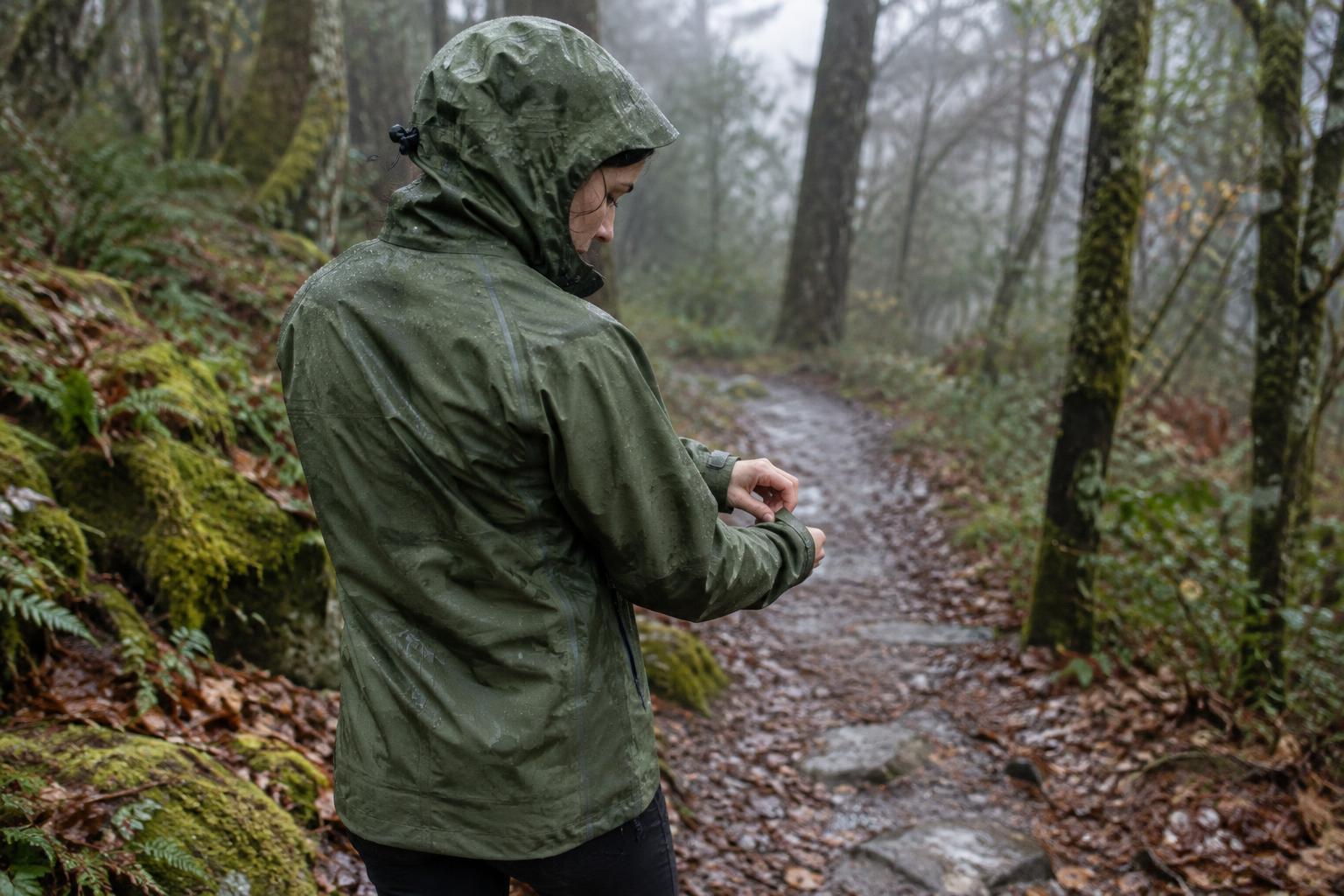
Most waterproof jackets use a membrane or coating behind an outer fabric. Many also have a durable water-repellent finish, often called DWR, on the outside. This finish helps rain bead and roll off. When it wears down, the outer fabric may become saturated, sometimes called wetting out. The waterproof layer may still block rain, but the jacket can feel colder and less comfortable, and moisture vapour may escape less easily.
Consider how the jacket will be used. A lightweight shell may be pleasant to pack for day trips, while a tougher outer fabric may better tolerate frequent contact with packs and rough surfaces. Try the jacket over the layers you expect to wear. Raise your arms, turn your head with the hood up and check that the hem does not lift or block movement. A jacket that fits your activity is more useful than one chosen by numbers alone.
Choose for the conditions, then care for the jacket
For easy walks where showers are brief, prioritise a jacket you can carry comfortably and put on quickly. For longer outings in persistent rain, pay closer attention to the waterproof construction, hood adjustment and coverage at the cuffs and hem. For fast walking or steep climbs, look for ventilation you can operate without stopping. If you regularly wear a backpack, check that pockets and vents remain accessible beneath its straps.
Once you have a jacket, follow its care label. Dirt and body oils can interfere with performance, so wash it as directed rather than assuming waterproof gear should never be cleaned. When water stops beading on the outer fabric, check the manufacturer’s guidance on restoring or renewing its water-repellent finish. Ratings help narrow the options, but fit, features and routine care determine how well a rain jacket serves you over time.