Start with the walk, not the shopping list
Before choosing a bottle or filling a snack bag, look at the walk itself. Note the expected time on foot, any long climbs, the weather forecast and how far you will be from a reliable place to refill. Allow for breaks and a slower return than you might expect. A short, shaded loop near home calls for a different plan from an exposed route with no facilities.
Think about the people in your group, too. Drinking and eating needs vary with effort, temperature and individual preference. Rather than relying on one fixed amount for every outing, use what you have learned on similar walks as a starting point, then leave some room for delays. If you are trying a longer route or unfamiliar terrain, it is especially useful to plan conservatively.
Make a water plan you can check
Decide where your drinking water will come from before you set out. Look for confirmed refill points such as visitor facilities or places where you expect to stop, and check whether they are likely to be accessible during your walk. Do not assume a stream, public tap or seasonal facility will provide safe drinking water. If a refill is uncertain, carry enough to complete the route without it or choose a route with more dependable options.
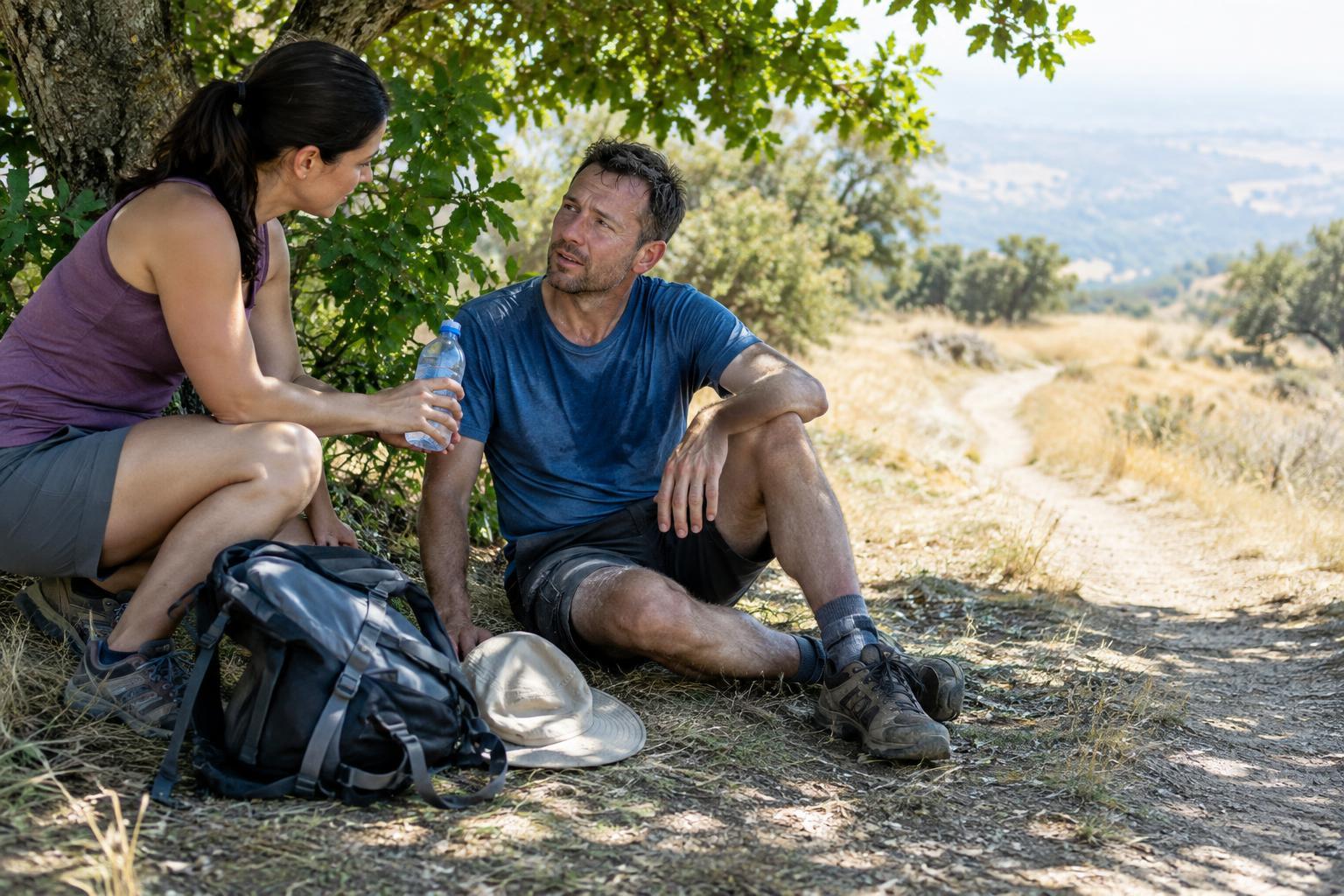
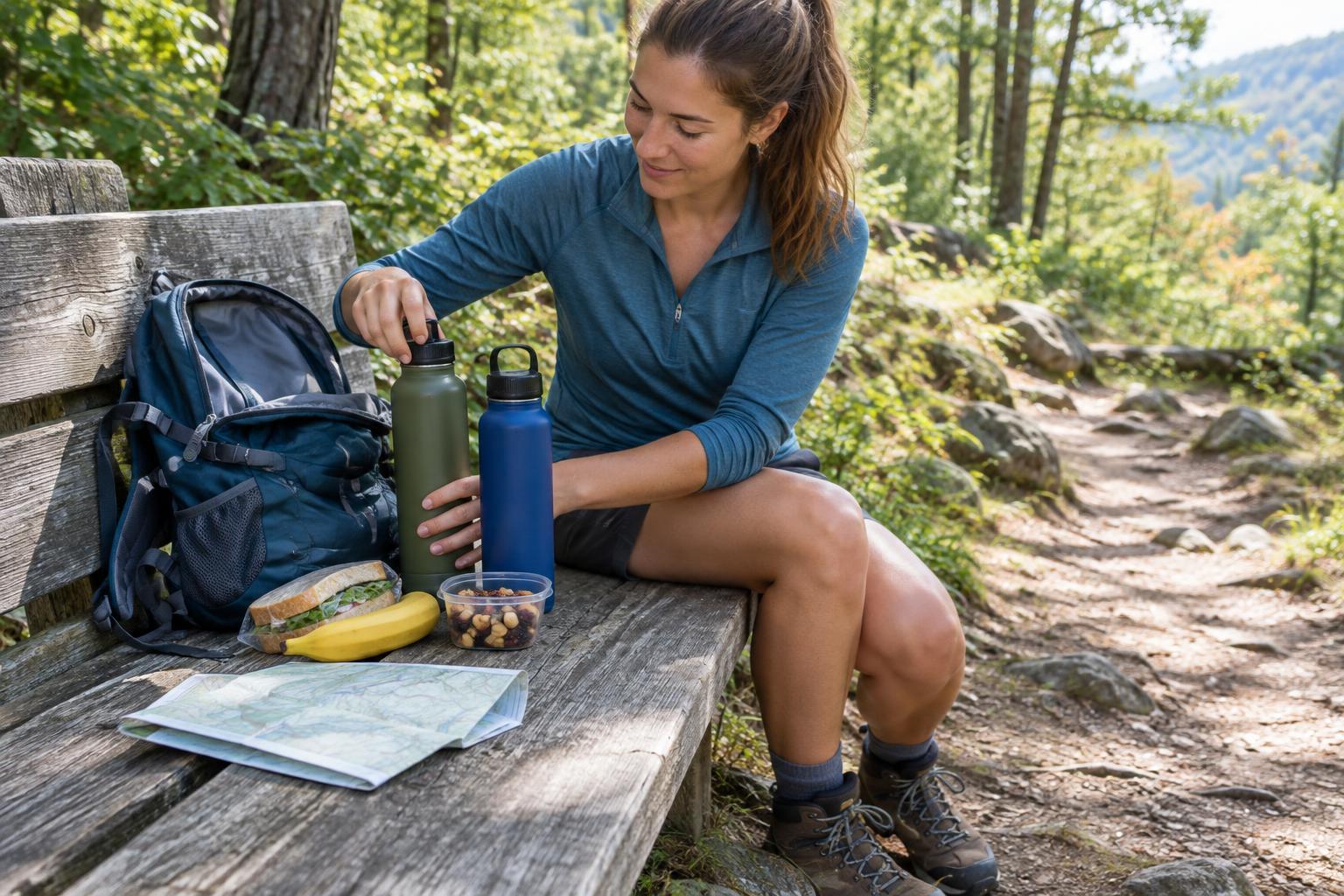
Carry water where you can reach it easily. A bottle in a side pocket makes it simple to take regular sips; a second container can serve as a reserve. Dividing water between two containers also makes packing easier and gives you a backup if one leaks. Check lids before leaving, and keep bottles away from items that should stay dry.
As you walk, pay attention to how much water you have left and how far you still have to go. A useful check is at the halfway point or before a long stretch without a refill. If supplies are running low sooner than expected, consider shortening the route rather than counting on an unverified source ahead.
Choose snacks that suit the route
For a day walk, snacks work best when they are easy to carry, easy to eat and appealing after a few hours outdoors. A sandwich or wrap can make a satisfying main stop, while fruit, crackers, nuts or other familiar foods can be useful for shorter breaks. Combining foods with different textures and flavours may make the pack more inviting than relying on a single snack.
Consider the conditions when you pack. Soft fruit can bruise, chocolate may melt in warmth, and crumbly foods can be awkward in the wind. Use a small container for delicate items and a reusable bag for anything that needs only light protection. If food needs to be kept cool, pack it appropriately and avoid leaving it in a warm bag for a long period. Bring foods you know you enjoy rather than experimenting with an unfamiliar meal far from the trailhead.
Pack a little more than your ideal schedule requires in case the walk takes longer. Put one snack within easy reach so you do not have to unpack everything for a short pause. Keep wrappers and food scraps together to take home; even biodegradable leftovers do not belong beside the path.
Build breaks into the day
A water and snack plan is easier to follow when it fits the route. Identify a few convenient stopping places on the map: a sheltered bench, a viewpoint or a junction before a climb. You do not need a rigid timetable, but brief pauses give everyone a chance to drink, eat and check how they feel before continuing.
On a group walk, avoid assuming that the quickest walker sets the pace for everyone else. Ask whether anyone needs a stop, particularly before passing a known refill point or entering a section where turning back would be difficult. Sharing the plan at the start helps people decide what to carry for themselves.
Do a final pack check
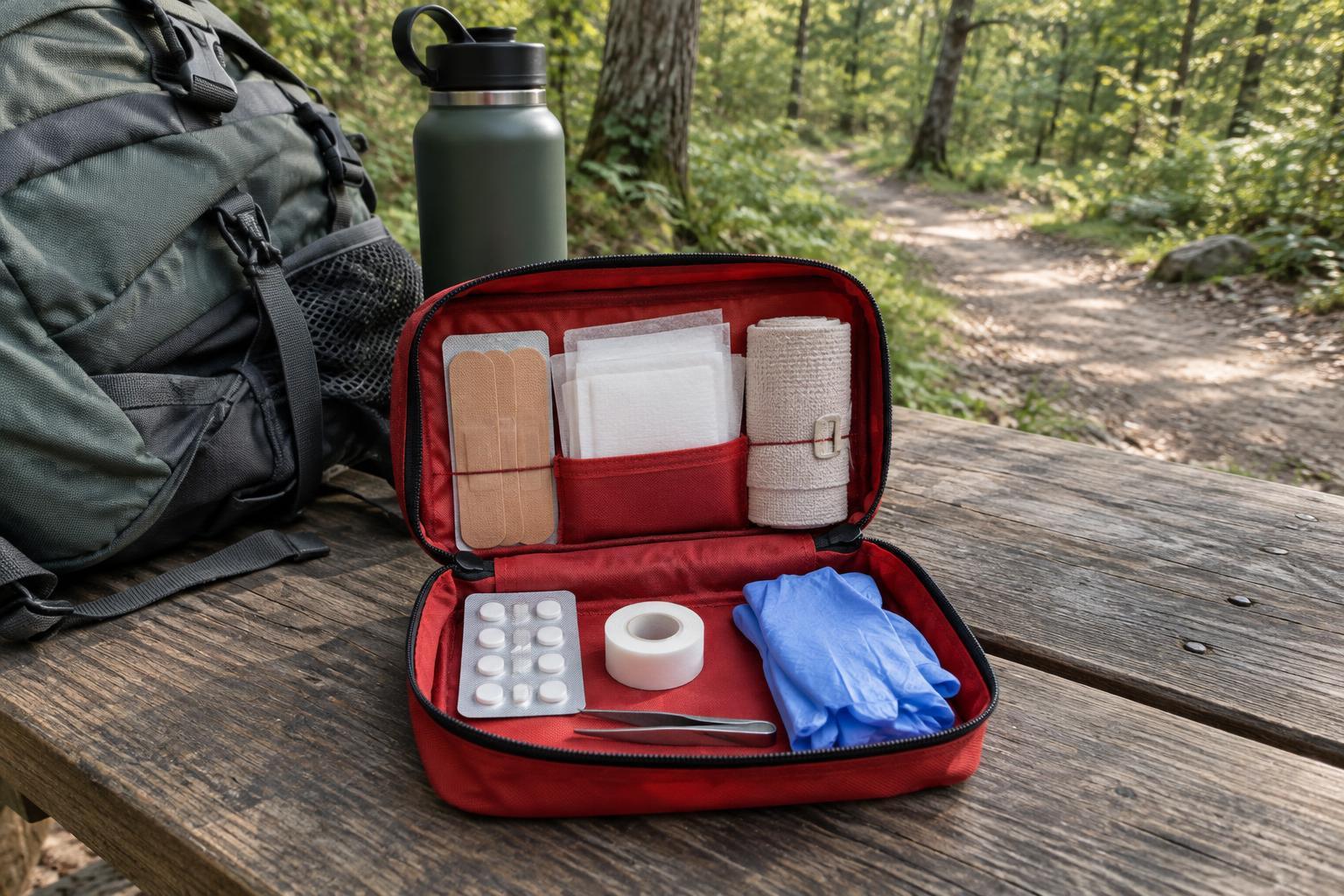
Before leaving, compare your packed water and food with the route you actually intend to walk, not just the one you first considered. Check the forecast once more, confirm that containers are full and secure, and make sure snacks are accessible. If the walk has become longer, hotter or more remote than planned, add supplies or choose a shorter option.
Afterward, notice what you used and what you carried home. That simple comparison can help you make a better estimate next time. With a route-aware plan and a little flexibility, water and snacks become part of an enjoyable walk rather than something you have to worry about along the way.