Start with the time you can actually use
A short day can make a familiar walking distance feel less forgiving. Rather than planning around sunset alone, work out when you can realistically begin walking. Allow time to reach the trailhead, find the start of the path and make any necessary preparations before setting off. At the other end of the day, decide when you want to be back at your vehicle, transport stop or accommodation. That gives you a more useful walking window than daylight hours on their own.
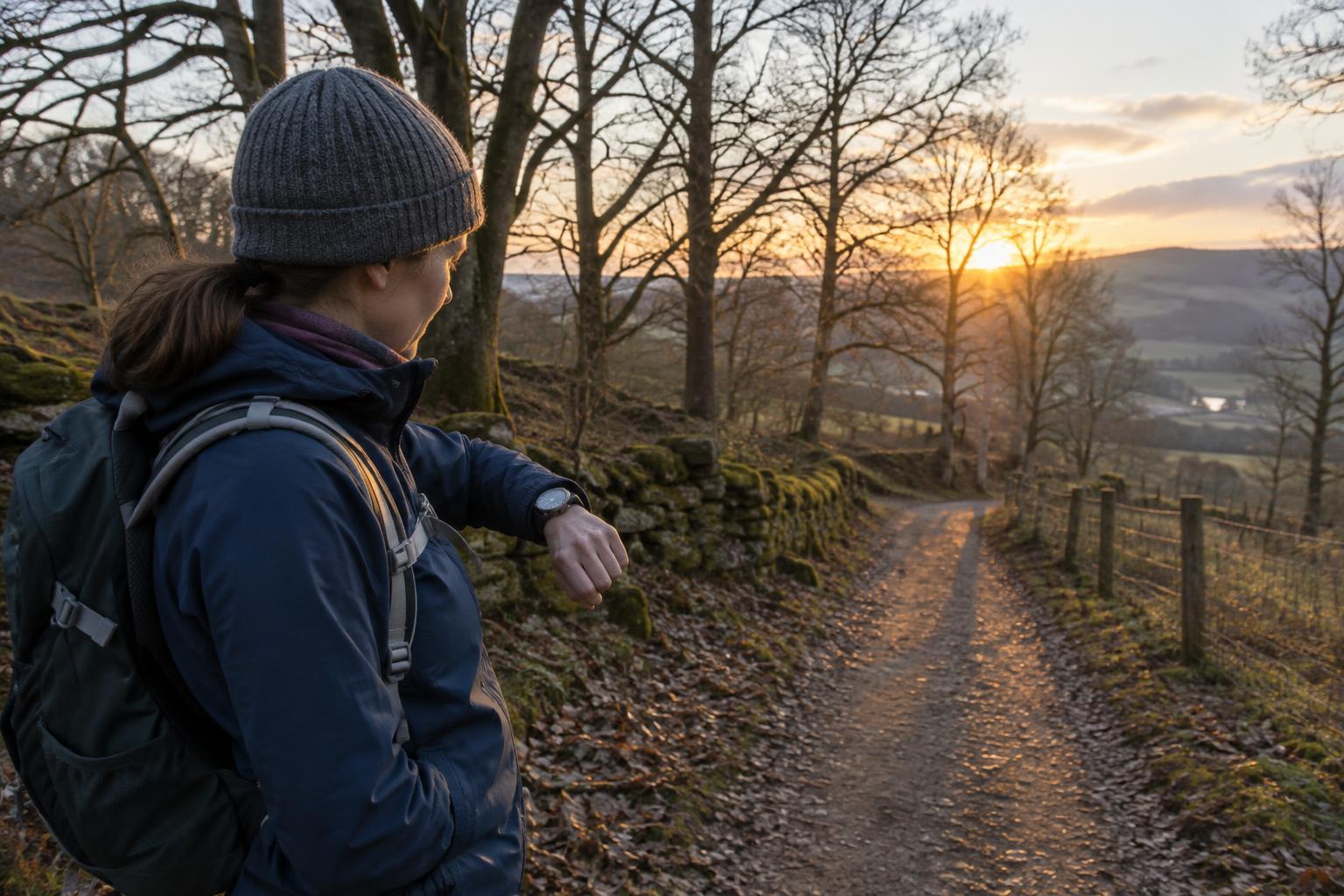
Check the expected sunset time for the place you will walk, then aim to finish comfortably before it. Light may become less useful earlier on wooded paths, in valleys or under heavy cloud. Keep a margin for navigation checks, rest stops and a slower return. If the available window is tight before you leave, choose a shorter walk rather than relying on a brisk pace to make the plan work.
Choose a route that is easy to shorten
An out-and-back route gives you a simple way to turn around when needed, provided the return uses a clear path. A short loop can also work well if its full distance and terrain are manageable. Be more cautious with a route that commits you to a long final stretch after its halfway point, or one where the hardest navigation comes near the end.
Look beyond the distance shown on a map. Steep climbs, uneven ground, frequent crossings and places where the path is hard to follow can all take more time than an easy track. Identify a clear destination or decision point that you can reach without using up most of your walking window. If the main viewpoint or landmark lies too far along, pick a closer goal that still makes the outing worthwhile.
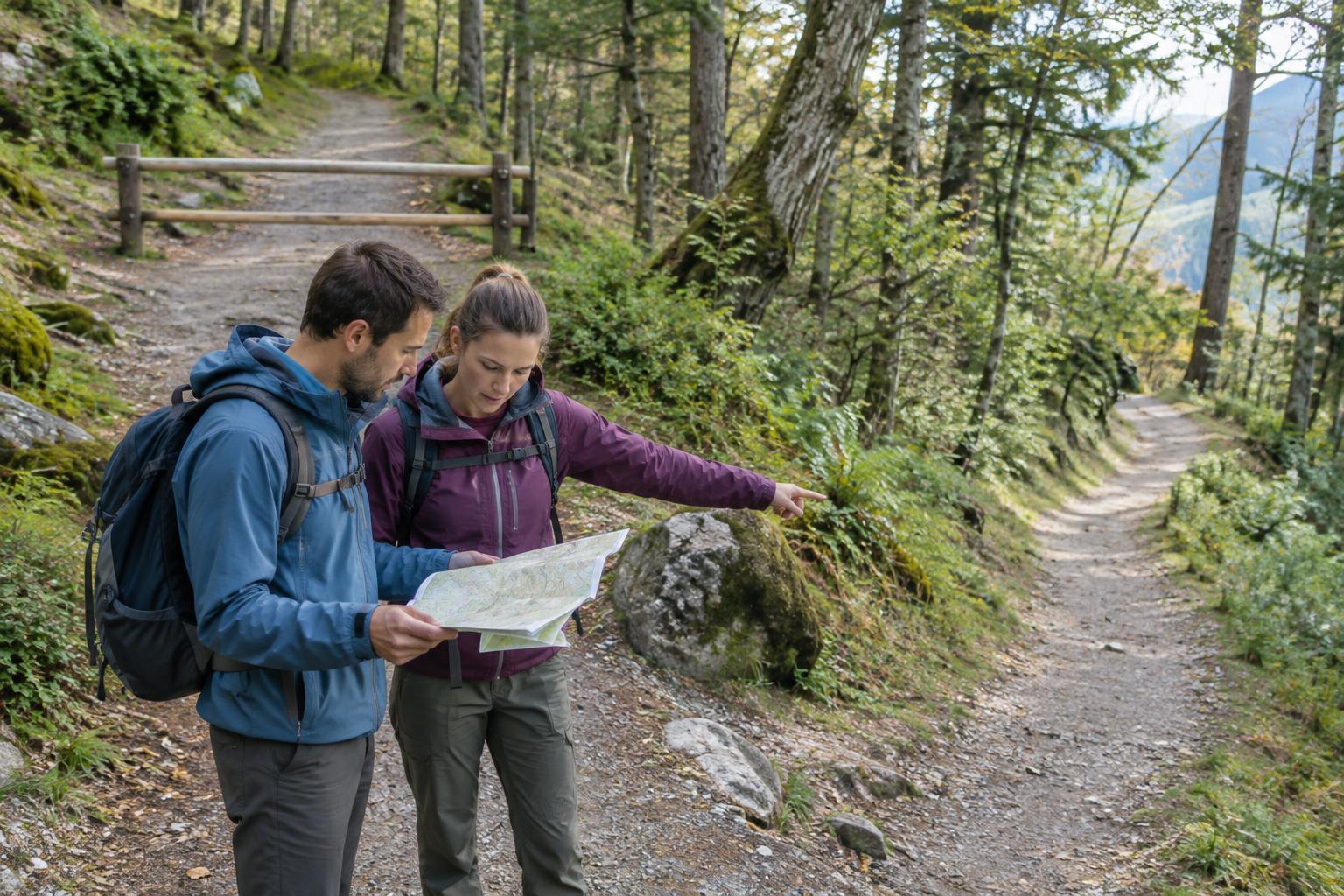
Before setting off, note any junctions where a shorter permitted route might be possible. Check that a potential shortcut is an established, accessible path rather than a line that only appears convenient on a map. A dependable option to shorten the walk is more useful than an ambitious itinerary that leaves no room for change.
Set a turnaround time before you start
A turnaround time is a decision made in advance: if you have not reached your intended point by then, you head back. Base it on your planned finish time and a realistic estimate for the return, with extra time left over. The return may not take exactly as long as the outward leg. A descent can be slow on slippery ground, and tired legs or fading light can make familiar terrain feel more demanding.
Keep track of your progress at obvious landmarks rather than checking the clock only when you reach your destination. If you are behind schedule early on, adjust the goal while the choice is easy. When walking with others, agree on the turnaround time together and use the pace of the slower walkers for planning. Reaching a summit or viewpoint is optional; getting back without a rushed finish is part of the walk.
It can help to separate a firm turnaround time from a hoped-for destination. That way, stopping short does not feel like a failed plan. You still get time outdoors, and you avoid the temptation to extend the walk simply because the goal appears close.
Pack for the finish you did not plan
Even on a walk intended to end in daylight, carry a light source you can use hands-free and check that it works before leaving. A phone light can be a useful backup, but it is less convenient when you also need the phone for navigation or communication. Bring suitable layers for a slower or colder finish, along with water and something to eat. Keep essential items where you can reach them without unpacking your entire bag.
Save or carry route information that you can use without depending entirely on a mobile signal. Check the return path at junctions while there is still plenty of light, especially if it looks different when approached from the opposite direction. If someone is expecting you, share the route and your anticipated return time, then let them know if your plans change when you are able to do so.
When conditions, progress or visibility make the original plan doubtful, turn back early or use a known shorter route. Limited daylight is easier to manage when the route, timing and gear all support the same simple choice: finish with time to spare.