Find out where the tide affects your route
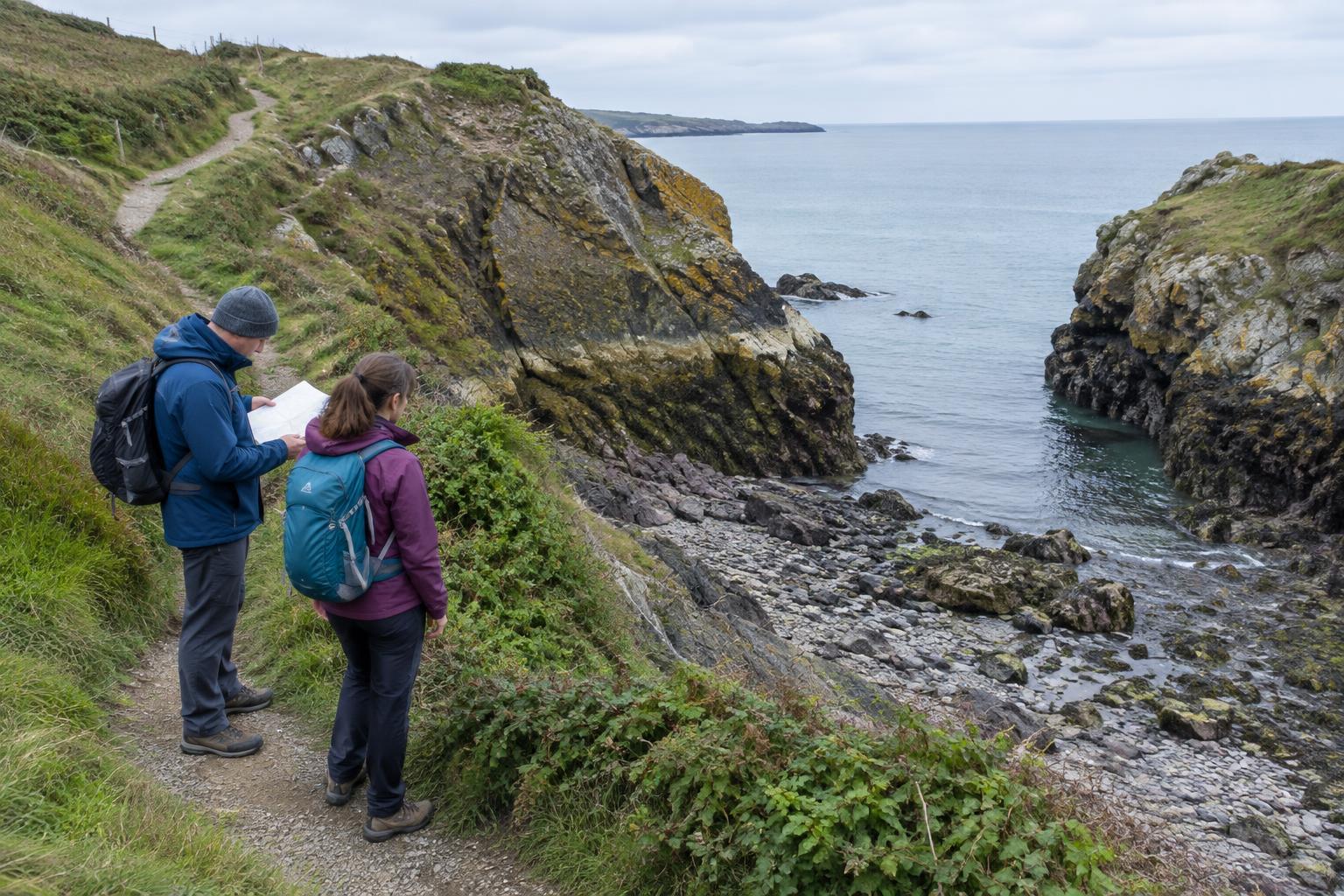
Start with a map of the whole walk, not just its destination. A path along a clifftop may stay well above the water, while a nearby beach, rocky foreshore or causeway may only be usable at certain tide levels. Look closely at any section where the route drops to shore level, crosses an inlet or follows the base of a headland. Check whether you can leave that section at several points or only at its far end.
Route descriptions can help identify tidal sections, but do not assume that a line on a map means the way is passable whenever you arrive. A beach may narrow against a cliff, and a path across rocks may become difficult before it is fully covered. If the walk depends on a tidal crossing, find out whether local route guidance gives specific conditions for using it. When that information is unclear, choose a route that stays above the shore.
Read the tide information for the right place
Check a tide table or forecast for a location close to your walk and for the day you intend to go. It will usually show predicted times and heights for high and low water. Confirm that you are reading the correct date and local time, especially if you have saved a screenshot or are planning across a change in clock time. Predictions for a nearby harbour may not match conditions exactly along an exposed beach or inside an inlet.
High and low water are turning points, not fixed periods when every coastal route is open or closed. The height matters too: one low tide may leave more exposed ground than another. If local guidance specifies a safe tide height or a particular window for a crossing, use that guidance rather than guessing from the time of low water alone. Tide predictions also cannot account perfectly for conditions on the day; wind, waves and weather can make the shore less accessible than the table suggests.
Work backward from the most restricted section
Estimate when you will reach the section affected by the tide, including travel from the start, breaks and slower going over sand or rocks. Then consider how long it will take to get completely through it. Plan for a generous margin on both sides of that estimate rather than aiming to arrive exactly at low water. The usable window varies by location, so a general rule such as “two hours either side” is not a substitute for local information.
If you must return the same way, check the tide for the return journey as carefully as for the outward leg. A beach that is open on arrival may be cut off before you come back. Set a turn-around point and time in advance, based on when you need to leave the tidal section—not when you hope to finish the walk. Share the broad route and expected return with someone who is not walking with you.
Build a plan that does not depend on perfect timing
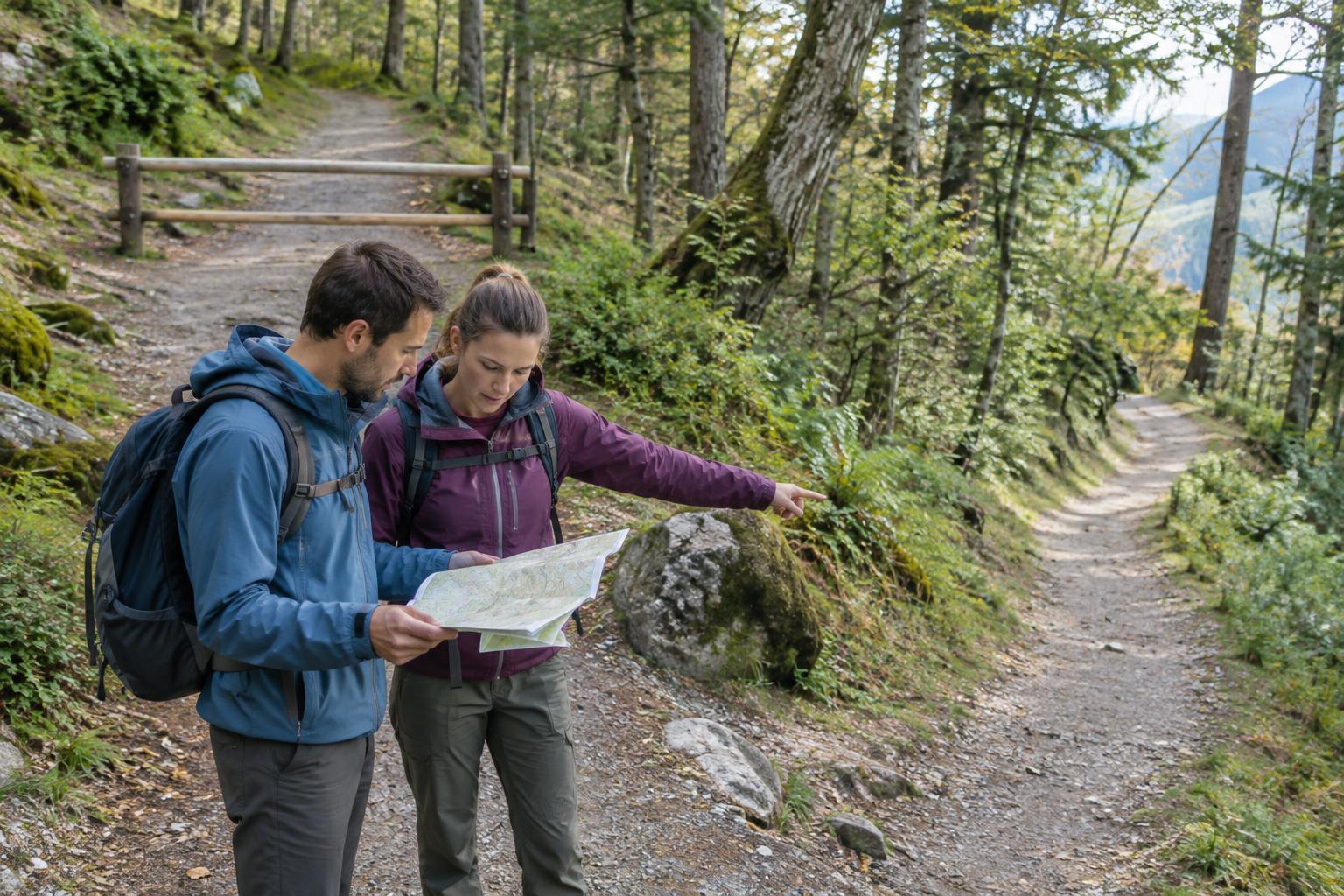
Mark an inland path, higher-level trail or other straightforward alternative before setting out. Check that any proposed exit actually connects to a usable route; cliffs, fences and private land can make an apparent shortcut impractical. Carry a map you can use without a mobile signal, along with enough phone battery to check your position or call for help if needed.
Allow for transport delays and changes in walking pace. If you reach a tidal section later than planned, or cannot clearly see a safe way through and out, take the alternative rather than trying to make up time. Never rely on climbing rocks or scrambling up a cliff as an escape route. A shorter walk on firm, higher ground is a better outcome than becoming committed to a narrowing strip of shore.
Make a final check at the coast
Before stepping onto a beach or crossing, compare the plan with what you can see. Note the direction the water appears to be moving, the size of the waves and whether the ground ahead has a clear exit. Recent rain can make streams across the beach deeper or faster, while wet rocks and seaweed can make progress slower than expected. Keep an eye on the conditions as you walk rather than relying only on the forecast you read at home.
If the sea is reaching the base of cliffs, waves are washing across your intended route, or you are unsure whether there is enough time to complete the section, turn back while you still can. Tide-aware planning is not about finding the longest possible window on the shore. It is about choosing a walk you can enjoy without needing the sea, the weather and your pace to behave exactly as expected.