Find out why the zipper is sticking
When a zipper stops moving, resist the urge to pull harder. Force can bend teeth, tear nearby fabric or pull a slider off its track. Set the item on a flat surface if possible, take tension off the opening and look closely at both sides of the slider. Check for trapped lining, loose threads, packed-in dirt or teeth that are no longer sitting in a straight line.
The location of the problem is a useful clue. A slider that stops at one particular spot may be catching fabric or damaged teeth. A zipper that feels rough along its whole length may have grit or dried residue in it. If the slider moves but the teeth separate behind it, cleaning alone may not solve the problem: the slider or zipper components may be worn.
Release a snag without tearing the fabric
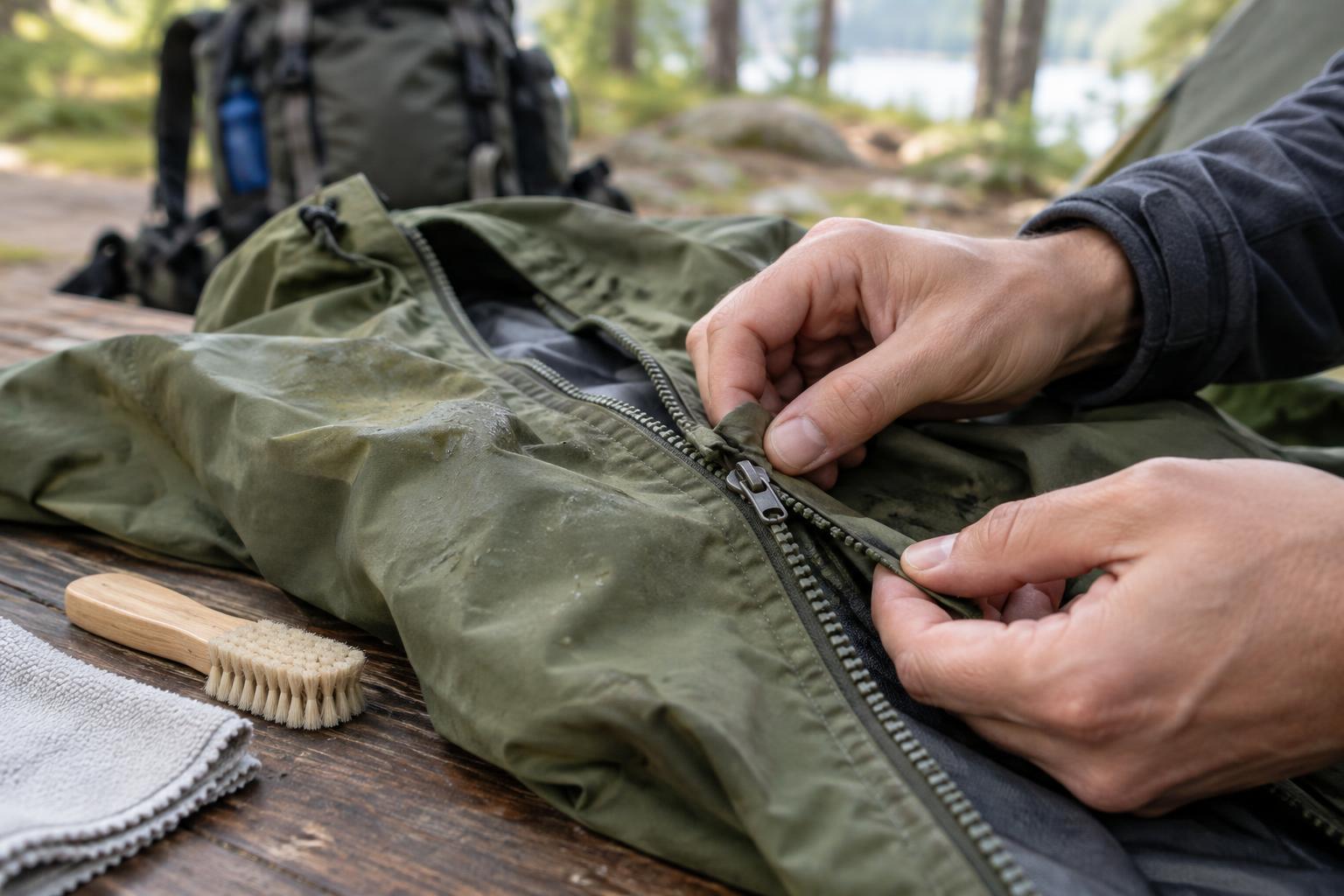
If fabric or a thread is caught, hold the material close to the slider so it cannot stretch farther into the gap. Gently move the slider back toward the direction it came from while easing the fabric out with your fingers. Work in small movements rather than trying to unzip the full length at once. On a jacket, loosening the garment or taking it off can reduce tension and give you a better view.
For a loose thread, first free it from the slider; trim it only if doing so will not open a seam. Avoid using a sharp tool beside lightweight tent fabric or a waterproof jacket lining unless you can clearly see what the tool will touch. Once the obstruction is out, align the zipper edges and test a short section slowly. Stop if it catches in the same place again.
Clean the zipper before adding anything to it
Sand, trail dust and salt residue can make a zipper feel stiff. Brush the teeth and the area around the slider with a soft, dry toothbrush or small cleaning brush. For stubborn dirt, use a little water and, if the gear’s care instructions allow it, a small amount of mild soap. Work gently on both sides of the teeth, then wipe away loosened debris with a damp cloth. Keep abrasive particles away from the slider rather than pushing them through it.
Let the zipper dry thoroughly before judging how it moves. This matters especially for gear that will be folded or stored after cleaning. If you are caring for a pack or tent, check the surrounding seams and coated fabric before applying any cleaner; when in doubt, test a small, inconspicuous area and follow the maker’s care guidance.
Use lubricant sparingly and choose it for the gear
If a clean, dry zipper still drags, a zipper lubricant may help. Choose a product intended for the zipper type and the surrounding fabric, particularly on waterproof or coated gear. Apply a small amount to the teeth as directed, then run the slider gently along the zipper to distribute it. Wipe off any excess so it does not collect dirt or transfer to clothing.
Household oils and heavy grease are poor default choices for outdoor gear: they can attract grit and may leave marks on fabric. Avoid treating lubricant as a fix for bent teeth, a broken stop or a slider that no longer holds the teeth together. In those cases, check whether the slider or zipper can be repaired or replaced rather than repeatedly forcing it closed.
Build zipper care into your post-trip routine
After a sandy, muddy or coastal outing, shake out the gear and brush visible debris from its zippers before putting it away. Rinse or spot-clean when needed, following the item’s care instructions, and allow it to dry before storage. Close zippers with the fabric lying flat; do not pull a bulging bag shut by its zipper alone. Reducing strain on the closure can help prevent future jams.
Before a trip, run each important zipper its full length and inspect the teeth, stitching, pull tab and end stops. A small snag is easier to address at home than when a pack is full or a tent is being pitched. If the zipper keeps separating, has missing teeth or is coming loose from the fabric, plan for a proper repair. Routine cleaning and gentle handling will not fix every failure, but they can keep an otherwise sound zipper working reliably.