Identify the start point, not just the trail
A trail name does not always point to one place. A route may have several entrances, while a map pin labeled with the trail name may sit near its midpoint. Before you travel, identify the exact start recommended by your route description and locate it on a map. Note the name of the parking area, visitor center, road junction or other nearby landmark, as well as any coordinates provided.
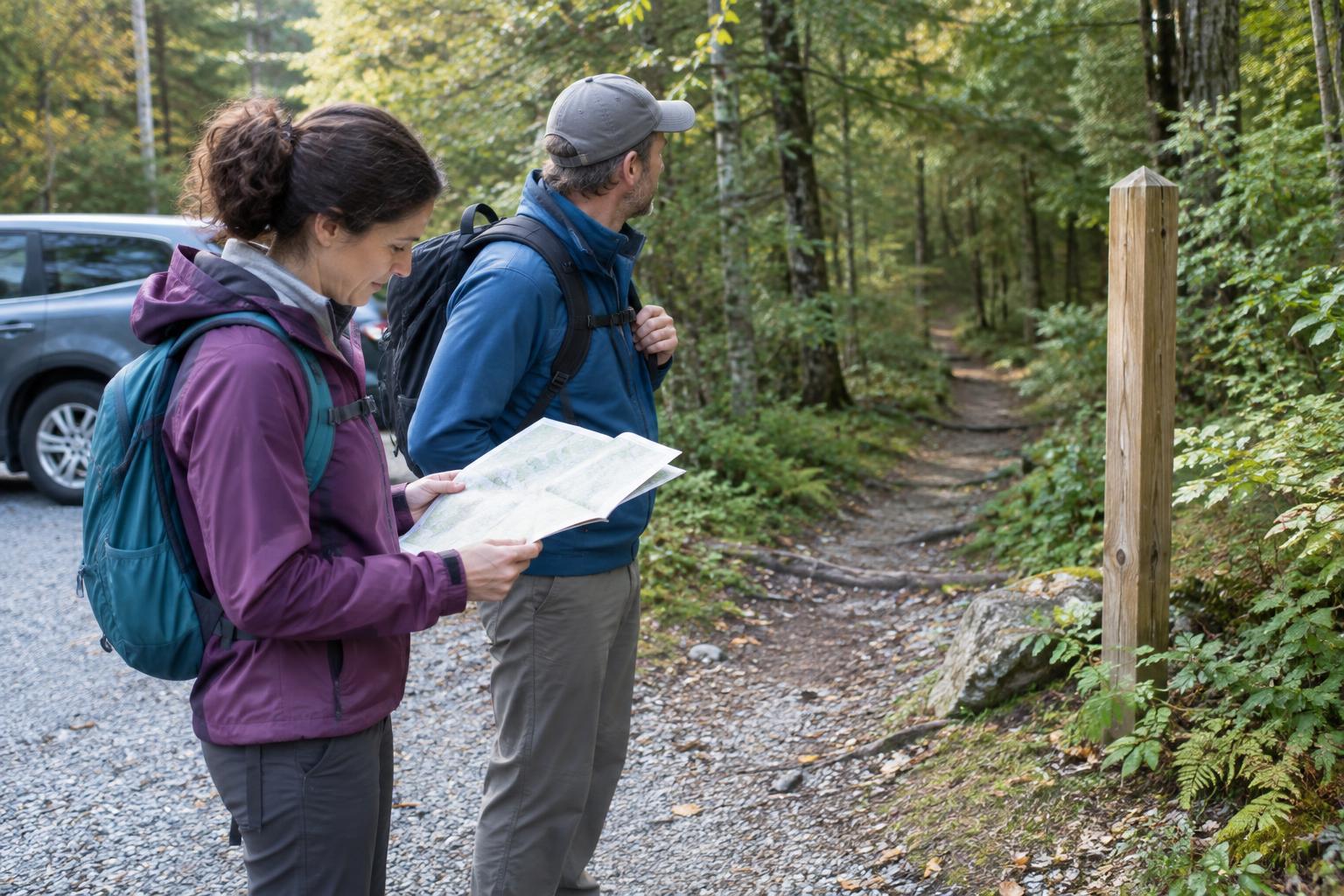
Then compare the route description with the map. Does the first stretch of path leave from the side of the road you expect? Is there a bridge, gate or signed junction near the start? These small clues are especially useful where several paths share a parking area. If two sources appear to disagree, do not assume the first pin you find is correct. Look for a route map that shows the opening section clearly, or choose a different walk with a start you can establish confidently.
Check how you can reach the entrance
Finding a trailhead on a map is different from reaching it. Check which road or footpath provides access, and whether your planned mode of travel can use it. A short-looking approach may involve a private lane, an unsuitable road or a crossing that is awkward on foot. If you are taking public transport, look at the walking route from the stop to the actual trail entrance rather than measuring only the straight-line distance.
Access arrangements can vary by location. Before setting out, check any available information about opening hours, parking rules, fees, seasonal restrictions or required reservations. If you will be driving, identify the intended parking area rather than assuming you can leave a vehicle beside the trail sign. Where parking is limited, having another suitable walk in mind is more useful than arriving with no alternative.
Make an arrival plan with some slack
Work backward from when you want to finish the walk. Allow time not only for the route itself, but also for travel, finding the entrance, getting ready and taking breaks. If the walk is unfamiliar, a comfortable margin makes it easier to pause at junctions without feeling rushed. Check the available daylight for your planned day and aim to finish well before it becomes difficult to see.
Save the trailhead location and the route map where you can reach them without a mobile signal. A written note with the road name, parking area and first trail direction can help if navigation sends you to a nearby but incorrect spot. If you are meeting others, agree on one specific meeting point, such as a named parking area or visitor center entrance. “At the trailhead” may mean different things to different people.
Use the last few minutes to confirm you are in the right place
On arrival, take a moment to match what you see with your plan before setting off. Check the name on any sign or noticeboard, look for the first junction shown on your map, and confirm the direction in which the route begins. A trail marker may show that you are on a path without confirming that it is the path you intended. If the surroundings do not match your notes, stop and work out why rather than pressing on.
This is also a good time to check for local notices and adjust your plan if an entrance or section is closed. Keep gates and access points clear while you prepare. Before leaving a vehicle, make sure you have what you need for the walk, including water, suitable layers and a way to navigate back. Notice one distinctive feature of your starting point so it is easier to recognize on your return.
Know what you will do if the plan fails
Sometimes the mapped entrance is difficult to find, parking is unavailable or the route looks different from its description. Decide in advance how much time you are willing to spend resolving a start-point problem. If you cannot confirm both a suitable place to begin and a clear way back, it is reasonable to switch to your backup walk or save the outing for another day.
Once on the trail, keep track of your first few turns rather than relying on a sign at the start. A brief look back at junctions can make the return direction more familiar. Share your intended route and expected return time with someone if you are walking in a less familiar area. The goal is not to make a simple day trip complicated; it is to settle the important details early so you can enjoy the walk itself.