Start with distance and a pace you can sustain
A map distance tells you how far you will travel, but not how long the trip will take. Begin with a moving-time estimate: divide the route distance by a walking speed that suits you and the path. On a fairly level, clear route, 4 kilometres per hour is a workable starting assumption for many recreational walkers. That makes an 8-kilometre route about two hours of moving time before hills, difficult ground or stops.
Treat that speed as a planning tool, not a target. If you usually walk at a different pace, use what you know from comparable outings. Walking with children, carrying a heavy pack or navigating an unfamiliar route may also call for a slower estimate. The aim is to predict a comfortable day, not to prove how quickly you can finish.
Add time for climbing
Elevation gain is the total amount of uphill climbing along a route. It is not simply the difference between the start and finish heights: a walk that repeatedly dips and rises can involve substantial climbing even if it ends where it began. If your map or route description gives total ascent, use that figure.
As a rough starting point, add 10 to 20 minutes for each 100 metres of ascent to your level-ground estimate. A gradual climb on a good path may fall near the lower end; steep steps, loose ground or a pack can push it higher. This is deliberately a range, because the same elevation gain can feel very different when it is spread across several kilometres rather than concentrated in one short slope.
For an 8-kilometre walk with 300 metres of ascent, a two-hour distance estimate becomes roughly two and a half to three hours of moving time before other adjustments. If your chosen base pace already reflects frequent hills, make a smaller adjustment so you do not count the same difficulty twice.
Read the terrain, including the downhill sections
The line on a map does not show every reason you might slow down. Smooth, well-marked paths generally allow a steadier rhythm than mud, sand, roots, rocks or overgrown sections. Narrow paths and stream crossings can also make progress uneven. If the route description suggests awkward footing for much of the walk, use a slower base speed rather than adding a small delay for every obstacle.
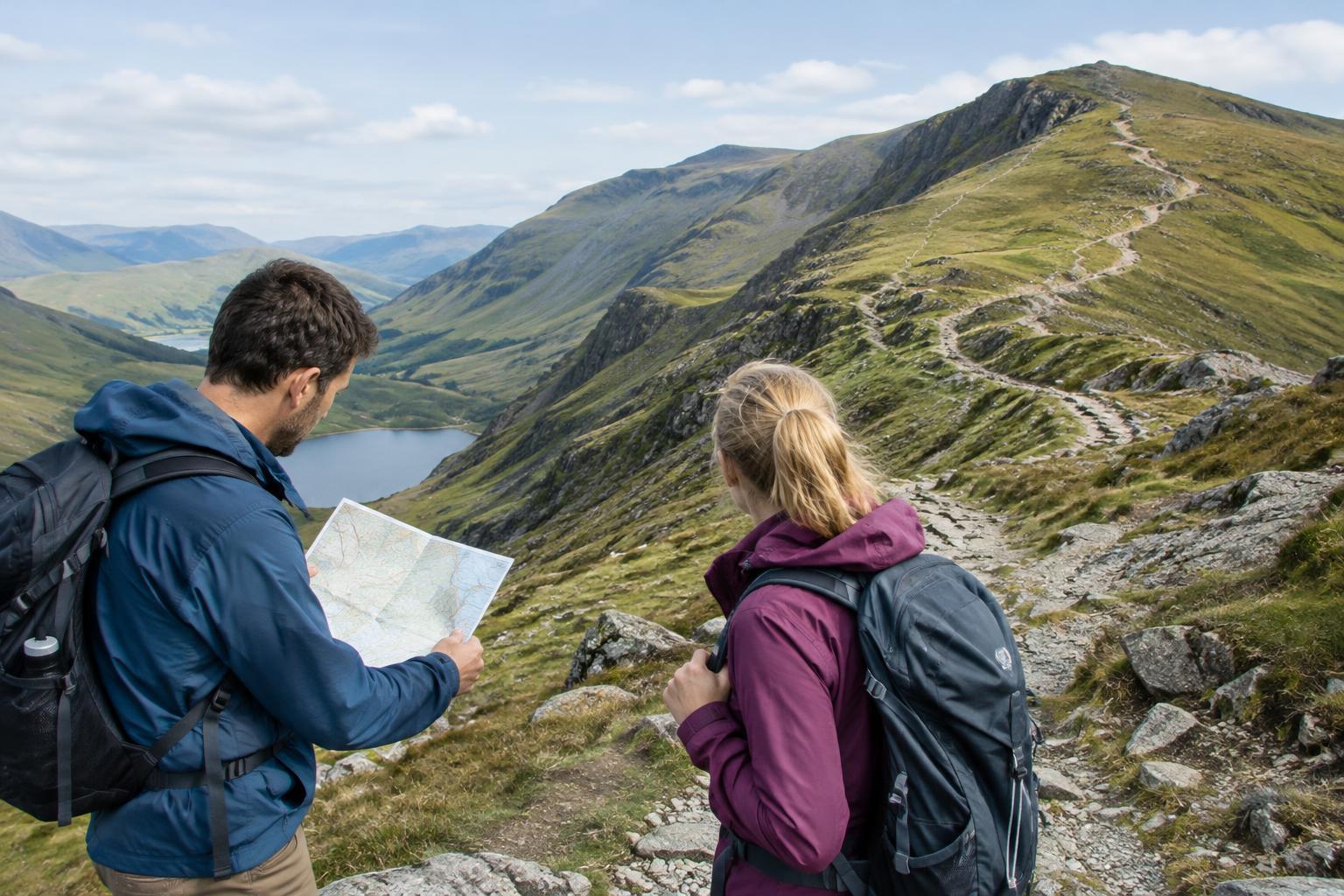
Do not assume all descent will be fast. A gentle downhill path may be easy to follow, while a steep or slippery one can require short, careful steps. Look at where the climbing and descending occur as well as their totals. A steep descent late in a walk may take longer than expected, especially when legs are tired.
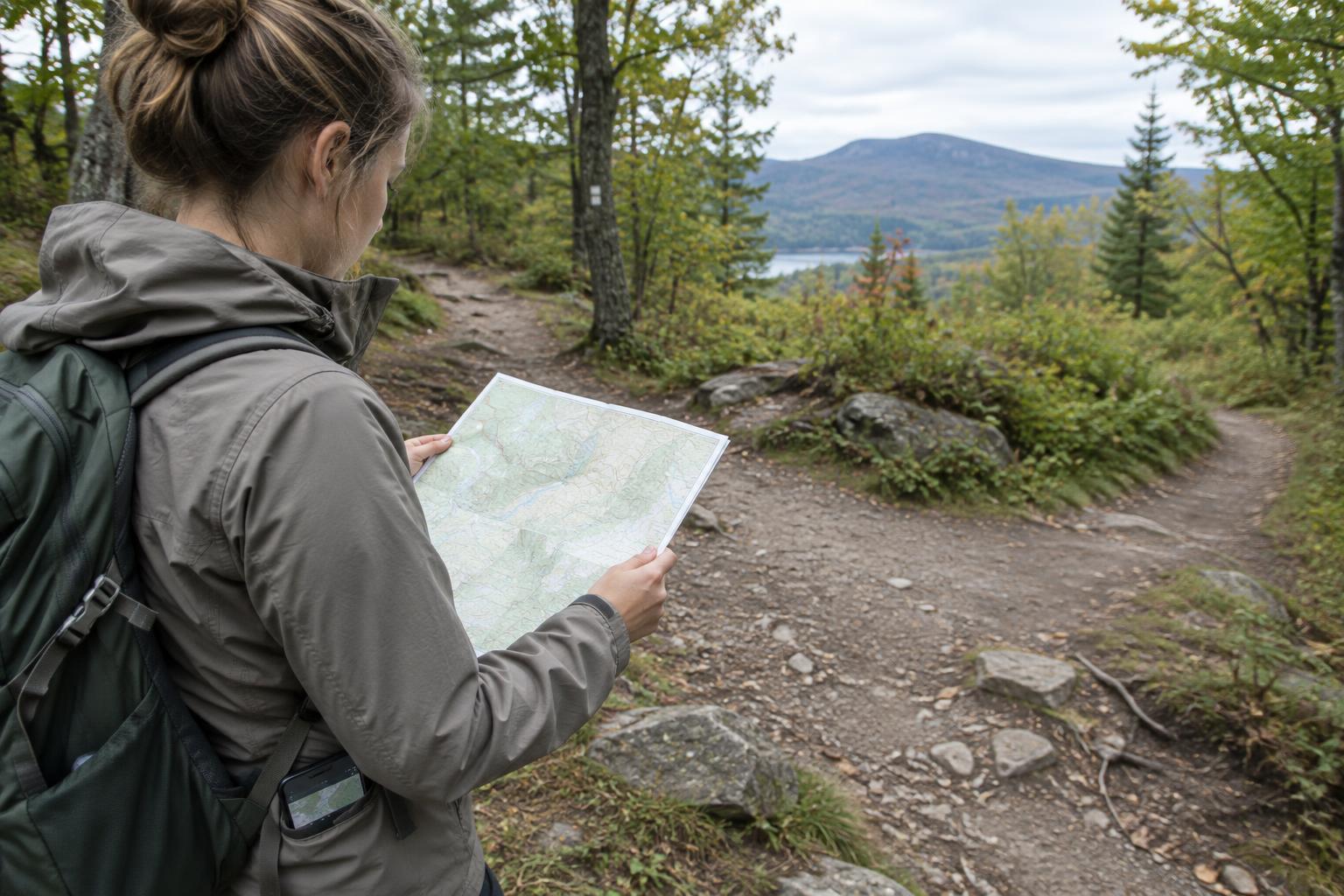
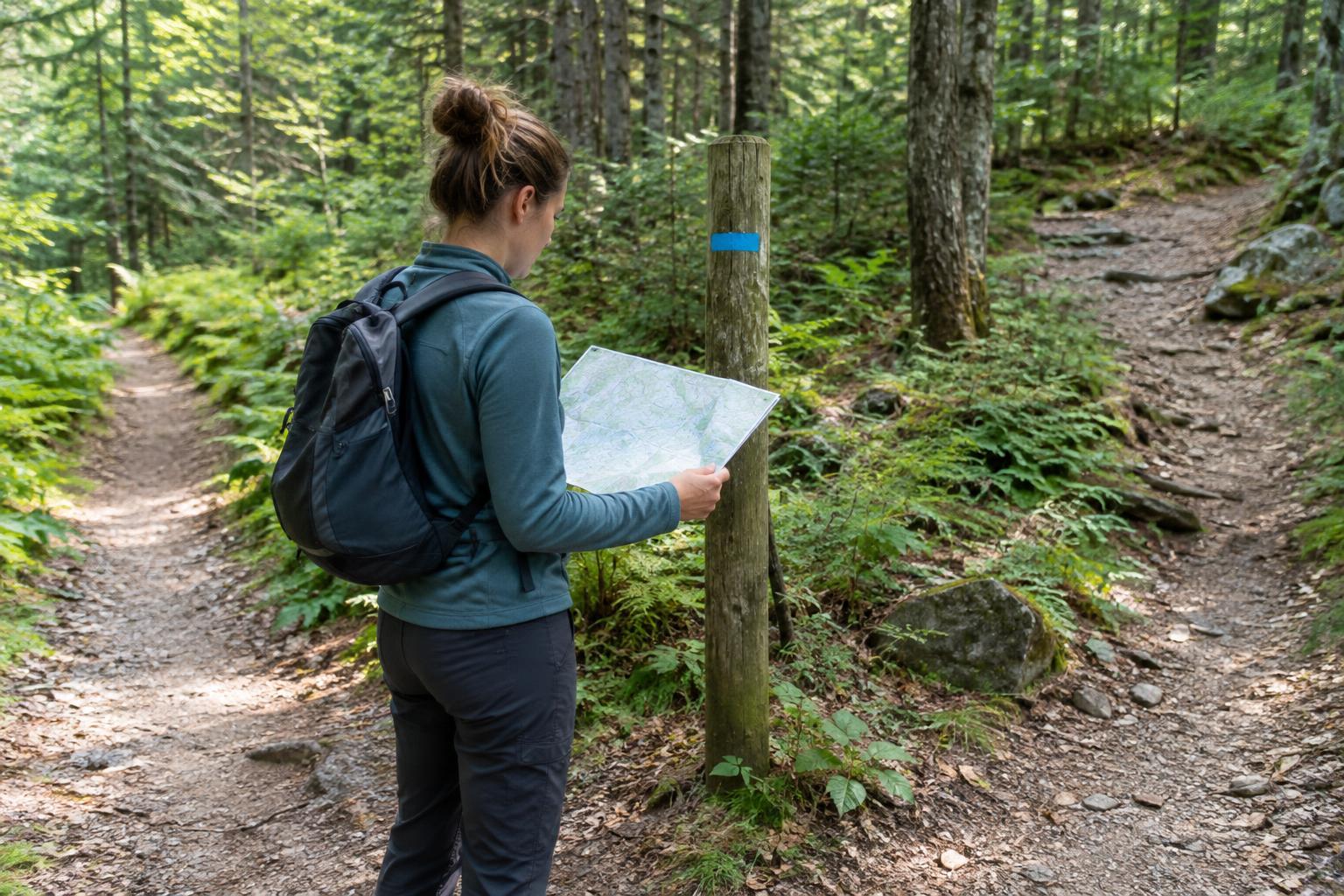
Route-finding matters too. Clear signs and obvious junctions help keep a group moving; faint tracks or several similar turns may mean more pauses to check the map. Allow time for that without assuming you will maintain your usual pace throughout.
Turn moving time into a day-trip plan
Moving time is not the same as elapsed time. Add the stops you expect to take for water, food, photographs, clothing changes and navigation. For a short walk, a few brief pauses may be enough. For a longer day trip, it is often more useful to plan one or two proper breaks as well as smaller pauses. If you are walking with a group, base the schedule on a pace everyone can sustain.
Return to the 8-kilometre example. At 4 kilometres per hour, the distance suggests two hours. Adding 300 metres of ascent gives roughly two and a half to three hours of moving time. If the path is rocky and the group plans a lunch stop, the full outing will take longer. Rather than choosing one exact arrival time, plan with a window and leave some spare time for slower sections.
Before setting out, check whether that window fits the daylight available and the needs of your group. Identify a sensible point to turn back if progress is slower than planned. An estimate is most useful when it helps you make decisions during the walk, not just before it.
Improve your estimates after each walk
After a few outings, compare your planned time with what happened. Note the distance, ascent, path conditions, moving time and length of breaks. You may find that you climb steadily but slow down on uneven descents, or that short navigation stops add more time than expected. Those patterns are more helpful than a universal walking-speed rule.
For future routes, start with the distance, adjust for ascent and terrain, then add breaks and a margin. Keep the calculation simple enough to repeat. A realistic range, informed by your own experience, is a better guide than a precise-looking number that overlooks how the route actually feels underfoot.