Dress for the day, not just the departure
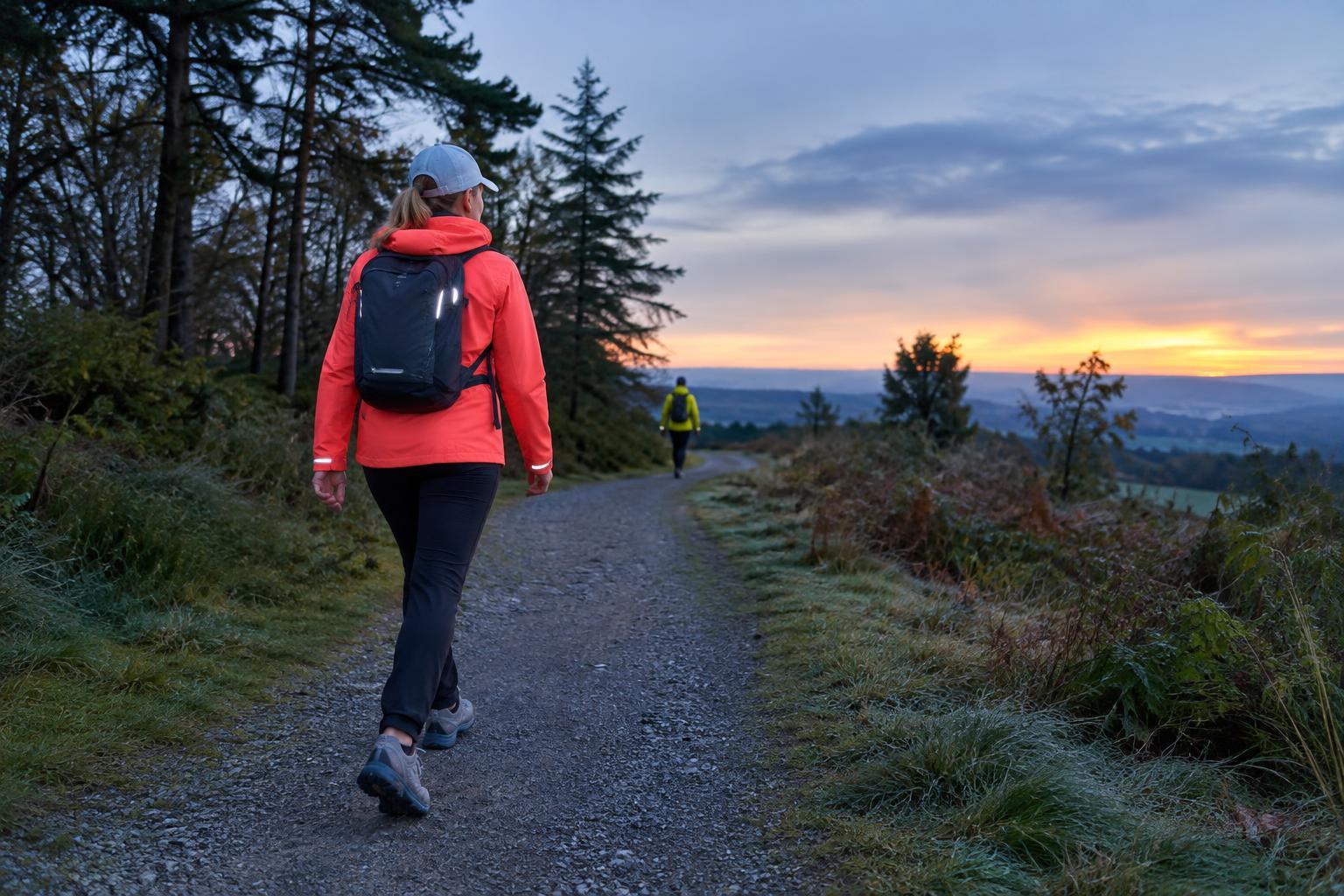
It is easy to choose an outfit while standing outside your door in the morning. If the air feels cold, a thick jumper and heavy coat seem sensible. A few hours later, especially once you are walking in the sun, those choices may be too warm to wear and awkward to carry. For a day trip with a chilly start and warm afternoon, plan an outfit you can adjust in small steps.
Think through the whole outing before you get dressed. Will you be walking steadily or stopping often? Is the route exposed to wind, or mostly sheltered? Will you need to sit outside for lunch? Your pace and stops can affect how warm you feel as much as the forecast does. It also helps to check whether the afternoon is expected to be dry: warm air does not rule out wind or a passing shower.
Build a comfortable base
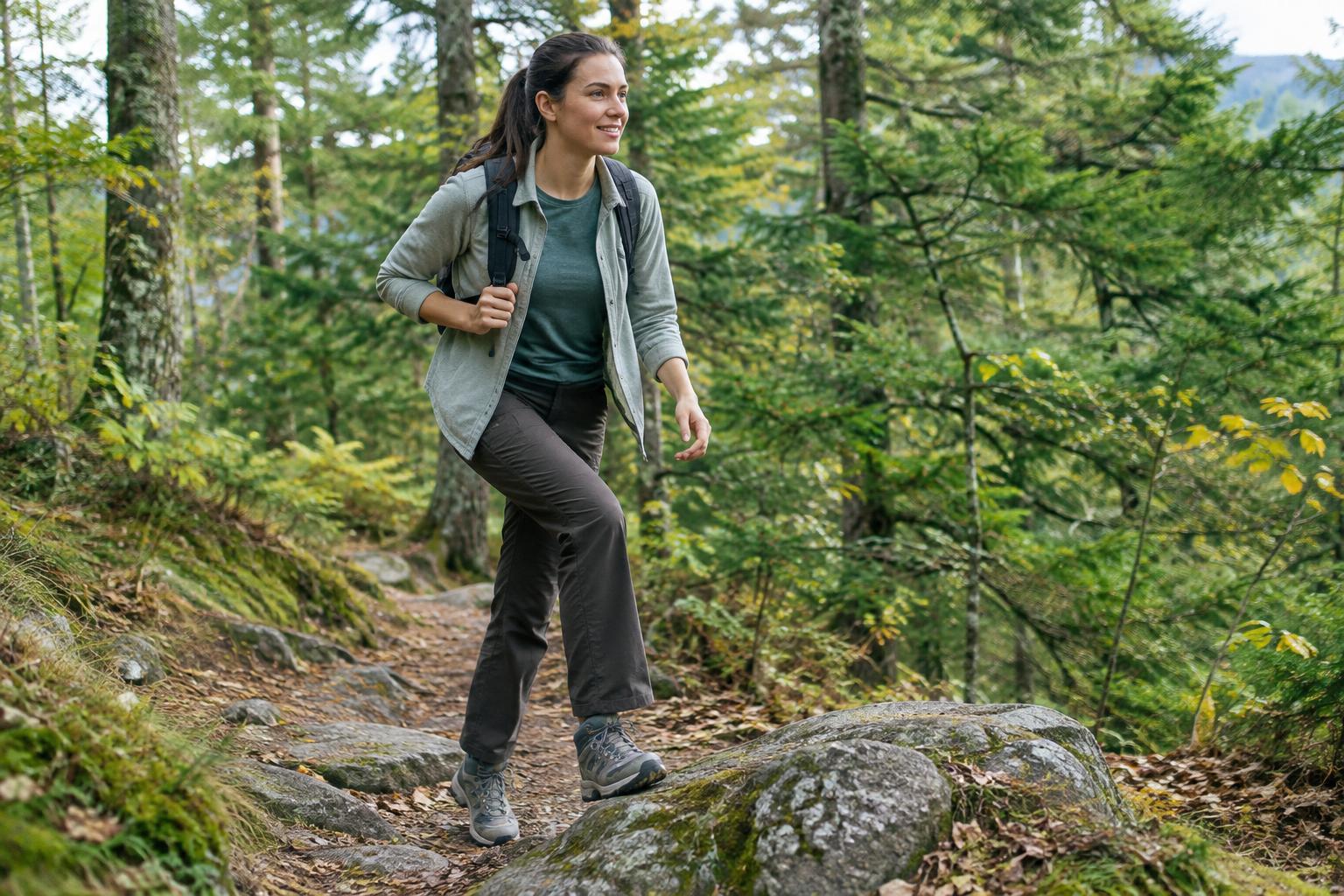
Start with a light top that feels comfortable against your skin when you are moving. A breathable T-shirt or long-sleeved top can work well, depending on how cold the morning feels and how much sun protection you want later. Choose a fit that lets you move freely and sits neatly under another layer. A top that bunches under a jacket can become irritating over several hours.
Fabric choice matters most when you expect to sweat. A quick-drying synthetic or wool-blend top may feel more comfortable than a thick cotton shirt after an uphill stretch or a brisk walk. That does not mean you need specialist clothing for every outing. For a gentle trip in mild, settled conditions, a familiar, comfortable top may be enough. The useful question is whether it will still feel pleasant when you are warmer, cooler or slightly damp.
Add warmth you can remove easily
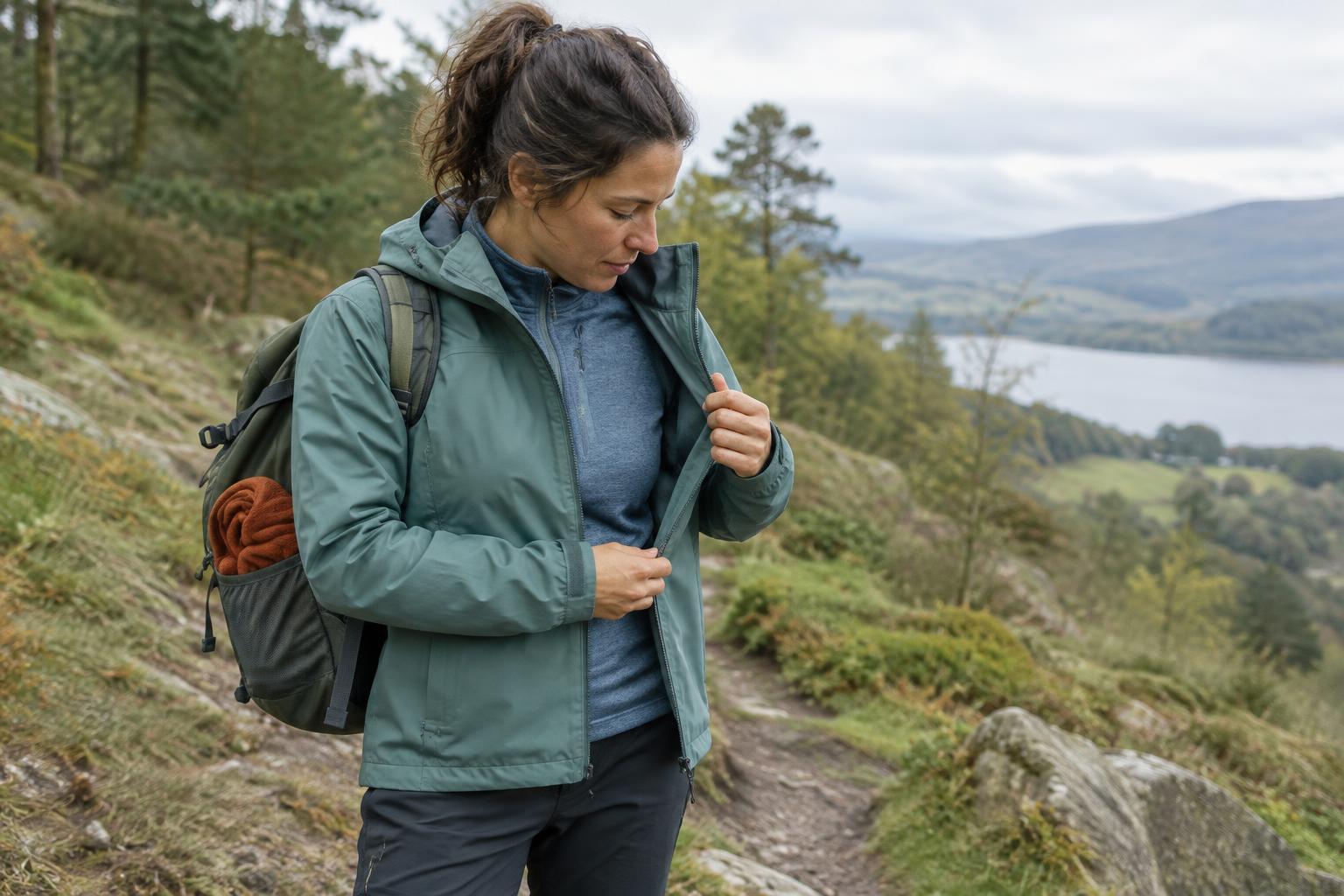
For the chilly first hour, put a light insulating layer over your base. A fleece, lightweight sweater or packable insulated vest gives you warmth without committing you to a heavy coat all day. A full-length zip is handy because you can let out heat before you need to stop and take the layer off. If you tend to warm up quickly while walking, begin with just enough insulation to feel a little cool when standing still.
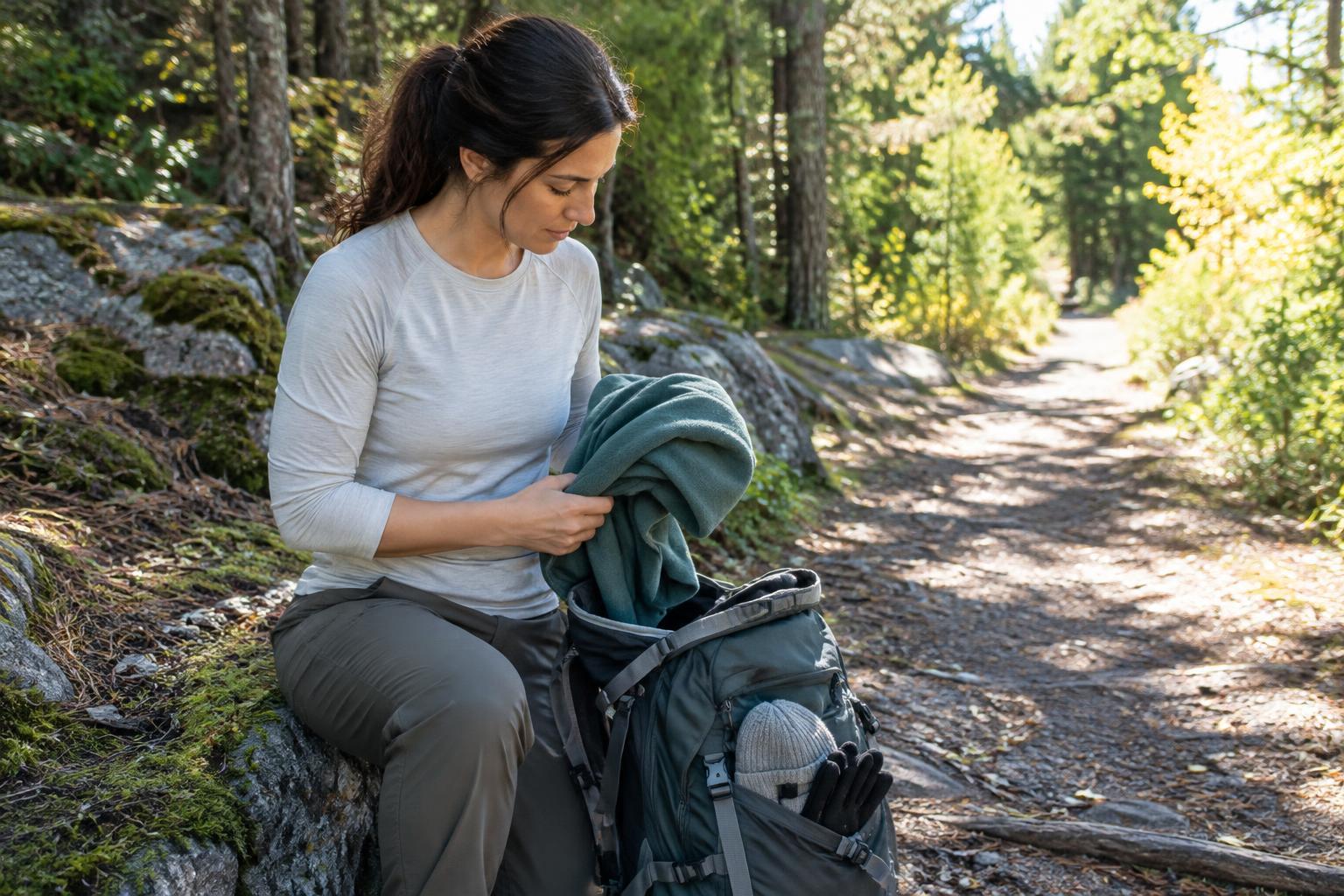
Make sure your extra layer fits in your day bag once the temperature rises. Before leaving, try packing it alongside your water, food and other essentials. A layer that only fits when the bag is empty is less useful than it first appears. If you are going somewhere windy or exposed, a light wind-resistant outer layer can also be valuable. It may provide more comfort than adding another thick layer, while being easier to stow in the afternoon.
Choose practical bottoms and small accessories
For your lower half, favour trousers or shorts that suit the walking surface and feel comfortable across a range of temperatures. Lightweight trousers can take the chill off early in the day while offering coverage from sun and brush later. If you prefer shorts, consider whether the morning, route and rest stops will leave your legs uncomfortably cold. You do not need to match every layer perfectly; you need clothes that let you keep moving and sit down comfortably.
Small accessories can make the start of the trip easier without taking much space later. A thin hat or light gloves may be worth packing for a cold departure, particularly if your hands get chilly. A brimmed hat and sunglasses may be more useful once the sun is strong. Socks deserve attention too: choose a pair that works with your footwear and does not slip or rub. Comfortable shoes that are already familiar to you matter more than an outfit that looks ready for an adventure.
Adjust before you get too hot or cold
The best layering plan only works if you use it. As soon as you begin to feel warm, open a zip or remove a layer rather than waiting until you are sweaty. Put it back on when you slow down for a break, especially in shade or wind. Keeping an outer layer accessible near the top of your bag makes these changes quick enough that you will actually make them.
Before heading out, check the conditions for your route and pack for plausible changes, not every imaginable one. Bring rain protection if showers are possible, and remember that exposed places can feel cooler than sheltered streets. With a comfortable base, one removable warm layer and a practical outer option, you can meet a cold morning without being stuck in winter clothing all afternoon.