Plan for the light you will actually have
A walk that starts in daylight may end in shadow, especially if your route passes through trees, between buildings or along an unlit path. Before getting dressed, think about when you expect to return and where visibility may change. Clothing that stands out on an open trail might blend into a dark roadside once the sun drops.
Visible clothing helps other people notice you, but it does not guarantee that a driver, cyclist or fellow walker will see you in time. Treat it as one part of a low-light routine: choose an appropriate route, stay attentive at crossings and carry a light when you may need to see the ground or be seen after dark.
Use bright color and reflective material for different jobs
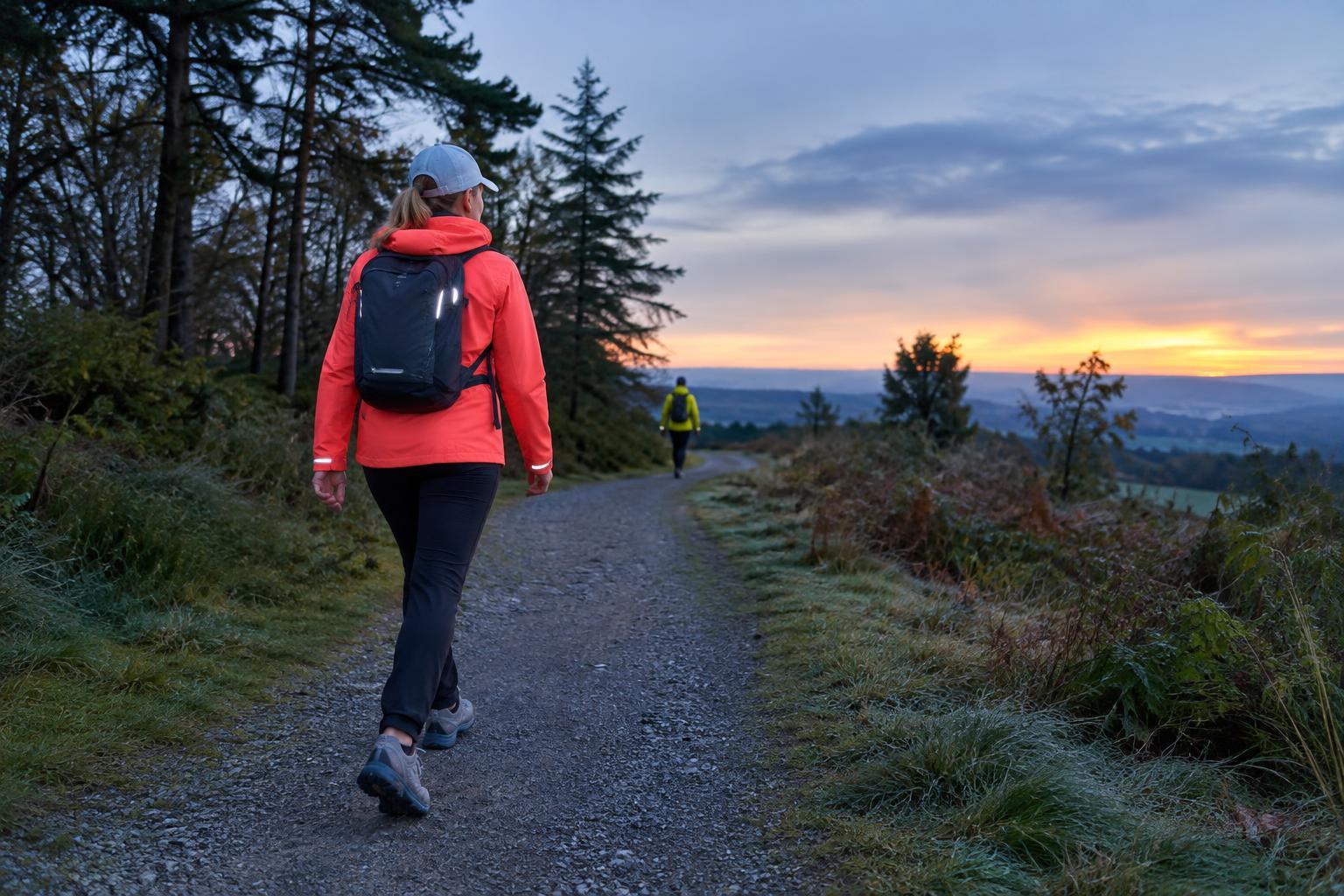
Bright, contrasting colors can help you stand out against muted surroundings in dim daylight. A vivid jacket or outer layer is often more useful than a bright shirt hidden beneath a dark coat. Consider the background along your route, too: a color that contrasts with woodland greens may be less distinctive among brightly colored signs and shopfronts.
Reflective material works differently. It returns light toward its source, so it can become conspicuous when illuminated by a bicycle lamp or vehicle headlights. It is less useful where there is no light shining on it. For a walk that may continue from twilight into darkness, combine a bright outer layer with reflective details rather than relying on either one alone.
Look at where those details sit. Small reflective logos can disappear beneath a backpack or scarf. Bands or panels on moving arms and lower legs can help show that a person is walking, while reflective areas on the front, back and sides offer visibility from more directions. You do not need every item to be brightly colored; a few well-placed outer pieces can do the work.
Make visibility part of a comfortable layering system
The most visible garment is only useful if you are willing to wear it for the whole walk. Start with layers suited to the weather, then make sure the outermost layer carries the color or reflective features you want others to see. In cool conditions, that might be a bright shell over warmer clothing. On a mild evening, it could be a lightweight vest over a comfortable top.
Check the fit before leaving. You should be able to move your arms freely, turn your head and reach pockets without the garment riding up or twisting. If you carry a pack, try it on over your walking clothes. Shoulder straps, a waist belt and the pack itself can cover large portions of a jacket, including its reflective trim.
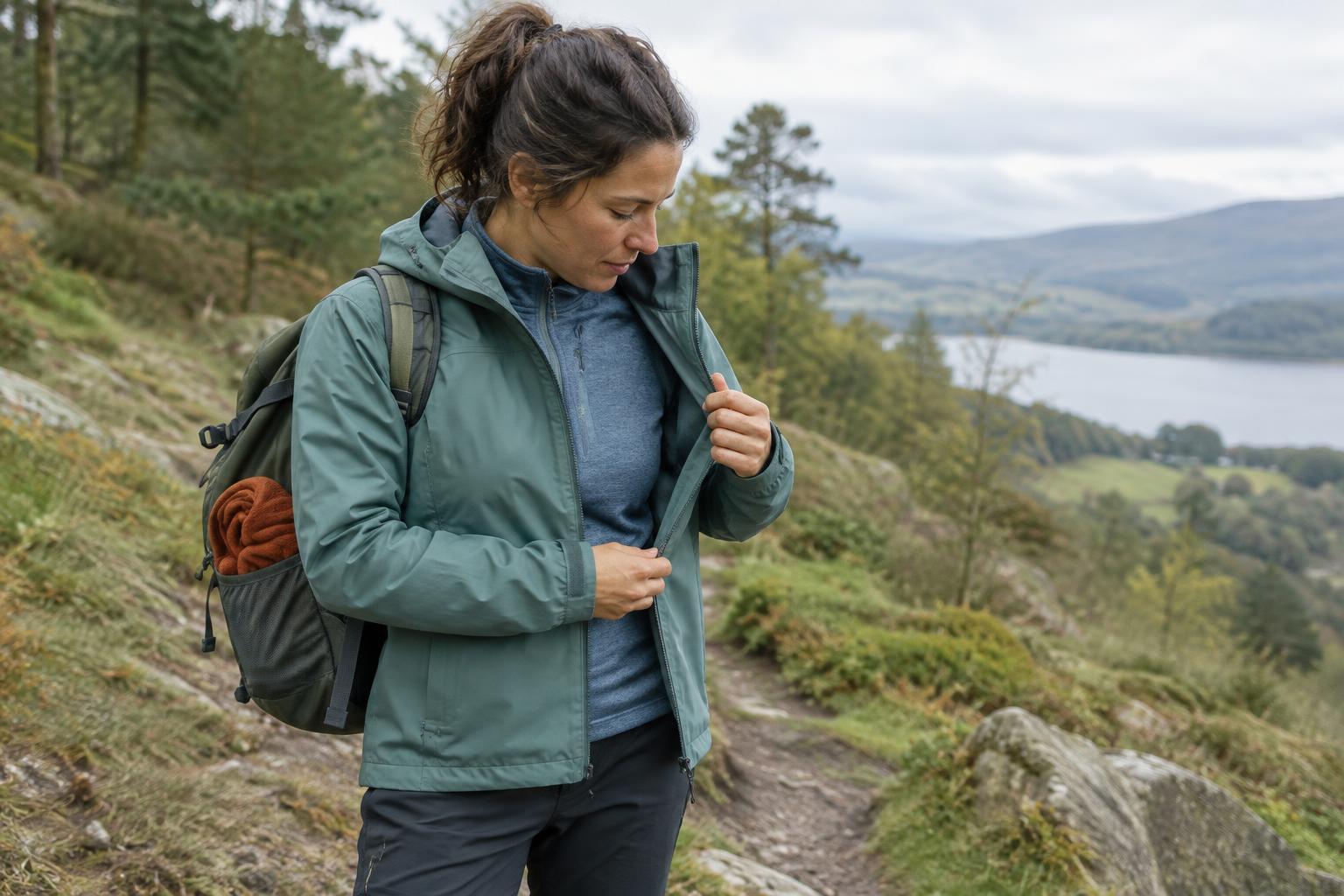
Weather protection matters as well. A thin visibility vest may fit easily over a raincoat, but it should not flap so much that it becomes distracting. If rain is likely, choose layers that keep you comfortable and place your visible piece on top. A clear plan for adding or removing layers makes it easier to stay noticeable as conditions change.
Check what can be seen from every direction
Before a low-light walk, put on your full outfit, including your pack, hat and any rain layer. Ask yourself what remains visible from behind and from the side, not just from the front. A bright jacket can be largely hidden by a dark backpack. Reflective details on a pack cover, straps or accessories can help fill those gaps.
Accessories are useful when you want flexibility. A reflective band, a bright cap or a visible pack cover can move between outfits. Place them where they will not be blocked by loose clothing or gear, and avoid anything that interferes with your grip, balance or comfort. If your route becomes dark, a carried light can help you spot uneven ground; choose and use it so that you can still pay attention to others nearby.
Keep your setup simple and ready to use
Mud, wear and layers of dirt can make clothing details harder to notice. Follow each garment’s care label, clean visible outerwear when needed and check reflective areas for peeling or damage. After changing your pack or buying a new coat, repeat the full-outfit check rather than assuming your old setup still works.
A dependable dawn-or-dusk outfit does not have to be elaborate. Keep a bright or reflective outer piece near your usual walking gear, and pack a light if there is a chance you will return after dark. The aim is a combination you can put on easily, move in comfortably and adjust as the light changes.