Start by removing loose grit
The safest cleaning habit is to keep dry grit from being dragged across a lens. Sand, dust and dried mud can catch under a cloth or fingertip, so resist the urge to polish sunglasses as soon as they look smudged. If you are on a walk, it is usually better to put them in their case and wait until you have clean water.
Before handling the lenses, wash or wipe dirt and sunscreen from your hands. Then rinse the sunglasses gently with cool or lukewarm water. Let the water carry particles away rather than rubbing them loose. If the frames are especially muddy, pay attention to the rims and nose pads, where grit can remain close to the lens edges. Avoid hot water, which may not suit some frame materials or lens coatings.
Wash away fingerprints and sunscreen gently
After rinsing, check the maker’s care instructions if you have them, particularly for mirrored lenses or special coatings. For sunglasses that can be washed with mild soap, use a small drop of plain, lotion-free dish soap on clean, wet fingertips. Lightly clean both sides of the lenses, then the nose pads and parts of the frame that touch your skin. Use a gentle touch; pressure is not needed to lift an ordinary fingerprint.
Rinse thoroughly with cool or lukewarm water so soap does not dry into streaks. Skip household glass cleaners, bleach, solvents and abrasive cleaners unless the sunglasses maker specifically recommends a product. These may be unsuitable for lens coatings or frame finishes. If you use a bottled lens cleaner, choose one intended for your type of eyewear and follow its directions.
Dry with a clean cloth, not whatever is handy
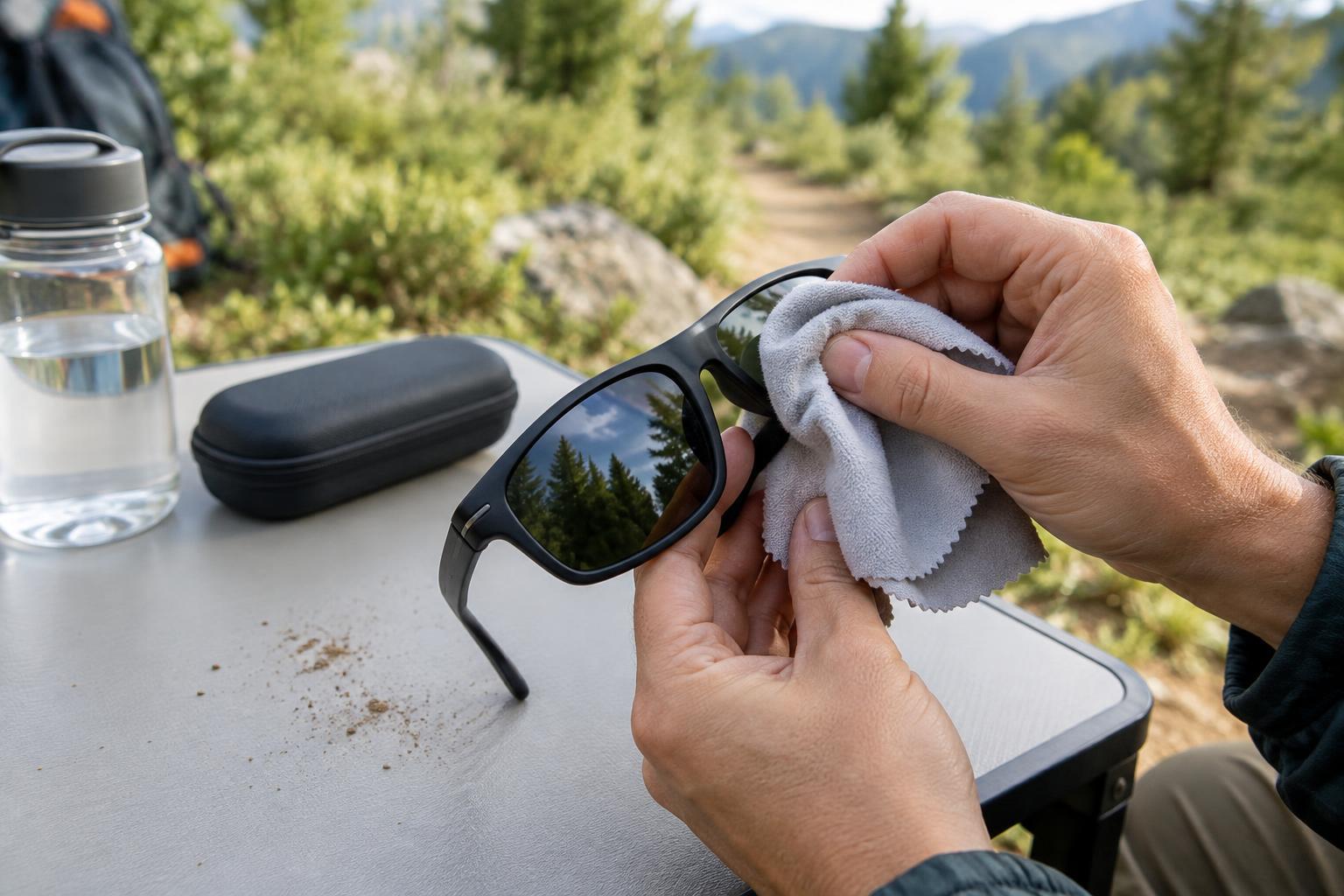
Shake off excess water gently, then use a clean microfiber lens cloth to blot and lightly wipe the lenses. Give the rims a moment to drain: water hiding around them can run back over a lens you have just dried. If a mark remains, rinse and clean it again instead of pressing harder with the cloth.
A shirt hem, paper towel or napkin might be convenient on the trail, but it can hold grit or have a rough surface. A microfiber cloth is only helpful when it is clean, too. Keep yours in a pouch or case pocket rather than loose with keys and snacks. Wash it according to its care label when it becomes oily or dirty, and keep it away from fabric softener, which can leave residue. If the cloth falls in the dirt, set it aside until you can wash it.
Adjust the routine for outdoor messes
Different trips leave different deposits. After a windy, sandy walk, rinse especially well before touching the lenses. After a day near salt spray, rinse the frames and lenses with fresh water when you can, including around the hinges and nose pads. Sunscreen marks may need the gentle soap wash rather than repeated dry wiping.
If you cannot rinse your sunglasses during an outing, avoid trying to rub off a stubborn mark. A quick clean is not worth grinding trapped debris against the lens. Store the glasses safely and deal with the mess later. For lenses with specialty finishes, or sunglasses supplied with a particular cleaning kit, follow the maker’s guidance where it differs from a general routine.
Keep them clean between uses
Store dry sunglasses in a protective case when you are not wearing them. Place them where they will not be crushed in a bag, and avoid leaving them lens-down on a rough surface. Before packing them after a trip, check the case lining for sand or crumbs; putting clean lenses into a gritty case undoes your careful washing.
A simple post-trip check takes little time: rinse off obvious dirt, clean any oily marks, let the frames dry and tuck a clean cloth into the case. These small habits make the next cleaning easier. More importantly, they reduce the occasions when you have to choose between looking through a smudge and hurriedly wiping grit across a lens.