Let the pan cool before you clean it
A nonstick camp pan often needs less scrubbing than an uncoated one, but it benefits from a little patience. After cooking, move it off the heat and allow it to cool enough to handle comfortably. Pouring cold water into a very hot pan can cause sudden temperature changes that may affect the pan’s shape or coating. It can also send steam and hot grease toward your hands.
Once the pan has cooled, remove loose food with a soft cloth, paper towel or silicone spatula. Wipe out excess grease before washing, rather than sending it into a campsite sink or onto the ground. If your cookware came with care instructions, check those first: coatings and recommended cleaning methods vary.
Wash with soft tools and a small amount of soap
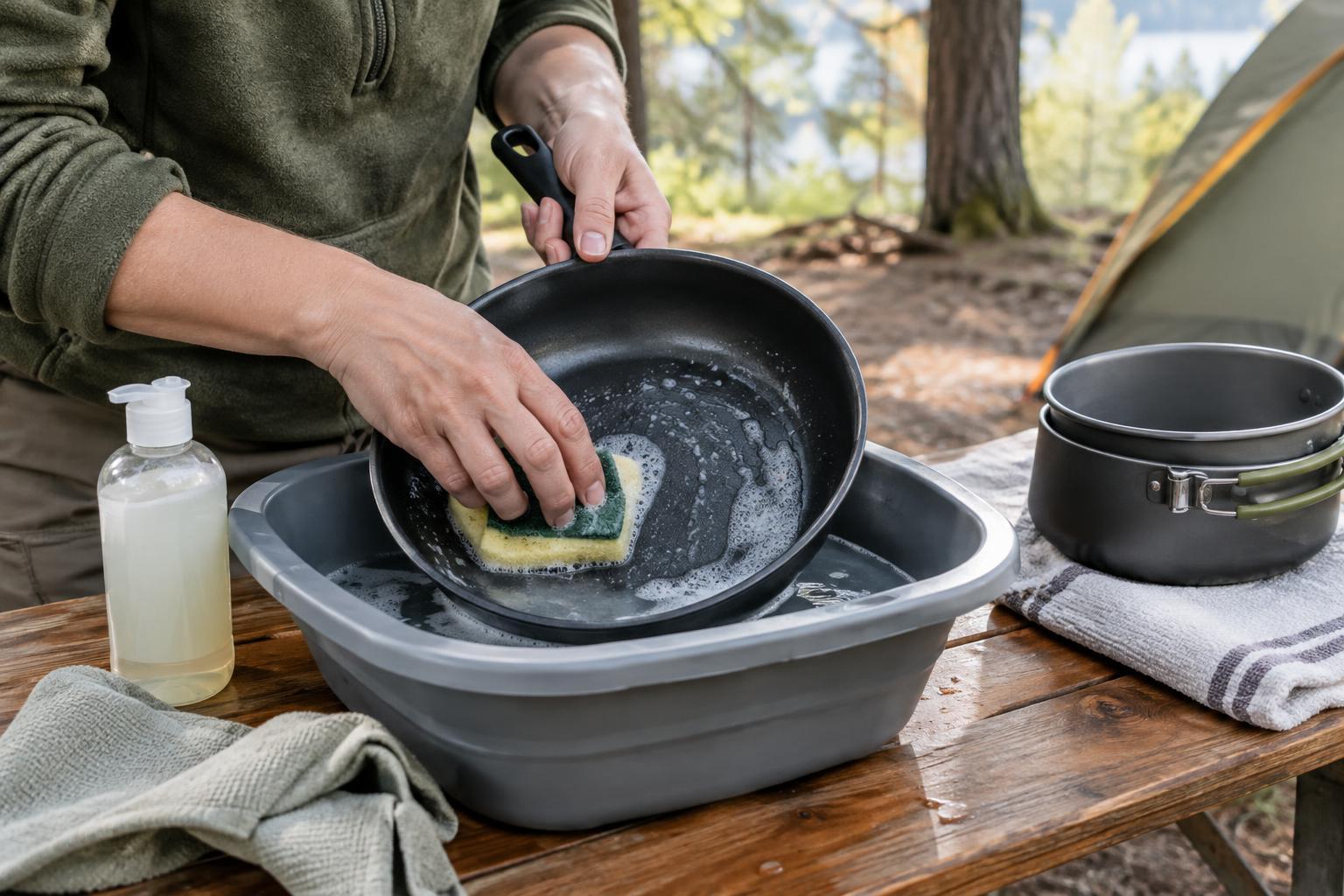
For routine cleaning, use warm water, a little mild dish soap and a soft sponge or cloth. Work across the cooking surface with light pressure, then clean the rim, handles and outside of the pan where food or soot may have collected. Rinse away the soap and check the surface by touch for any remaining slick spots or residue.
Leave steel wool, abrasive scrub pads, gritty cleaners and metal scrapers out of the wash kit. They can scratch or wear a nonstick coating, even when a mark is not immediately obvious. A soft brush can help around rivets or folds, provided its bristles are gentle enough for the cookware. If you are unsure whether a tool is safe, try the softer option first.
Loosen stuck-on food instead of scraping
Dried oats, eggs and sugary sauces may cling to a pan despite its nonstick finish. Add enough warm water to cover the residue and let it soak for a while. Then ease the food away with a soft sponge or a silicone or wooden utensil. Repeat the soak if needed; several gentle passes are safer for the coating than one forceful scrub.
If soaking alone is not enough, a brief, gentle simmer with water may help loosen food, as long as the cookware manufacturer permits it. Let the pan cool again before washing. Avoid heating an empty nonstick pan in an attempt to burn residue away, and avoid using a knife to lift stubborn patches. Taking more time now is usually easier than managing a damaged cooking surface later.
Keep campsite cleanup contained
At a campsite, plan for washing before you start cooking. A small basin, a soft sponge and a container for carrying water make it easier to clean cookware without washing directly in a stream or lake. Scrape food scraps into your waste bag, and wipe grease from the pan before adding wash water. Even biodegradable soap should be kept out of natural water sources.
Follow the campsite’s rules for collecting and disposing of dishwater. Where facilities are provided, use them; elsewhere, local guidance may specify how to handle strained wash water. Pack out food scraps rather than scattering them, and do not leave a soapy pan to rinse in the rain. If water is limited, a thorough wipe after cooking can reduce the amount needed for a final wash, but remove food residue before packing the pan away.
Dry and pack the cookware with care
Dry the pan fully before storing it, paying attention to handles, folded joints and any lid that traps moisture. Leaving cookware closed while damp can create odors and make the next cleanup harder. If you have to pack it wet for the walk home, open it up and wash and dry it properly as soon as you can.
Protect the cooking surface during transport. A soft cloth or the pan’s storage bag can separate nested pieces, and utensils are less likely to scratch the coating when carried in their own pouch. Avoid stacking sharp-edged stove parts directly inside the pan. Before each trip, look for peeling, deep scratches or other obvious damage and follow the maker’s guidance on whether the cookware should still be used. Gentle cleaning helps, but careful packing and cooking with suitable utensils matter just as much.