Start drying as soon as you get home
Mildew is more likely to develop when a tent stays damp in a tightly packed bag. Rain is an obvious source of moisture, but dew, condensation, and wet ground can leave fabric damp after a fair-weather trip. Treat the carry bag as a way to transport your tent, not as a place to leave it after returning home.
Unpack the tent as soon as you reasonably can. If you cannot clean it immediately, spread out the body and rainfly in a sheltered, ventilated space rather than leaving them compressed. Keep wet fabric off floors or surfaces that could transfer dirt. Separate the groundsheet or footprint, open the doors and vents, and check the corners and folds where moisture tends to linger.
Remove dirt without damaging the fabric
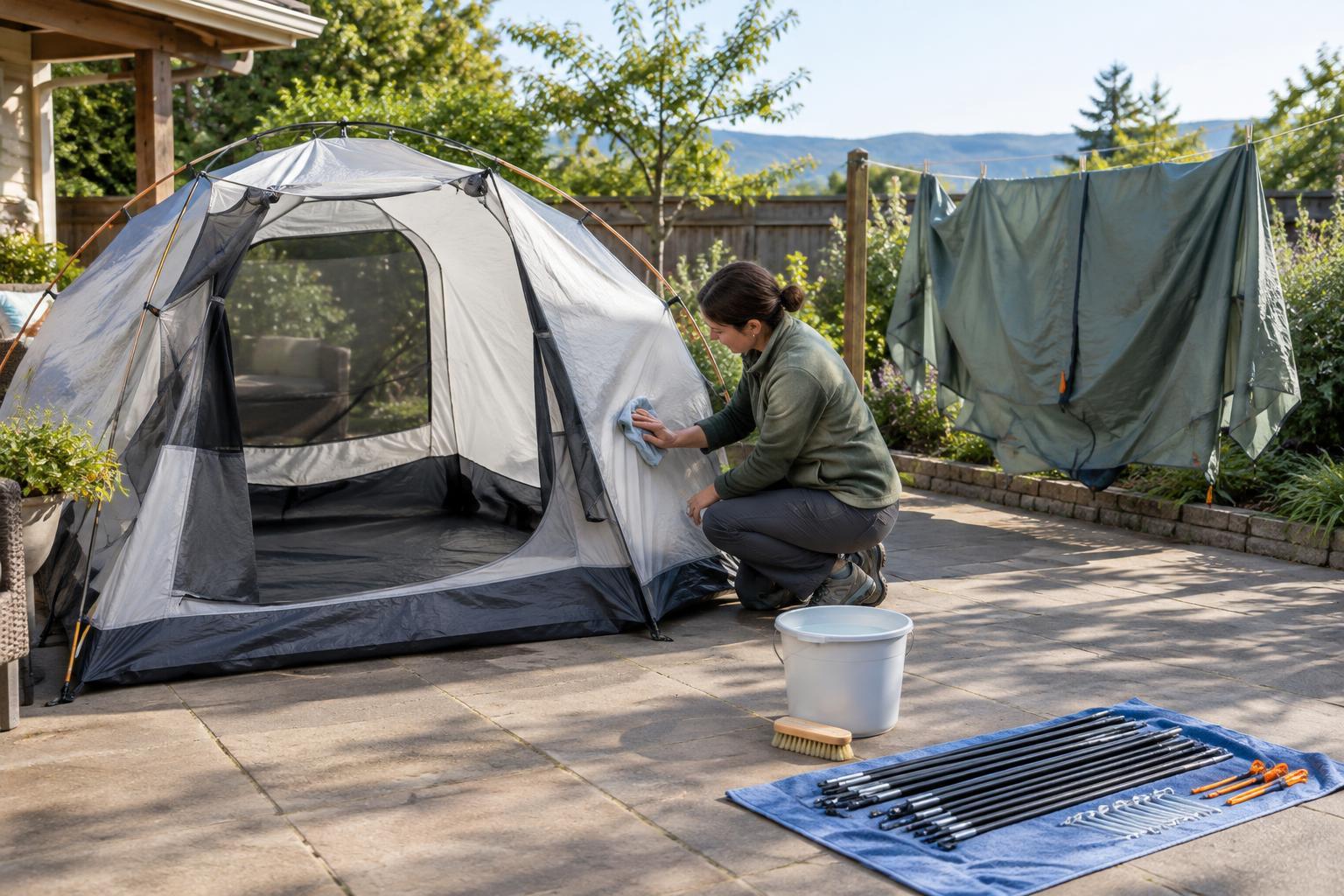
Begin with a dry clean. Shake out loose grit, leaves, and grass, then use a soft brush or cloth on stubborn debris. Pay attention to the floor, zippers, mesh, and the edges of the rainfly. Clearing grit before washing helps avoid rubbing it into coatings or zipper teeth.
For ordinary dirt, use a sponge or soft cloth with lukewarm water. If water alone is not enough, choose a cleaner suitable for tent fabrics and follow both its directions and the tent maker’s care guidance. Test any cleaner on a small, inconspicuous area first. Avoid bleach, fabric softener, harsh detergents, and vigorous scrubbing; these may harm coatings, seam tape, or water-repellent finishes. Rinse away any cleaner residue, and do not put the tent in a washing machine or dryer unless its care instructions explicitly allow it.
Dry every component completely
After cleaning, pitch the tent or hang its pieces where air can circulate on both sides. A shaded, breezy spot is often useful for extended drying because strong sun can wear on some fabrics and coatings over time. Keep panels from bunching together. Turn the tent body, rainfly, and footprint as needed so the underside and folded edges get air too.
Do not judge dryness by the largest panels alone. Feel along seams, pockets, zipper flaps, guyline attachment points, and the floor corners. Wipe moisture from poles and stakes, and let their bags dry separately. If the tent has been pitched outdoors to dry, check it again before packing; evening dew or damp ground may have added moisture back. When in doubt, give it more time.
Store it loosely in a suitable place
Once every part is dry, store the fabric loosely rather than compressing it in its small trip bag. A roomy, breathable storage sack or a clean shelf gives the material space and makes it easier to notice dampness. You can keep poles and stakes in their own bags to reduce the chance of sharp edges pressing against the fabric. Make sure those bags are dry before putting everything away.
Choose a clean, dry storage area with reasonably stable conditions. Avoid damp basements, leaky sheds, and spots beside heaters or in prolonged direct sunlight. A sealed plastic container may seem protective, but it can trap moisture if anything inside is not fully dry. If you must use one, be especially careful about drying first and check its contents periodically.
Check the tent before the next trip
Before packing for another outing, unfold the tent and look for musty odors, visible spots, sticky coatings, loose seam tape, and damage around the floor or zippers. An odor or discoloration calls for another careful clean and thorough dry; persistent mildew or deteriorating coatings may require guidance from the manufacturer. Do not cover a problem with fragrance and pack the tent away again.
A quick inspection also gives you time to replace a missing stake, untangle guylines, or address a small repair. The routine is simple: remove dirt, use gentle cleaning methods, dry every piece, and store the tent with room to breathe. Those habits make it easier to unpack a usable shelter when the next day trip or overnight adventure comes around.