Start with a safe workspace
Pocketknives and multitools pick up pocket lint, trail dust, moisture and sticky residue. Left in a pivot or spring, that debris can make an otherwise useful tool stiff or unpleasant to handle. Routine care is straightforward: remove loose dirt, clean only as thoroughly as needed, dry the tool completely and add a small amount of suitable lubricant to moving parts.
Work over a clear, well-lit surface with a cloth underneath to catch drips and debris. Keep fingers out of the path of every blade and tool. Open one implement at a time, hold the handle securely and close it before switching to another. If a tool has a lock, check that you understand how to release it; do not force a stiff implement open. A soft brush, cotton swabs, lint-free cloth, mild dish soap, warm water and a small bottle of tool-appropriate oil are usually enough for basic care.
Remove grit before adding water
Begin with the tool dry. Brush lint and grit from the handle, hinge and spaces between folded implements. A soft toothbrush can reach many corners, while a wooden toothpick can gently lift compacted dirt from a recess. Avoid scraping a cutting edge or pushing debris deeper into the mechanism. Wipe the blade and exposed metal with a cloth, moving carefully away from the sharp edge.
For stubborn sap or adhesive, check the maker’s care guidance before using a cleaner. Strong solvents may damage handle materials, coatings or adhesives, and they are rarely necessary for ordinary dirt. Apply any compatible cleaner to a cloth or swab rather than flooding the pivot. Removing grit first matters: oil added to a dirty hinge can turn dust into a paste that is harder to clear later.
Wash lightly and dry thoroughly
If the tool still feels dirty, wipe accessible surfaces with a cloth dampened with warm water and a little mild dish soap. Use a damp swab around joints, then remove soap with a separate, lightly damp cloth. Some all-metal tools can tolerate a brief rinse, but do not assume yours can. Handles with wood, electronics or enclosed components may need a much drier approach. Follow the manufacturer’s instructions when they differ from a general routine.
Dry every surface you can reach with a clean cloth, then leave the tool open in a safe place so moisture trapped near pivots can evaporate. Keep it away from children and pets while it dries. You can gently move each implement after the visible water is gone to expose damp areas, then wipe again. Do not put the tool away wet or apply oil over remaining water. If you notice rust, remove light surface marks with a suitable non-abrasive method recommended for that tool; deep corrosion or a damaged locking mechanism deserves closer inspection rather than extra force.
Lubricate the pivot, not the whole tool
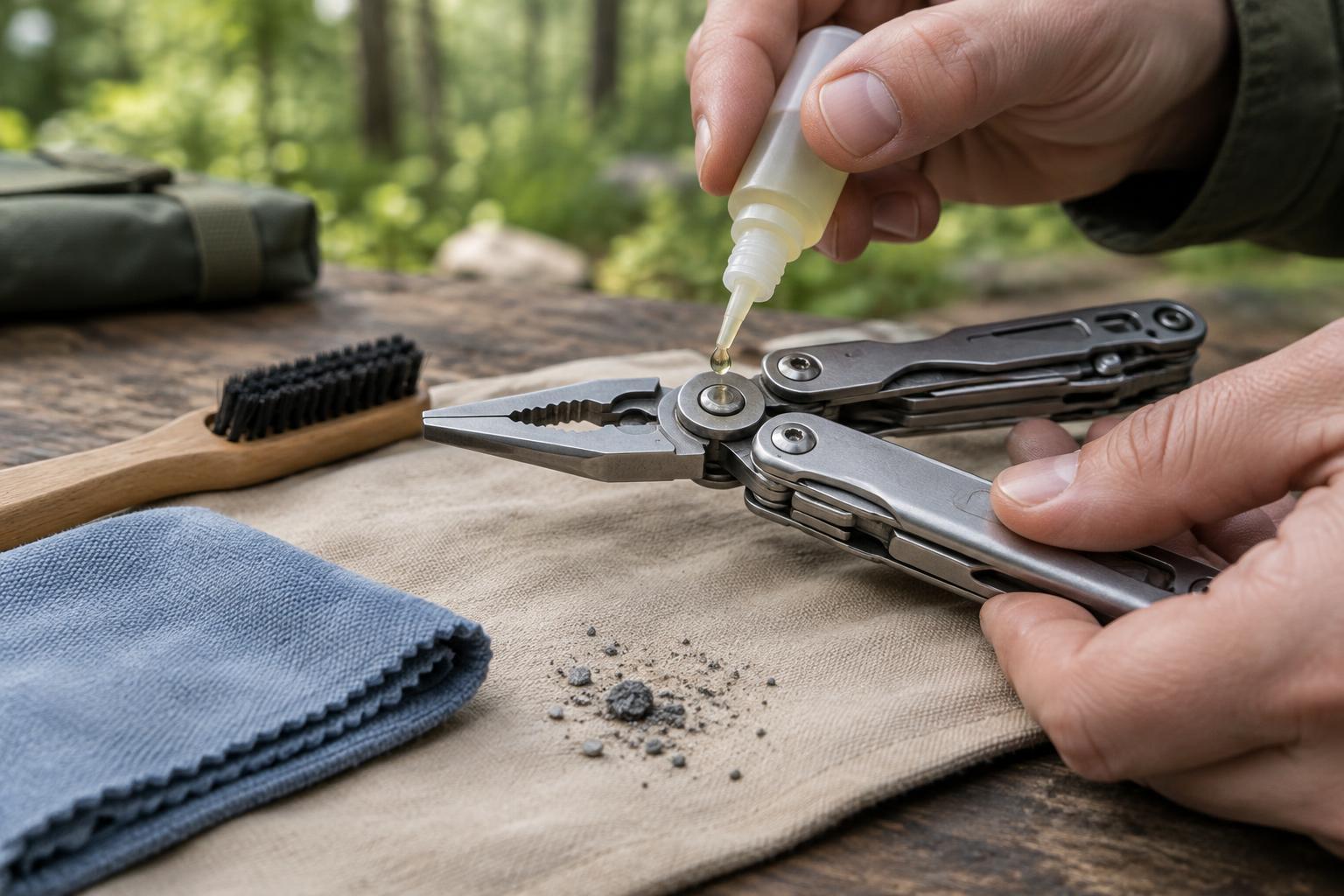
Once the tool is fully dry, place one small drop of lubricant at a pivot or other moving joint. Open and close that implement several times to work the oil in, keeping your hands clear of its edge. Repeat only where movement calls for it. Wipe away any oil that comes out of the joint and any film left on the handles or blade. Excess oil attracts dirt and can make a grip slippery.
Choose a lubricant that the tool maker recommends and that suits how you use the tool. If a blade may touch food, consider a product labeled for incidental food contact, and clean the blade before food preparation. Avoid spraying lubricant indiscriminately into the handle: it is difficult to control where it goes, and it can carry dirt into tight spaces. A drop applied with a fine tip gives you more control.
Check the action before packing it away
When the tool is clean, dry and lightly lubricated, test each implement carefully. It should open and close in its normal way, and any lock should engage and release as designed. Cleaning can improve a gritty pivot, but it cannot repair a bent part, loose fastener or unreliable lock. Stop using a damaged tool until it has been properly assessed; avoid taking apart a spring-loaded multitool unless its maker provides instructions for doing so.
Finish by wiping down the outside and storing the tool somewhere dry, rather than in a damp sheath or the bottom of a wet pack. After a muddy day trip or unexpected rain, a quick inspection and dry-off may be all it needs. More thorough cleaning can wait until you see built-up grime or feel resistance. Small, regular checks keep maintenance manageable and make it easier to spot a problem before your next walk.