Empty it and check the care instructions
Start by taking everything out of the cooler, including loose ice packs, dividers and removable liners. Throw away food scraps and pour out meltwater. If the cooler has a drain, open it over a suitable sink or outdoor drain, then check the plug and surrounding channel for trapped debris. A quick rinse can remove loose crumbs, but it will not replace a wash.
Before adding water or cleaner, check the manufacturer’s care instructions if you have them. Hard-sided coolers usually tolerate a thorough wash of their interior, while soft-sided coolers may have coatings, seams or insulation that should not be soaked. Never immerse an electric cooler or wash its powered components. Unplug it first, then follow its instructions for cleaning around vents, controls and electrical connections.
Wash the surfaces that touch food and hands
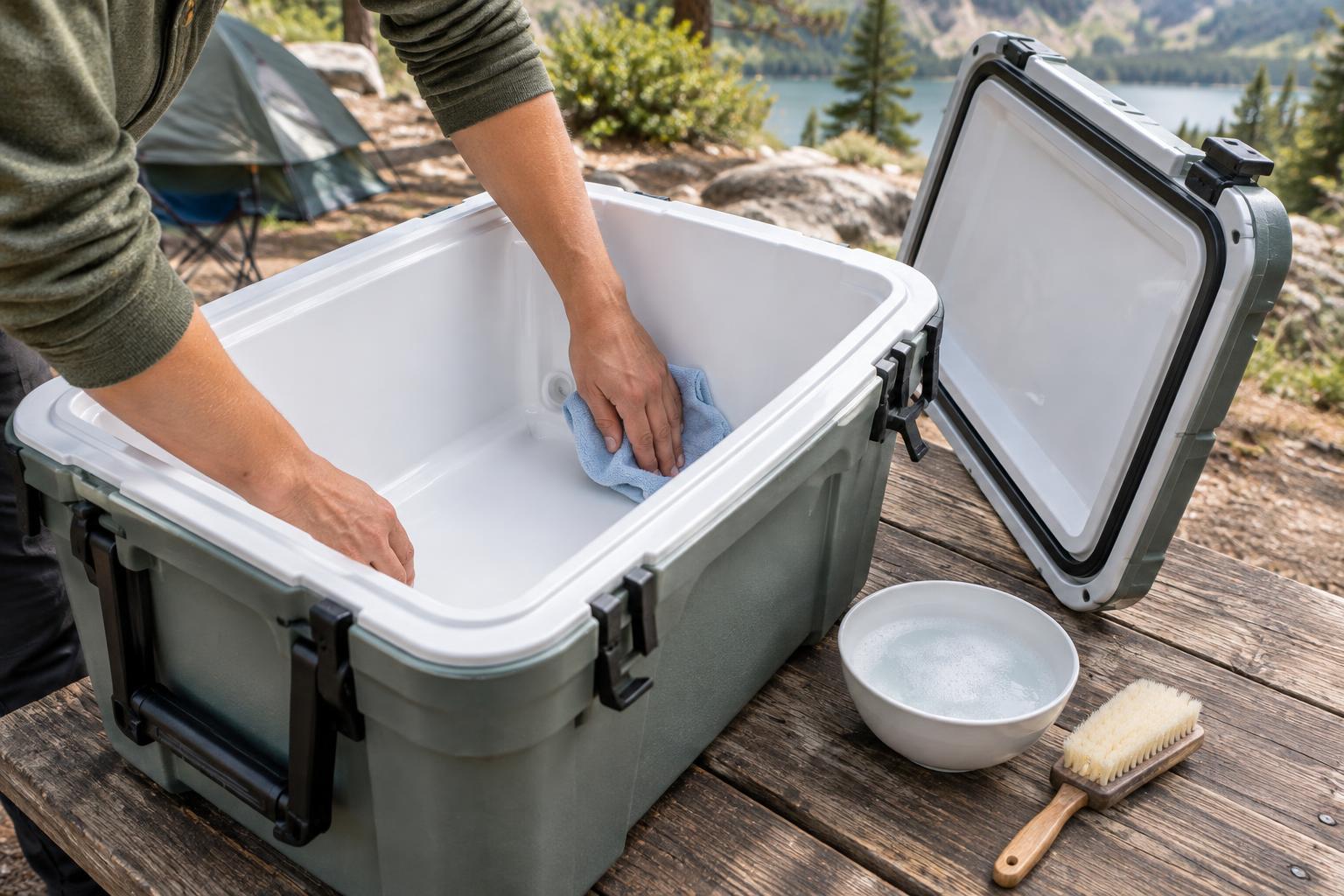
For a hard-sided cooler, mix a small amount of mild dish soap with warm water. Wipe or scrub the interior with a soft cloth or nonabrasive sponge, working into corners and around the lid. Pay particular attention to the rim, handles, latches, drain plug and any removable divider. These spots are easy to miss when the main compartment looks clean. Use a soft brush for narrow grooves rather than a rough scouring pad that could scratch the surface.
Clean a soft-sided cooler with a damp cloth and mild soapy water, following its care instructions for any removable liner. Wipe the inside, zipper area, handles and outer fabric where spills or sticky hands have left marks. Avoid flooding seams or padding. If a liner can be removed, wash and dry it separately as directed; do not assume the entire bag is machine washable.
Wipe away soap with a clean damp cloth, rinsing the cloth as needed. A hard-sided cooler can generally be rinsed more freely, but keep water away from any components that should remain dry. If raw meat juices or other potentially harmful spills leaked inside, consult the cooler’s instructions for an appropriate food-contact-safe sanitizing method after washing. Cleaning removes visible residue; it does not necessarily sanitize the surface.
Deal with lingering odors gently
Once the cooler is clean, leave it open and check whether the smell remains after the surfaces have dried. Odors often linger in small places: beneath a removable liner, around a drain plug or in a lid groove. Revisit those areas with soapy water before trying to cover the smell with fragrance.
For a mild lingering odor in a dry, hard-sided cooler, place an open container of baking soda inside, close the lid and leave it overnight. Keep the powder contained so it does not lodge in hardware or seams. Remove it before packing food. For a soft-sided cooler, use the same contained approach only if it can sit upright without spilling. Avoid heavily scented products, which may leave a smell of their own without addressing the source.
If an odor persists, repeat the wash and allow more drying time rather than mixing cleaning products. Do not combine different cleaners, and avoid harsh chemicals or abrasive treatments unless the manufacturer specifically recommends them. If a liner or other removable part remains stained or smells musty despite careful cleaning, check whether that part can be replaced.
Dry every part before storing
Drying is as important as washing. Wipe out standing water with a clean towel, then leave the cooler open in a well-ventilated place. Prop open a soft-sided cooler so air can reach the base and corners. Let removable parts dry separately, and check around seals, pockets, zippers and the drain before reassembling them. Direct heat may damage some plastics, coatings or adhesives, so choose airflow over a heater.
Store the cooler only when it feels completely dry. Leave the lid or zipper slightly open if its storage spot allows it, and keep the cooler away from damp floors. If space is limited and you must close it, check it again after a day to make sure moisture has not collected inside. A musty smell when you reopen it is a sign to wash and dry it again before use.
Make the next cleanup easier
Small packing habits can prevent a difficult cleanup later. Put loose food in sealed containers, secure items that might leak and keep raw foods separated from ready-to-eat snacks. Reusable ice packs can reduce the amount of meltwater, though any damp cooler still needs drying after a trip. Wipe spills when you notice them rather than letting them sit until you get home.
After each outing, empty the cooler promptly, wash any food residue, and give it enough time to dry before putting it away. This short routine is usually simpler than trying to remove an odor that has settled into seams or a closed, damp compartment.