Start with a walk you can comfortably finish
Your first day walk does not need to be long or remote to feel like an adventure. A local loop, woodland path or well-marked trail can give you a chance to enjoy being outdoors while you learn what pace feels comfortable. The best starting point is not someone else’s idea of an easy hike; it is a route that fits your own experience, available time and energy.
Think about walks you already take. If you regularly walk around town for an hour without feeling worn out, a similar amount of time on a mostly level trail may be a sensible first choice. If walking is less familiar, begin with a shorter route that has benches or easy places to turn back. Choose a walk that leaves you with some energy to spare, rather than one that tests your limit.
Read the terrain, not just the distance
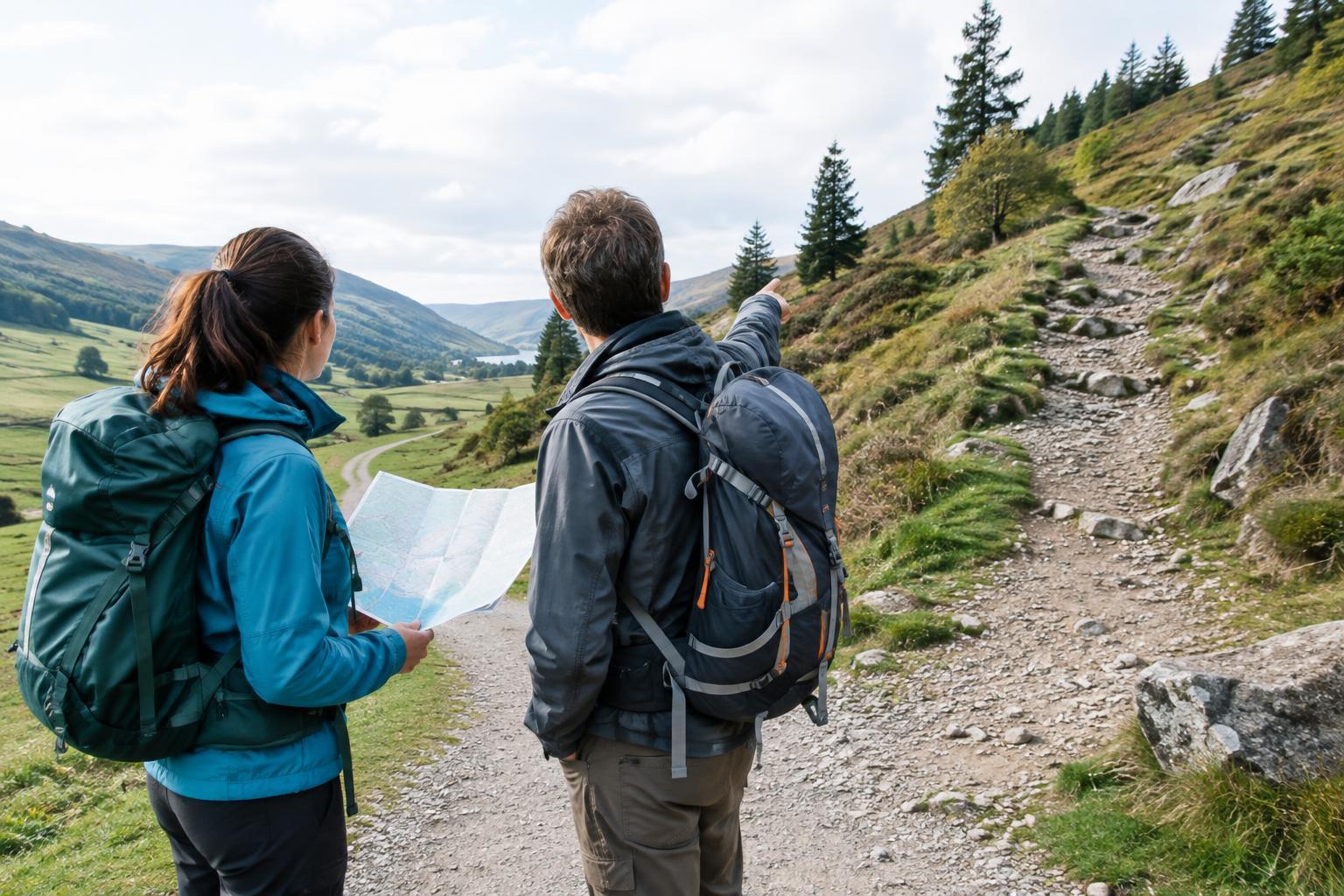
Distance is useful, but it tells only part of the story. A short route with steep climbs, loose stones or muddy ground can feel harder than a longer walk on a firm, level path. When comparing routes, look for descriptions of elevation gain, path surface, steps and exposed sections. If those details are missing, treat the route as less predictable and consider a better-described option for your first outing.
Terrain also affects how quickly you move. On a smooth path, you may settle into a steady rhythm. Roots, rocks and uneven ground ask you to slow down and watch your footing, especially on descents. A gentle hill can be enjoyable; repeated climbs may become tiring. For a first walk, a clear path with modest changes in height makes it easier to judge your effort and adjust your plans.
Match the route to your current fitness
Fitness for walking is specific: it includes time on your feet, comfort on uneven ground and how you respond to hills. You do not need a formal test. Consider whether you can keep a conversational pace on an ordinary walk, how you feel after climbing stairs, and whether you are used to carrying a small bag. Be honest about your usual activity rather than planning around a particularly energetic day.
If you are unsure, choose a short, mostly flat route and see how it feels. You can add distance or hills on later trips. If you are walking with others, plan for the person who expects to need the most breaks. A route everyone can enjoy together is better than one that pressures someone to hurry. Take breaks before you feel exhausted, and be willing to shorten the walk if the terrain proves tougher than expected.
Give yourself more time than the route suggests
A published walking time may not include stops to drink water, check directions, take photos or simply look around. Build in extra time, especially if the path is unfamiliar. Starting early enough to finish comfortably in daylight gives you more flexibility if you walk slowly or pause longer than planned.
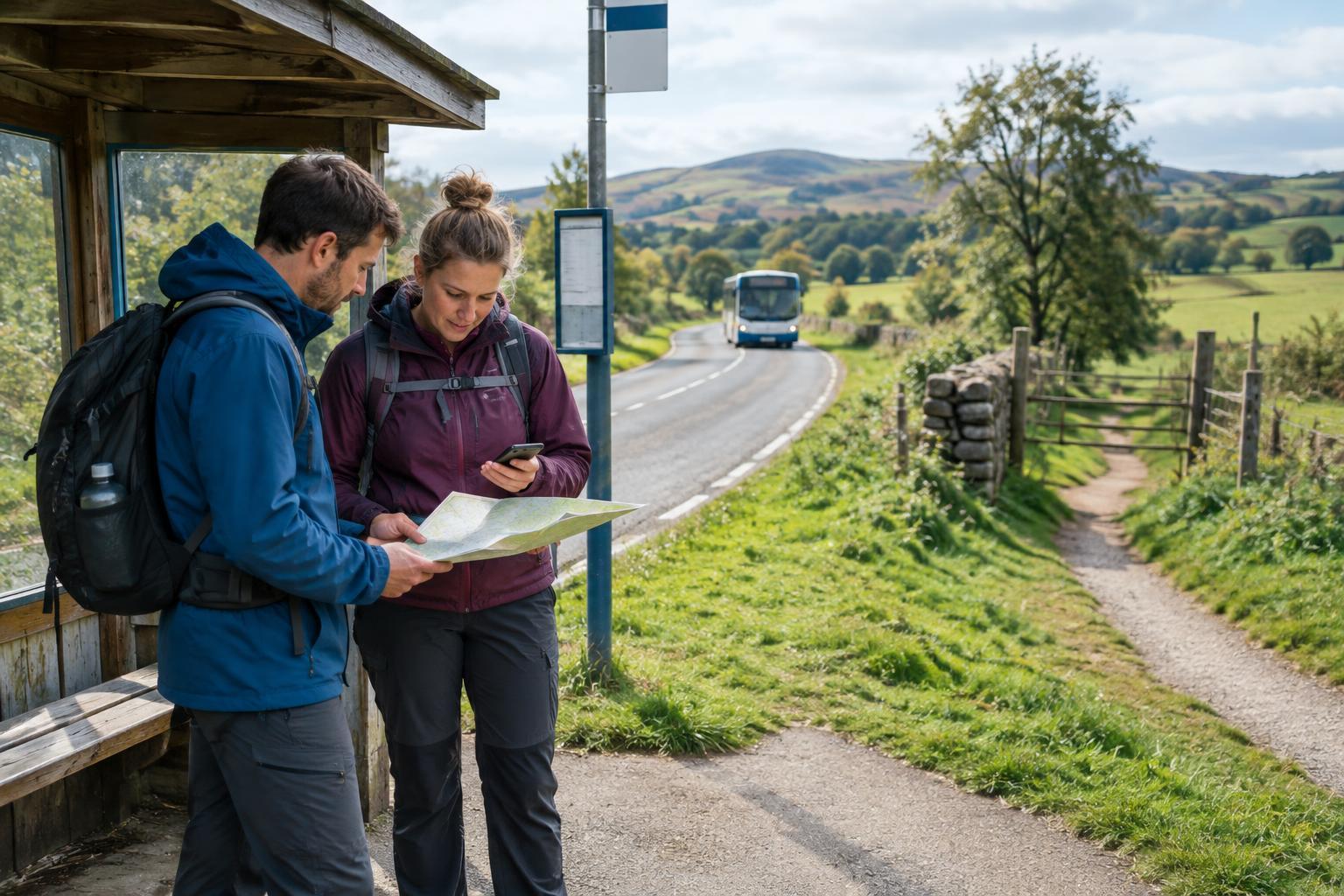
For a first day walk, a loop or an out-and-back route is often easier to manage than a point-to-point route that depends on transport at the finish. On an out-and-back walk, decide in advance when you will turn around; remember that reaching a viewpoint is only half the journey. Check where the route begins, where paths join and whether there are straightforward places to leave the trail if needed.
Prepare simply, then learn from the walk
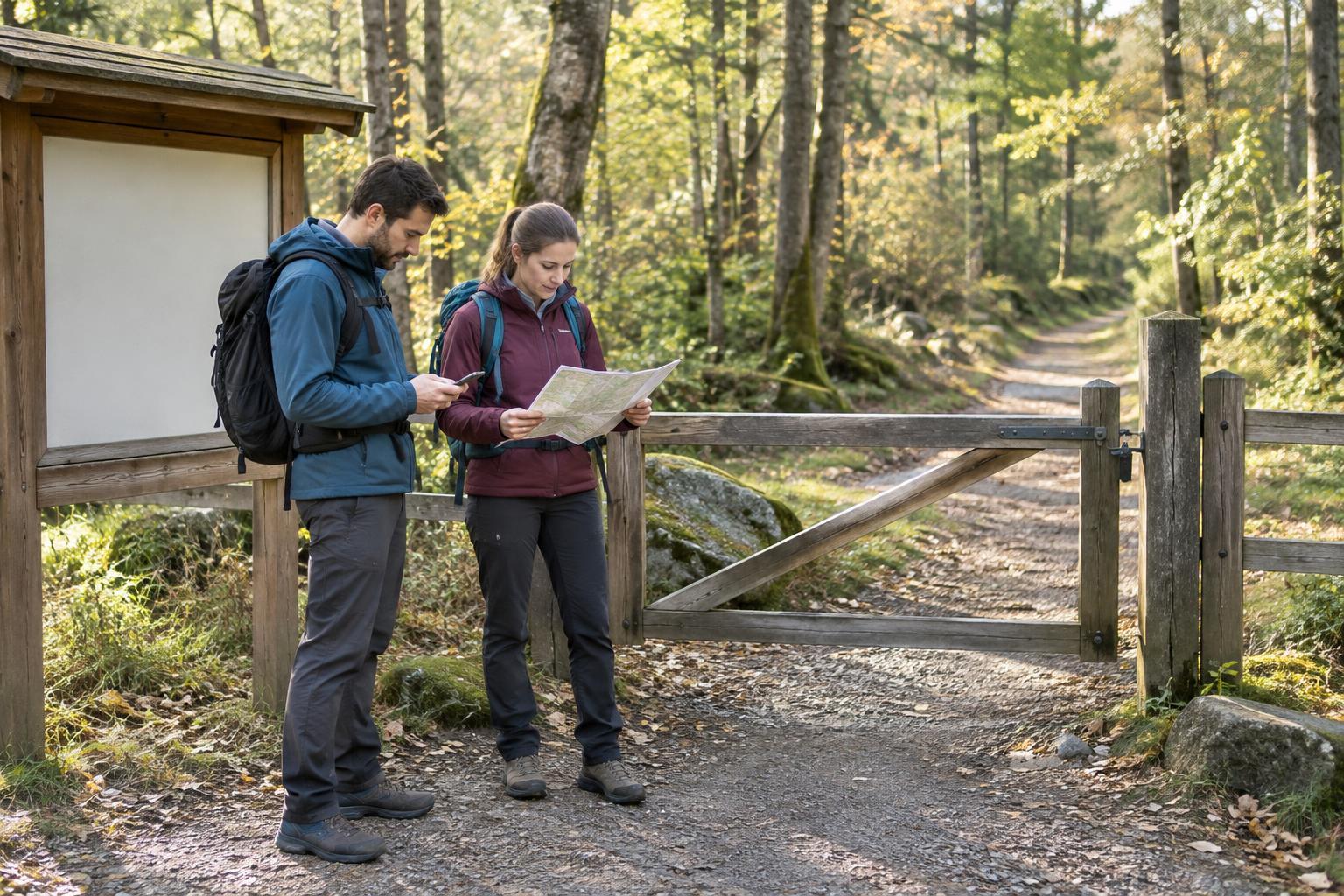
Before you go, check the expected conditions and bring water, a snack, suitable footwear and a layer you can put on if you stop or the weather changes. Save or carry route information that you can use without relying entirely on a phone signal. Let someone know where you plan to walk if you are heading somewhere quiet, and pay attention to any posted access information at the trailhead.
Afterward, notice what felt easy and what required effort. Was the distance comfortable but the descent tiring? Did a rough surface slow you down more than expected? These observations are more useful than comparing your pace with anyone else’s. For your next walk, change just one challenge at a time—perhaps a little more distance or a slightly hillier path. That way, each day out helps you choose the next one with confidence.