Start with the cause of discomfort
Walking underwear cannot stop you from sweating, but it can change how damp fabric feels against your skin. It can also reduce rubbing where your legs, waistband or pack straps shift as you move. The goal is not to find a universally “chafe-proof” garment. It is to choose a layer that stays comfortably in place through your usual stride, weather and walking pace.
Think about where discomfort tends to appear. Rubbing at the inner thighs calls for a different cut than pressure at the waist. If a pair feels fine while standing but bunches when you climb stairs or bend to tie a shoe, it may cause trouble several miles into a walk. Your existing underwear is a useful starting point: note what moves, pinches or stays damp.
Choose fabric for the conditions
Lightweight synthetic fabrics, such as polyester or nylon blends, are common choices for active walking. They generally move moisture away from the skin and dry faster than thick cotton underwear. Cotton may feel soft at the start, but it can hold onto sweat, leaving damp fabric in contact with areas that rub. Breathable fabric is helpful, though the cut and your outer layers also affect how quickly moisture escapes.
Merino wool and wool blends are another option, especially if you prefer a softer feel or plan to wear a pair for a long travel day. Different knits vary in thickness, stretch and drying time, so check the garment rather than relying on the fiber name alone. On a hot walk, a thin fabric may feel less bulky; in cooler conditions, comfort still depends on managing moisture beneath your trousers.
Prioritize fit over a label on the package
A close, flexible fit usually works better than fabric that slides against your skin. Look for a waistband that stays put without digging in and leg openings that do not roll upward. Boxer-brief or longer-leg styles can put fabric between rubbing thighs, but only if the legs stay in place. Briefs may feel cooler or work better under fitted trousers, depending on where you experience friction.
Sizing up to avoid tightness can create folds; sizing down can make seams and elastic press into the skin. Try your usual size, then walk, squat and step up onto a stair before committing to a longer outing. Check how the underwear works under the shorts or trousers you actually wear. Two comfortable pieces on their own may rub when their seams or waistbands overlap.
Check seams, panels and outer layers
Flat seams and smooth edges can help limit rubbing, particularly at the inner thigh and along the waistband. A seam described as flat may still land on a sensitive spot, so pay attention to placement as well as construction. Stretch panels should move with you without twisting. If a tag scratches, look for a tag-free design or confirm that it can be removed without leaving a rough edge.
Your outer clothing matters, too. Heavy trouser seams, tight shorts or a waistband trapped beneath a hip belt can create pressure that underwear alone will not solve. Try the full walking outfit with your daypack on. If friction appears only when you carry the pack, adjust how the layers sit before replacing an otherwise comfortable pair of underwear.
Test, wash and pack with comfort in mind
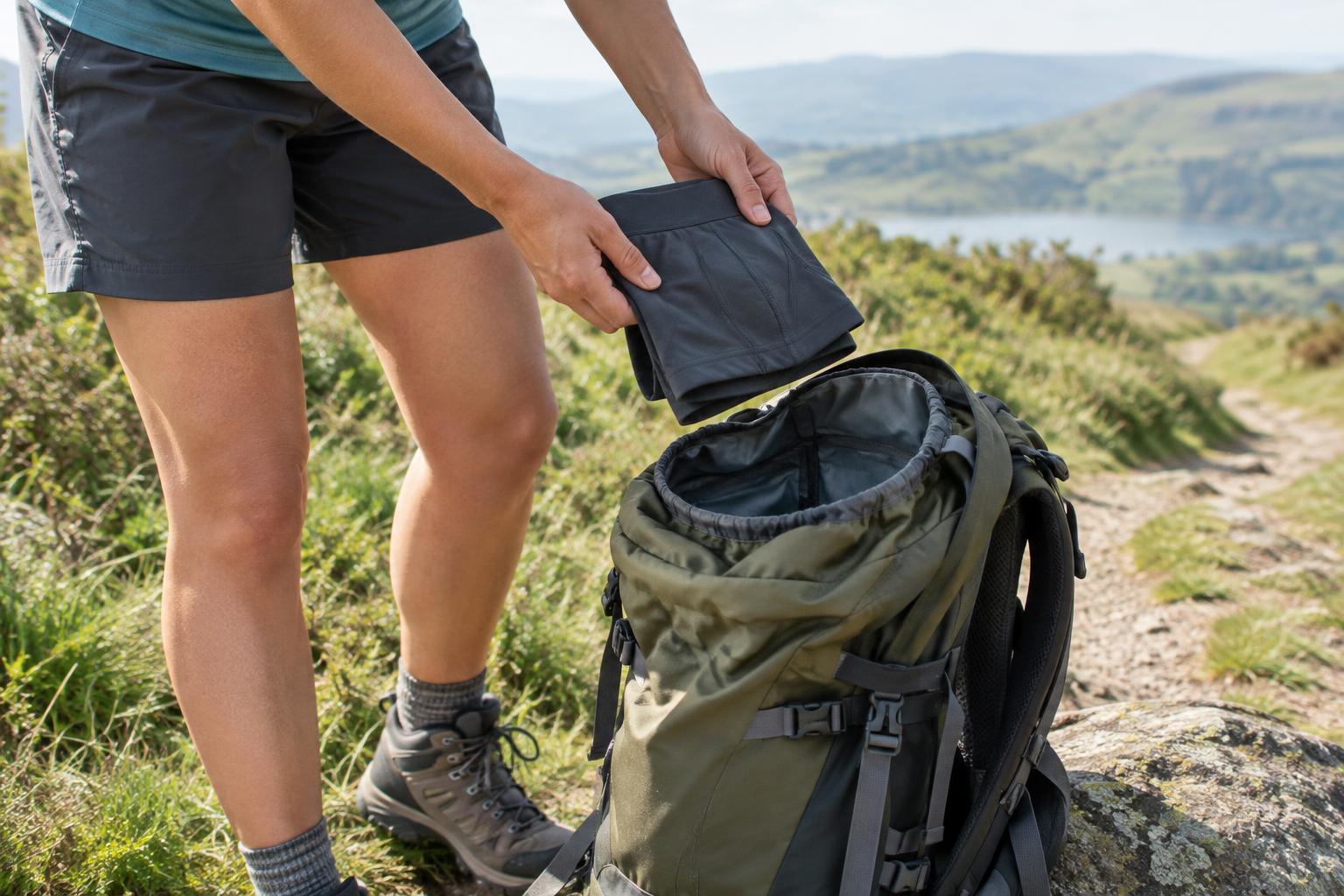
Give new underwear a short local walk before taking it on a full-day route. Start with clean, dry garments and notice whether fabric creeps, folds or remains damp after a climb. On a longer day, changing into a spare pair can feel more useful than trying to tolerate wet fabric. If you use an anti-chafe product, test it on a short outing rather than depending on it for the first time far from home.
Follow the garment’s care label, and avoid letting sweaty underwear sit bundled in a pack for longer than necessary. Washing removes sweat and grit that can make fabric feel rough; thorough drying makes it more pleasant to wear again. Over time, stretched elastic, persistent bunching or worn seams are signs that a once-reliable pair may no longer be the best choice for walking.