Start with the UV label, not the lens color
Walking sunglasses should make bright conditions more comfortable while protecting your eyes from ultraviolet light. Look for a clear statement that the lenses block 100% of UVA and UVB rays or provide UV400 protection. Buy from a seller that gives you reliable product information; a dark-looking lens alone tells you nothing about its UV protection.
UV protection and lens darkness are different features. A pale lens can provide strong UV protection, while a very dark lens may not. Darkness mainly changes how much visible light reaches your eyes. If you are choosing between attractive colors, check the UV information first, then decide which shade suits your walks.
Choose a tint for the places you walk
A neutral gray tint reduces brightness without changing colors much. It is a versatile choice for open paths, coastal walks and other routes where light conditions are fairly consistent. Brown or amber tints can make some details and contrasts more noticeable, which some walkers prefer on mixed terrain. The best choice is also personal: try looking through the lenses outdoors, if possible, and notice whether the view feels clear and natural to you.
For walks that move between sunny clearings and heavy shade, an extremely dark tint may make roots, steps or uneven ground harder to see. A lighter tint, or a second pair suited to lower light, can be more practical. Photochromic lenses that change shade with light may reduce the need to swap glasses, but how quickly and how far they darken can vary. Check the particular pair rather than assuming it will suit every condition.
Polarized lenses reduce glare reflected from surfaces such as water, wet pavement and pale rock. They can be especially pleasant near a lake or on an exposed path, but polarization does not replace UV protection. It can also make some phone screens or digital displays harder to read. Test your usual devices through the lenses before committing to a pair for travel.
Pay attention to coverage and a secure fit
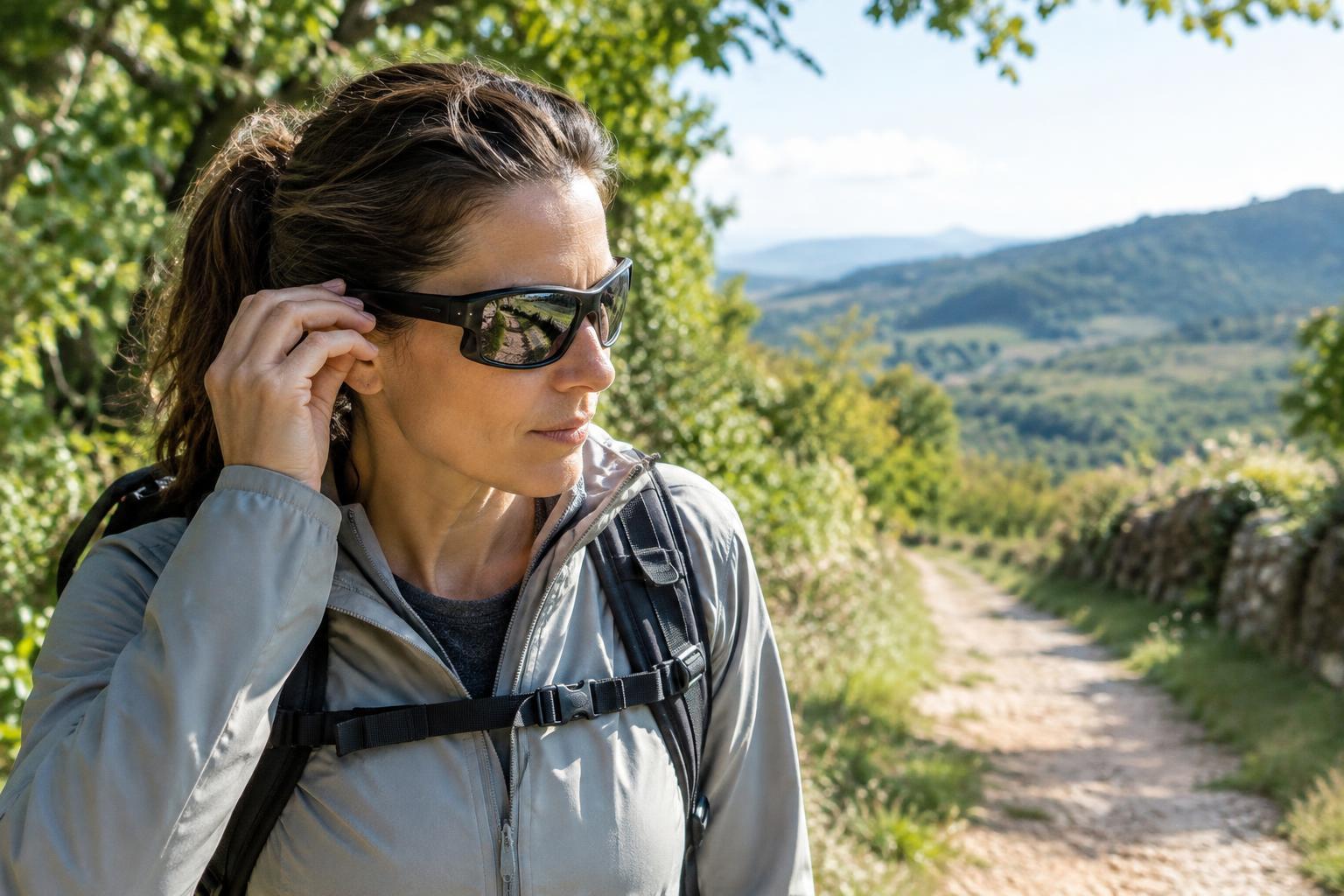
Good lenses are less useful if sunlight reaches your eyes around the frame. Look for lenses large enough to cover your eyes comfortably and a frame that limits light entering from the sides without blocking the view you need to navigate. Wraparound styles can offer more side coverage, while a cap with a brim can help when the sun is high. Neither removes the need to check the sunglasses’ UV protection.
Try the glasses while walking, looking down and turning your head. They should stay in place without pinching your temples or pressing painfully on your nose. Frames that constantly slide down are distracting, particularly when you are warm or carrying a pack. If your lashes touch the lenses, or the frame rubs your cheeks, try a different shape or adjustable nose pads. Comfort over several minutes is a better test than a quick glance in the mirror.
If you wear prescription glasses, consider prescription sunglasses or an option designed to fit over your everyday pair. Check the full combination for clear sight, secure placement and side coverage. A lightweight retention strap can help keep sunglasses handy during frequent stops, but it should not pull the frame into an uncomfortable position.
Check practical details before a day trip
Think about where the sunglasses will spend time when they are not on your face. A protective case helps prevent scratches in a crowded daypack, and a soft cleaning cloth is useful after fingerprints or trail dust collect on the lenses. Rinse off grit with water when available before wiping; rubbing dry particles across a lens can mark its surface. Check the maker’s care guidance before using cleaning products or exposing coated lenses to high heat.
Finally, choose a pair you are willing to carry and wear consistently. A comfortable frame with verified UV protection, a tint that lets you see the path clearly and enough coverage for your usual routes is more useful than extra features you do not need. For varied day trips, test your sunglasses in both sun and shade close to home before relying on them for a longer walk.