Start with how you use your phone
The right power bank depends less on the length of a walk than on what your phone will do during it. Occasional photos and a quick check of an offline map use power differently from continuous navigation, video recording or long periods in poor signal. Think about whether you need a small reserve for the journey home or enough power for a substantial recharge.
Before buying anything, try a typical outing with your phone fully charged and note its battery level when you return. That gives you a more useful starting point than a promise of a fixed number of phone charges. If you often travel with someone else or carry another rechargeable device, allow for that too—but avoid buying a much larger battery for a need that rarely comes up.
Match capacity to the trip, not the biggest number
Power-bank capacity is commonly listed in milliamp-hours, or mAh. A compact model around 5,000 mAh can be a sensible emergency reserve. A 10,000 mAh model is often a versatile choice when you expect to use navigation or want more flexibility. Larger models may suit longer trips or several devices, but their extra size and weight can be noticeable in a day bag.
The printed capacity is not the amount that reaches your phone battery. Some energy is lost as the power bank converts and delivers it, and charging efficiency varies with the devices and conditions. Treat claims about the number of full charges as estimates, not guarantees. If two models otherwise meet your needs, compare their actual dimensions and weight as well as their capacity.
Check ports, cables and charging speed
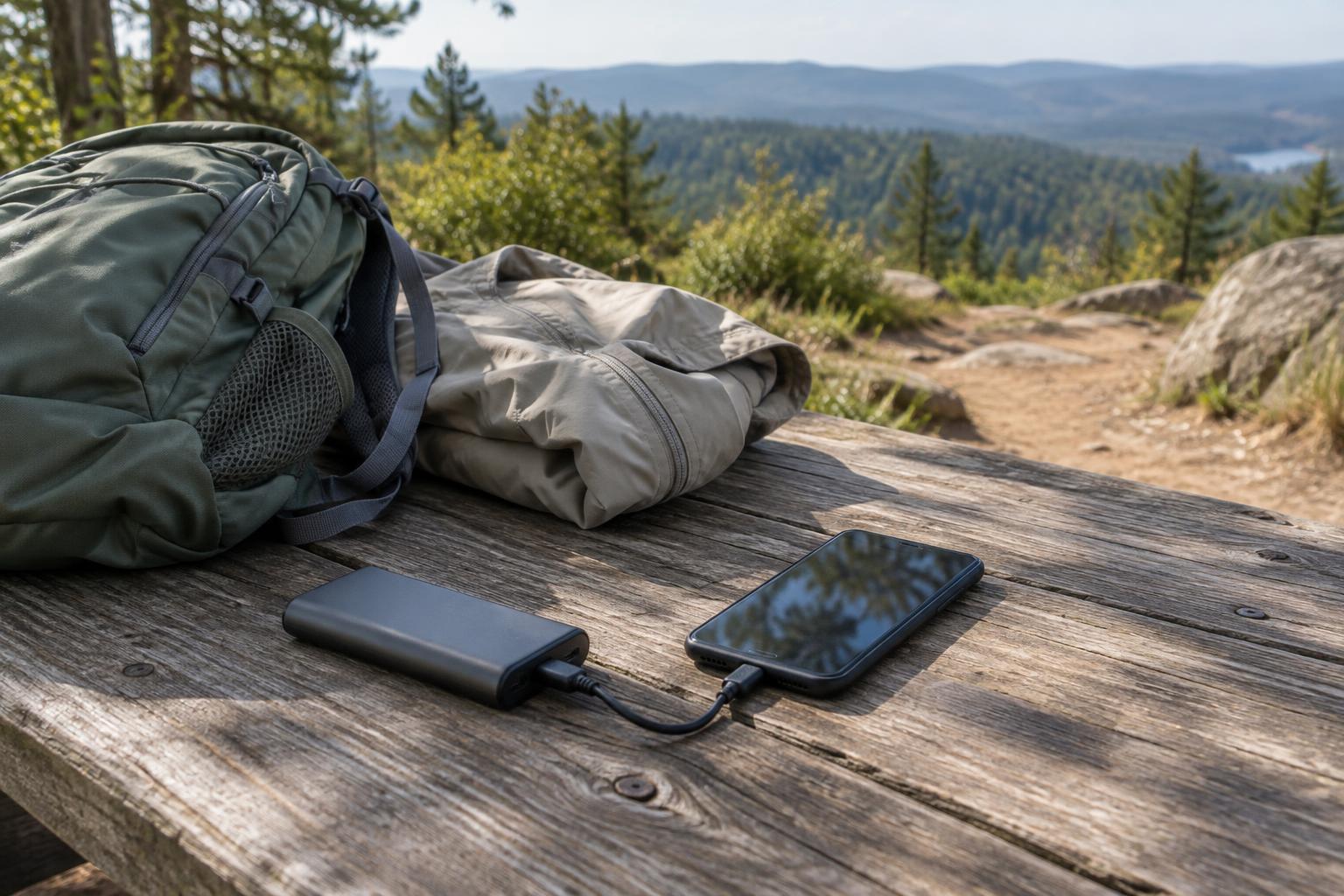
Look at the ports on both your phone and the power bank before choosing one. A USB-C port is convenient if it can recharge the power bank as well as send power to your phone, but check the product details: a port’s shape alone does not tell you what it supports. If you need to charge two devices, confirm that the power bank can power them at the same time.
Output power affects how quickly a compatible phone can charge, though the phone and cable also have to support that rate. For many day trips, a dependable recharge during a lunch stop matters more than the highest advertised speed. Consider how long the power bank itself takes to refill at home, especially if you use it on consecutive days. Pack a short, compatible cable and test the whole setup before relying on it outdoors.
Choose a shape you will actually carry
A power bank is only useful if it makes it into your bag. Slim, rounded models can be easier to slip into a small pocket than bulky ones with similar capacity. A visible charge indicator is handy when you are getting ready, while a secure place for the cable prevents a frustrating search at the trailhead. A built-in cable may reduce loose items, but make sure it fits your phone and can be replaced or worked around if it wears out.
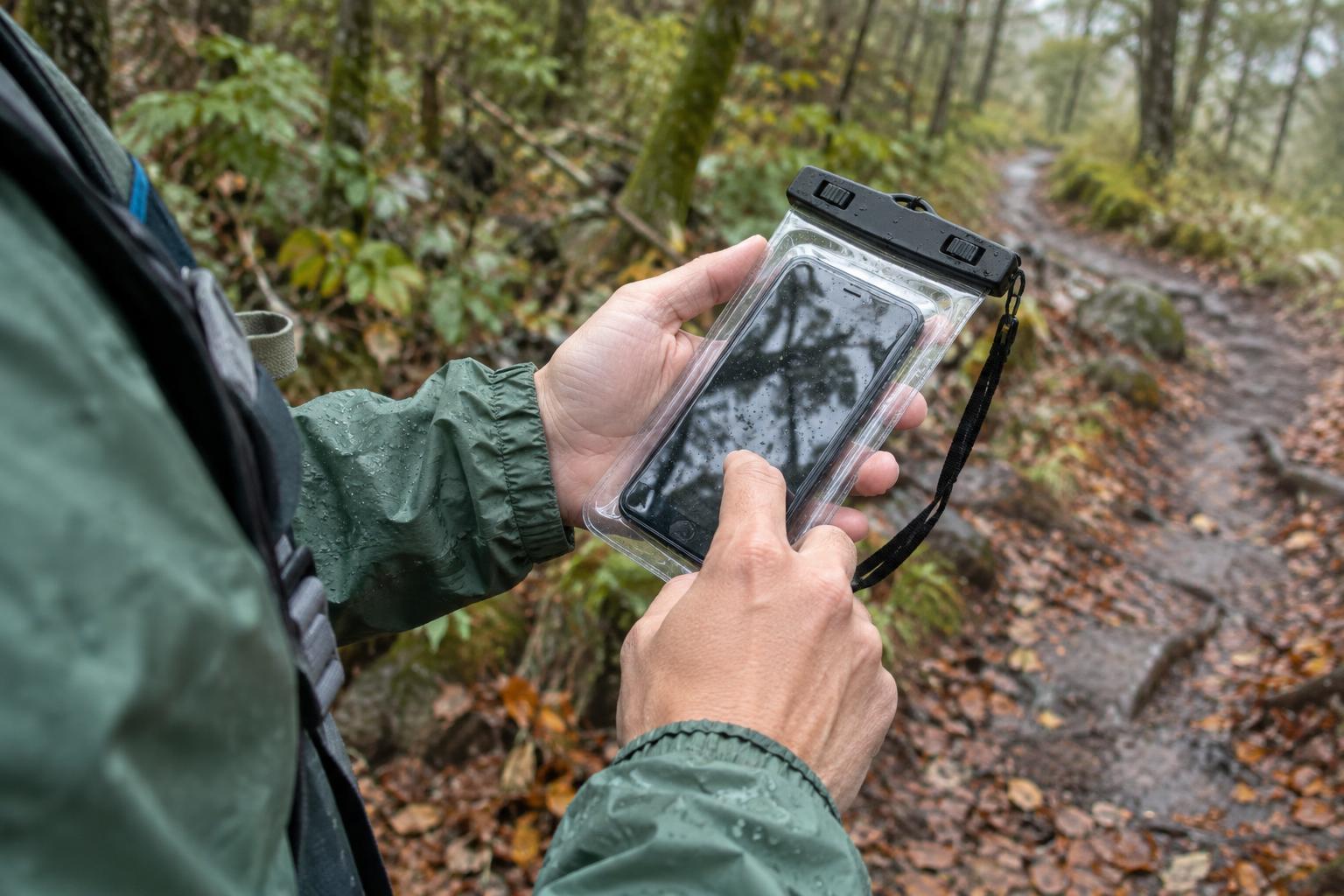
Weather resistance deserves a careful look. A tough-looking case does not necessarily mean a power bank is waterproof, and open ports need protection from rain, grit and damp clothing. Unless the model is specifically rated for the conditions you expect, keep it in a dry pouch or an inner bag pocket. Avoid leaving it in direct sun or charging it while it is wet.
Make your backup power go further
Charge the power bank before you leave, even if its indicator shows some power remaining. Download maps and other useful information in advance, reduce screen brightness when practical and close power-hungry tasks you do not need. If signal is patchy, your phone may use more energy trying to stay connected; adjust its settings to suit your navigation and communication needs without cutting off a connection you may require.
Keep the power bank and cable somewhere accessible so you can recharge before your phone reaches a critically low level. After the trip, let damp gear dry before storing it, inspect the cable for damage and recharge the bank for next time. The best choice is not necessarily the largest or fastest model: it is the one that reliably covers your usual day out and is easy enough to bring along.