Start with the conditions you expect
A pouch for occasional rain on a walking route has a different job from one you might drop into a stream. Before comparing designs, decide whether you need protection from wet hands and showers, sustained heavy rain, or brief accidental immersion. A water-resistant sleeve may be enough for light exposure, while a pouch intended for immersion needs a dependable seal and a clearly stated rating.
Read the maker’s description closely rather than relying on the word “waterproof” alone. If a pouch carries an IP rating, check the exact rating and any stated depth, duration or use conditions. A rating does not mean the closure will protect your phone if it is damaged, dirty or left partly open. For ordinary day walks, ease of sealing correctly may matter more than choosing the most heavy-duty pouch available.
Check the fit with the phone you actually carry
Use your phone’s dimensions, including its everyday case, when checking a pouch’s internal measurements. Leave enough room to insert and remove the phone without forcing it past the closure, but avoid so much spare space that it slides around whenever you reach for the screen. A bulky camera bump, wrist strap or card holder can change the fit even when the phone itself is within the listed size range.
Think about where the pouch will sit as you walk. A slim pouch may slip into a jacket pocket or hip-belt pocket; a larger one may be easier to handle with gloves but awkward to carry. If you plan to hang it from a lanyard, check that the attachment points look secure and that the cord length lets you view a map without pulling against your neck. For routes with branches or uneven ground, carrying it in a pocket can reduce snagging.
Try the screen, camera and controls before you commit
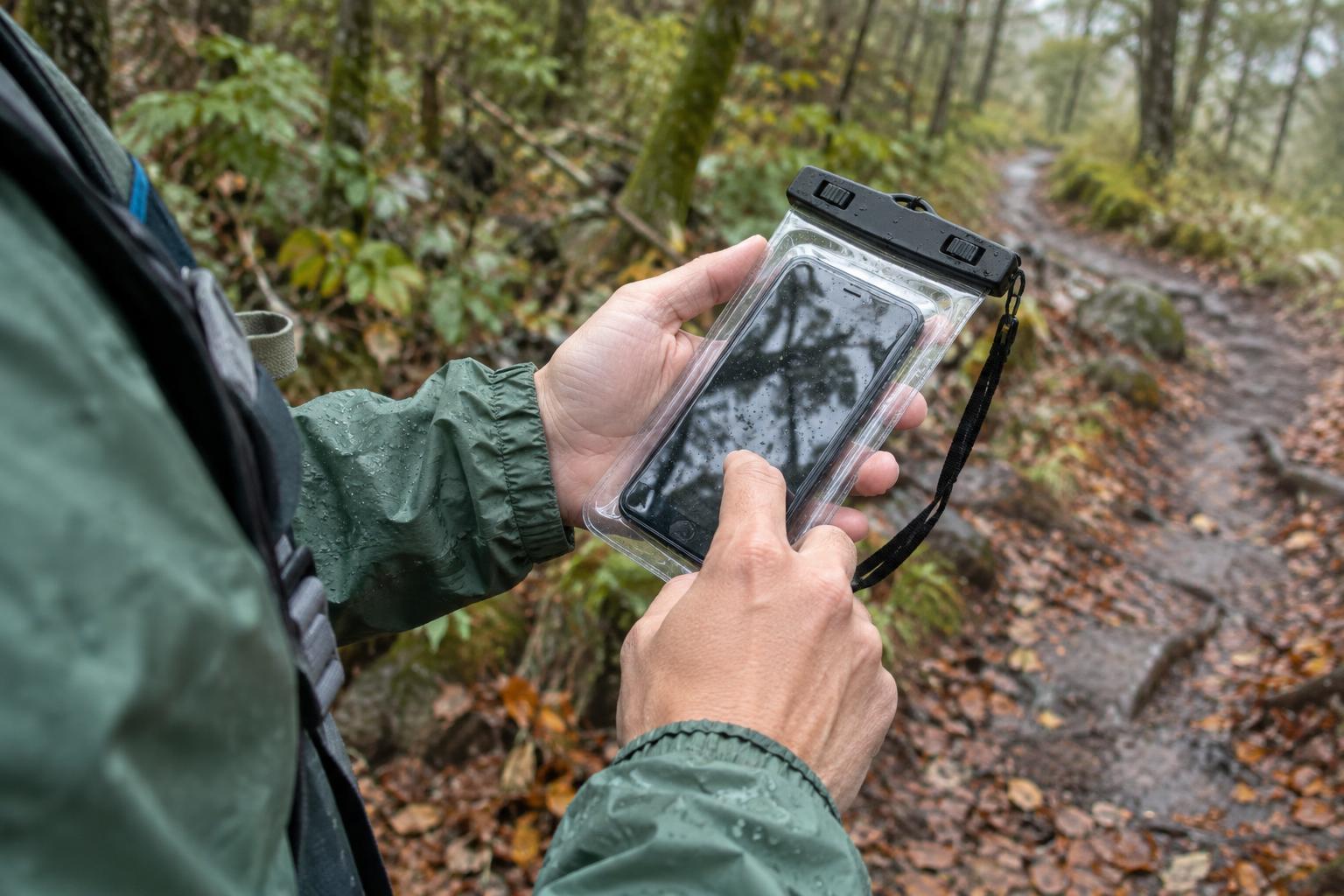
A clear window is useful only if you can perform your common trail tasks through it. With your phone inside, try waking the screen, unlocking it, zooming a map, reading in daylight and taking a photo. Test the side buttons as well: a stiff edge can make a volume or power button surprisingly difficult to press. If you wear gloves, repeat the checks with them on.
Touchscreens can become unreliable when water sits on the outer window, and some phones limit touch input when wet. Look for a pouch you can wipe quickly and hold steady rather than expecting flawless operation in a downpour. If photos matter to you, make sure the camera window lies flat over the lenses and does not produce obvious glare in your test shots. A pouch that works well for navigation may still be a poor choice for frequent photography.
Look for a closure you can inspect easily
Many pouches use a folded opening, sliding locks or snap-style clips. Whichever design you choose, you should be able to tell when every part is fully closed. Try opening and resealing it several times at home. Ask yourself whether you could do the same with cold fingers, and whether grit or a twisted edge would be easy to spot. Simple, repeatable operation helps when you are stopping briefly beside a trail.
Before its first outing, put a piece of dry tissue in the empty pouch, seal it as directed and test it under the conditions recommended by the maker. Check the tissue and the seal afterward. Repeat a suitable test if the pouch has been stored for a long time or shows signs of wear. This does not guarantee protection on every trip, but it can reveal an obvious leak before your phone is at risk.
Use the pouch as part of a sensible wet-weather setup
Start with a dry phone and a dry pouch interior. Moisture trapped inside can fog the window and make the phone harder to use, even if no rain gets past the seal. Keep sand, hair and fabric out of the closure, and avoid opening the pouch in heavy rain unless you have shelter. After a muddy or salty outing, clean and dry it according to its care instructions before storing it with the seal open or relaxed, if the design allows.
A pouch is one layer of protection, not a reason to keep your phone exposed all day. Store it in an accessible pocket when you are not using it, and carry a backup way to navigate if your route depends on the phone. The best choice is the one you can seal confidently, carry comfortably and operate well enough for the tasks you actually do on the trail.