Start with the route, not the forecast
An exposed walk may cross open hills, beaches, fields or paths with little reliable shade. Before choosing clothes, consider how long you expect to be outside, whether the route offers shelter and which parts of your body will face the sun as you walk. A short outing near trees calls for different preparation than a day on an open ridge. Clouds and cool air can make it easy to forget about sun exposure, so they are not good reasons on their own to leave protective layers behind.
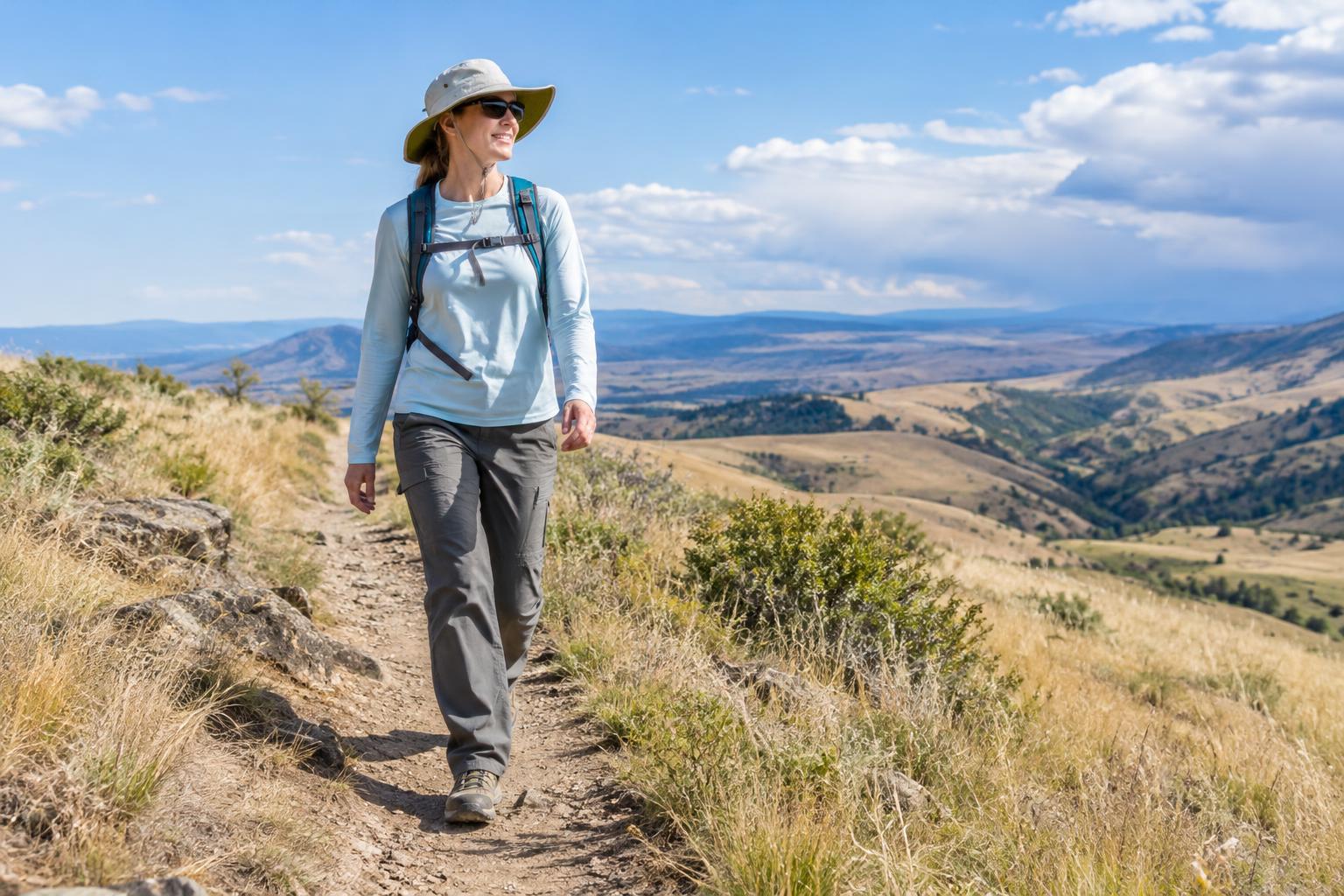
Aim to cover the areas that are hardest to keep shaded: shoulders, upper arms, neck and legs. A long-sleeved shirt, suitable trousers and a brimmed hat make a practical starting point. Clothing does not replace every other sun precaution, particularly where skin remains uncovered, but it provides coverage that stays in place without frequent reapplication.
Understand what the fabric offers
Some outdoor garments carry an ultraviolet protection factor, or UPF, rating. This indicates how much ultraviolet radiation the fabric is designed to block under the rating’s test conditions. A labelled garment can make comparison easier, but the label is only one part of the choice. Coverage, fit and whether you will actually keep the item on throughout the walk matter too.
If a garment has no UPF label, look closely at its construction. A dense, less see-through fabric generally offers more coverage than a loose, sheer one. Hold it up to the light as a simple visual check, while remembering that this cannot establish a protection rating. Stretch can pull a knit open, and worn or thinned areas may offer less coverage than the rest of the garment. Darker or heavier options may feel too warm for a strenuous walk, so balance coverage against comfort rather than choosing by color alone.
Choose a fit you can walk in all day
Sun-protective clothing works best when it allows normal movement without riding up. Try raising your arms, reaching for a pack strap and taking a long step. Does the shirt stay over your waistband? Do the sleeves still cover your wrists? Does the fabric pull tight across your shoulders or knees? A slightly relaxed fit can help a shirt feel airy, but excessively loose cuffs or hems may snag on vegetation or flap in the wind.
Pay attention to heat management as well. Lightweight fabrics, vented designs and sleeves that can be adjusted may make covered walking more comfortable. A shirt that feels pleasant while standing still may feel clammy under a backpack, so check where the pack rests against your back and shoulders. If you tend to remove a layer as soon as you warm up, consider whether a lighter, more breathable covered option would serve you better.
Cover the gaps around your clothes
A shirt and trousers leave smaller areas exposed. For a hat, consider a brim that shades the face and a design that also helps cover the ears and back of the neck. A cap can be comfortable, but its brim alone does not cover those side and rear areas. Test a hat in a breeze if possible; a secure fit or chin cord is useful when the path is open and windy.
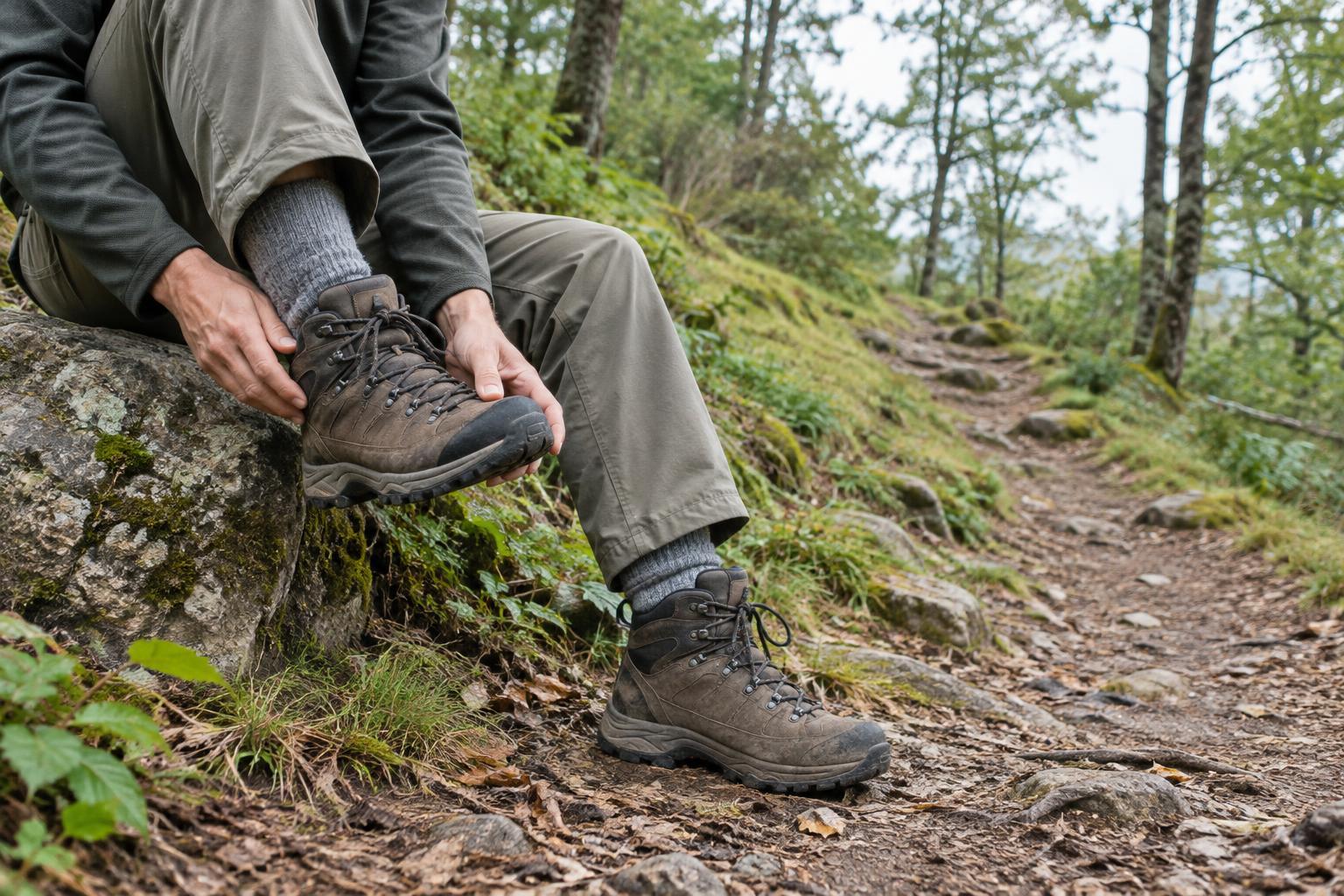
Check how your pieces work together. A low collar may leave the neck exposed, while a gap between trouser hems and shoes can expose the ankles. Sunglasses designed for UV protection can help protect your eyes, and suitable protection for any uncovered skin remains important. The goal is a combination you can use comfortably, not a single garment expected to do everything.
Pack and care for what you will actually use
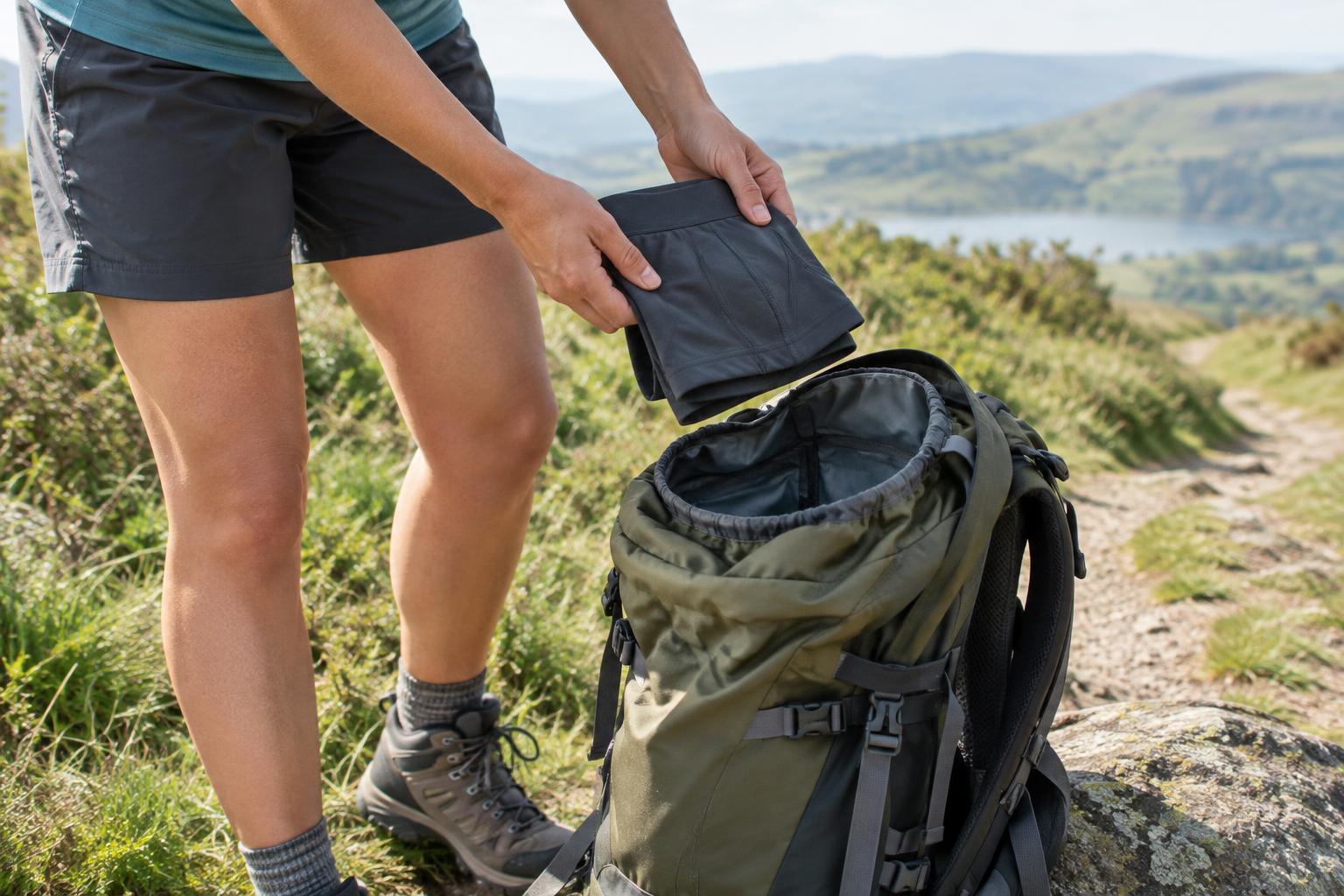
For changeable conditions, pack sun coverage where you can reach it without emptying your bag. A light overshirt or hat is more useful at the top of a pack than buried beneath lunch and spare shoes. On a longer walk, consider how clothing will feel if it becomes damp with sweat or light rain. An extra layer may be worth carrying if it helps you stay covered while the first one dries.
After the walk, follow the garment’s care label. Wash away dirt and sweat as directed, and inspect high-wear points such as shoulders under pack straps, elbows and knees. Replace or repurpose items that have become noticeably thin, stretched or damaged in areas you rely on for coverage. The most practical sun-protective outfit is one that fits your route, survives regular use and feels comfortable enough to keep wearing.