Start with the socks and conditions you will actually use
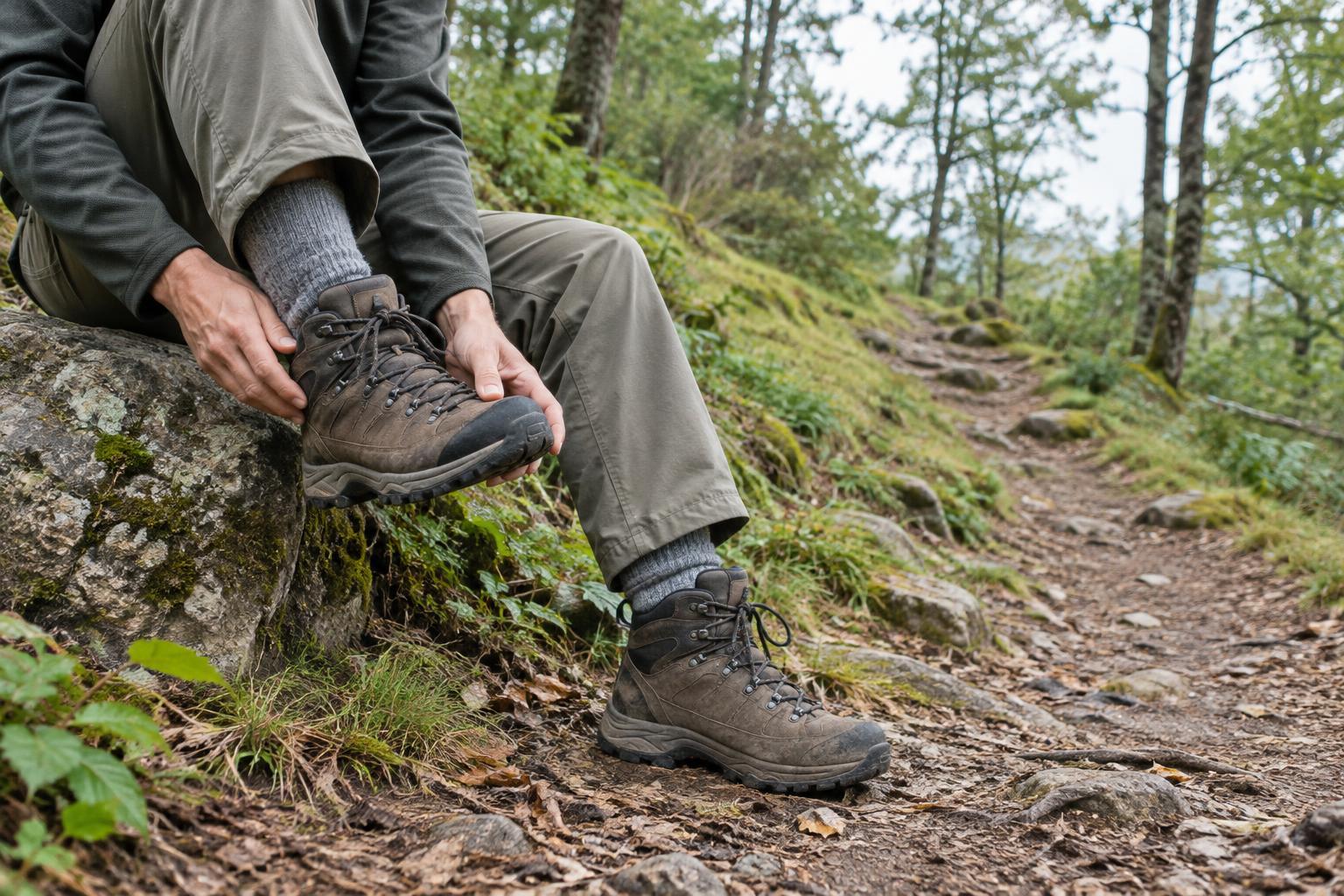
Hiking footwear should fit the walk you have planned, not just your feet while you are standing still. Try shoes or boots with the socks you expect to wear on the trail. A thicker sock can take up space, while a thin one may let your foot move more. If you use an insole, put it in the footwear before judging the fit.
Try footwear later in the day if possible. Feet can change size over the course of a day and during a long walk, so a pair that feels snug first thing in the morning may leave too little room later. Stand up and put weight on both feet when checking the fit. Measure or try both feet rather than assuming they are identical, and give the larger foot enough space.
Check toe room, width and pressure points
With the footwear laced as you would wear it, stand and walk around. Your toes should be able to move without pressing against the front or bunching together. A rough guide is to leave some space in front of your longest toe, but how that space feels in motion matters more than a single measurement. Your toes should not hit the front when you step down a slope.
Pay attention to the sides of your feet as well. The upper should hold your foot without squeezing the widest part, and your little toe should not feel pushed inward. Notice any firm seam, eyelet or edge that presses on one spot. A new shoe may soften somewhat, but it is unwise to count on wear alone to fix painful pressure or a shape that does not suit your foot.
Look for secure heels without over-tightening
Your heel should feel reasonably secure as you walk. A small amount of movement may occur in some footwear, but repeated lifting or rubbing can become irritating over a longer distance. If your heel slips, try adjusting the laces before deciding that the size is wrong. Lace the lower portion firmly enough to hold your foot, then adjust the upper portion for comfort around your ankle or instep.
Laces cannot solve every fit problem. If tightening them enough to stop slipping creates pressure across the top of your foot, the footwear may not be the right shape. Likewise, a boot that feels stable only when tied uncomfortably tight is unlikely to become more pleasant several hours into a walk. Check that your foot feels held in place without numbness, pinching or a need to keep readjusting.
Test the fit while moving uphill and downhill
A flat shop floor tells you only part of the story. If you can, walk on an incline or use a short ramp or stairs. Going uphill, notice whether your heel lifts excessively. Going downhill, check whether your toes slide forward and strike the front. Walk at a natural pace, then take a few longer steps and turn corners. Your feet should feel secure without being trapped.
If you are trying footwear at home, keep it clean while you assess it and check the seller’s return conditions before taking it outdoors. Spend more than a moment walking indoors, since a pressure point may take time to become noticeable. If one size feels cramped and the next lets your foot slide, consider a different model or shape rather than assuming you must choose between the two.
Build up to the long walk
Even footwear that fits well in a fitting room deserves a trial on familiar ground. Begin with a short walk in your intended socks, then try a longer outing that includes the kinds of surfaces and slopes you expect. This gives you a chance to adjust lacing and notice rubbing before you are far from home. Keep track of where discomfort occurs: a loose heel, cramped toes and pressure over the instep point to different fit issues.
Do not rely on a long first hike to break in a poor fit. Before setting out, check that your toenails are comfortable, your socks sit smoothly and your laces stay secure. Carry a spare pair of socks if wet feet are a possibility. The goal is not footwear you never notice at all, but a fit that remains comfortable and controlled as you walk, descend and spend more time on your feet.