Start with the clothes you actually wear
Rain pants are usually an outer layer, so your everyday trouser size is only a starting point. Think about the walking clothes they will cover: lightweight shorts in warm weather, hiking trousers on a cool day, or a thicker layer when temperatures drop. If you expect to wear them over several combinations, fit for the bulkiest realistic one rather than the thinnest. There should be room for fabric to move without large folds gathering around your legs.
When trying on a pair, wear your usual walking trousers and socks. Fasten the rain pants, then check the waist while standing and sitting. It should stay up comfortably without digging in or relying on a drawcord pulled to its limit. If you carry a pack with a hip belt, consider where the rain-pant waistband will sit beneath it. A comfortable fit in a changing room may feel different once a belt presses on the same spot.
Test your stride, not just your reflection
Walk, take a long step, climb onto a low step if one is available, and bend as though tying a boot. The pants should allow these movements without pulling tightly across the seat, thighs or knees. A little extra space is useful for layering, but an overly loose cut can flap in wind or catch on vegetation. Look for a balance: enough room to move freely, with no excess fabric that needs constant adjustment.
Check the length while wearing your walking footwear. The hems should cover the tops of your shoes or boots when you stand and still offer coverage when you step forward. If they drag on the ground, they are likely to collect dirt and wear faster. Ankle tabs, snaps or drawcords can help keep longer hems out of the way, but they cannot always make up for a leg that is much too long. If a brand offers different leg lengths, compare them rather than sizing up solely to gain coverage.
Make sure you can put them on when rain starts
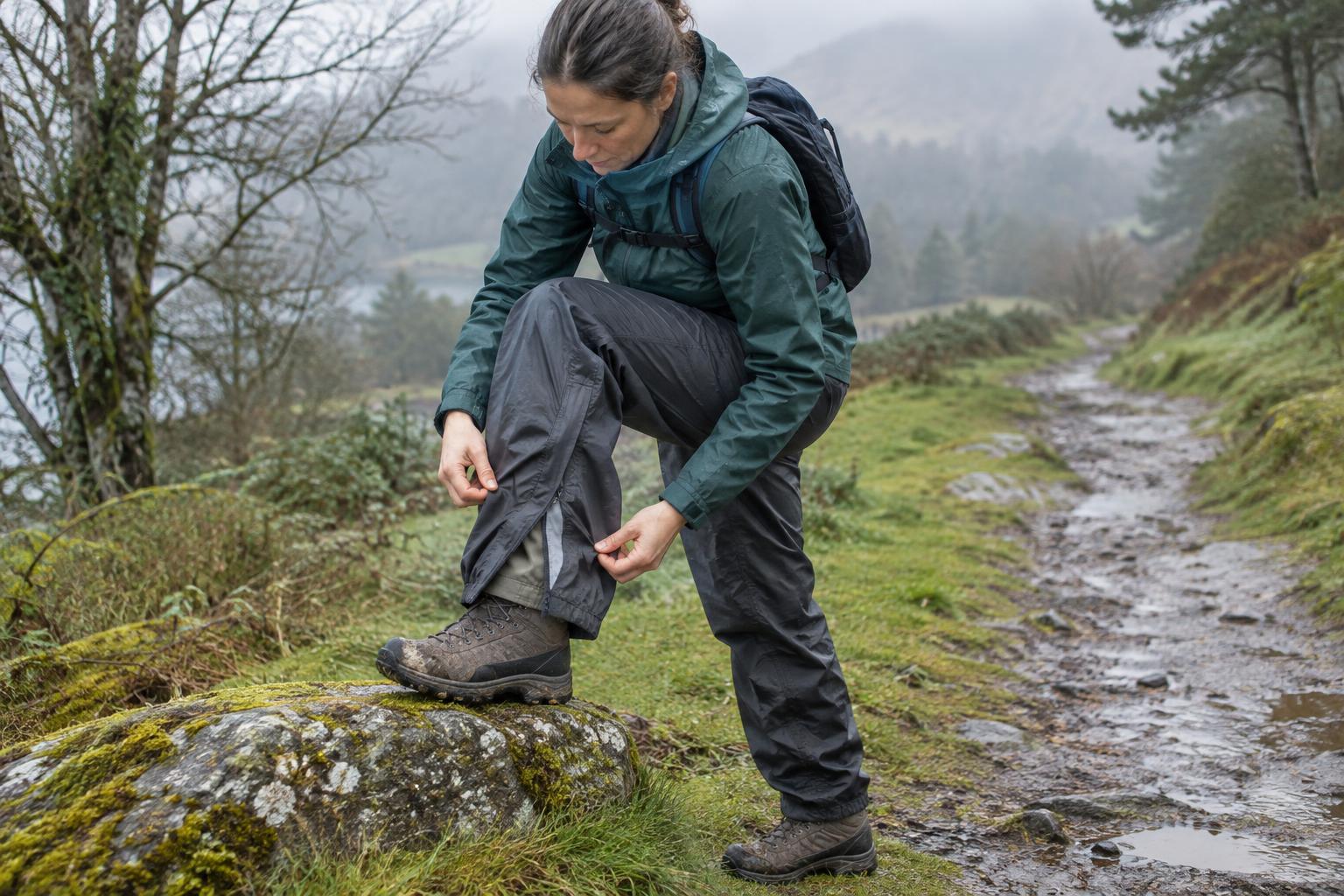
Rain pants are most useful when you can pull them on without a lengthy stop. Wide leg openings may pass over walking shoes; narrower ones may require you to remove your footwear. Side zips can make this easier, especially with boots, and longer zips may also offer a way to release heat. Try opening and closing them with the pants on. The zip should run smoothly without trapping the fabric underneath.
Notice where any closures sit once your shoes are laced. A snug ankle closure can limit water splashing onto your socks and reduce loose fabric around your feet, while an opening that is hard to reach or fasten may go unused. If you often walk in changing weather, practice pulling the pants on over your usual footwear before a trip. That quick test reveals more about their convenience than a folded pair on a shelf.
Choose protection without overlooking comfort
A waterproof fabric and protected seams matter for sustained rain; a water-repellent finish alone may be better suited to brief showers. Rain pants can also feel warm during brisk walking because they reduce airflow. Features such as side ventilation, adjustable openings and a light lining can affect how comfortable they feel. The best choice depends on the weather you expect and how hard you tend to walk, not simply on how substantial the fabric feels.
Look closely at places that take repeated wear: the seat, knees, inner ankles and hems. Reinforcement can be helpful if you regularly kneel, sit on rough surfaces or brush one boot against the other, though it may add weight. Pockets are convenient, but consider whether you can reach them under a jacket and pack belt. For occasional use, a simpler, packable pair may be easier to carry consistently than a heavier pair with features you rarely need.
Do one final check with your full walking kit
Before settling on a size, try the pants with your rain jacket, walking shoes and daypack if possible. Check that the jacket overlaps the waistband when you reach or bend, and that the hems remain clear of your soles. Move at a normal pace for a few minutes. If the waistband slips, the knees pull, or the cuffs repeatedly need fixing, try another size or cut rather than assuming you will get used to it.
Once you have a pair, follow its care label and let it dry properly after wet walks. Dirt and wear can affect how the outer surface sheds water, while a damaged seam or closure may let rain in regardless of fit. Keep the pants somewhere easy to reach in your pack. A pair that fits over your real walking clothes, goes on promptly and stays comfortable is far more useful than one chosen only for its label size.