Plan for water before you need it
Carry enough drinking water to start your walk, then treat natural sources as part of your plan rather than an emergency shortcut. Check your route for likely refill points and consider whether they may be dry, inaccessible or unsuitable after heavy rain. A marked stream or spring on a map is a possible source, not a promise of drinkable water. If you expect to refill, bring a treatment method you know how to use and a backup if that method depends on batteries or a delicate filter.
Water can look, smell and taste normal while containing organisms that can make you ill. It may also contain fuel, pesticides, heavy metals or other pollutants that ordinary backcountry treatment will not reliably remove. Choosing a source and treating it are separate steps: a promising source still needs treatment, while treatment cannot make every source suitable.
Choose the best available source
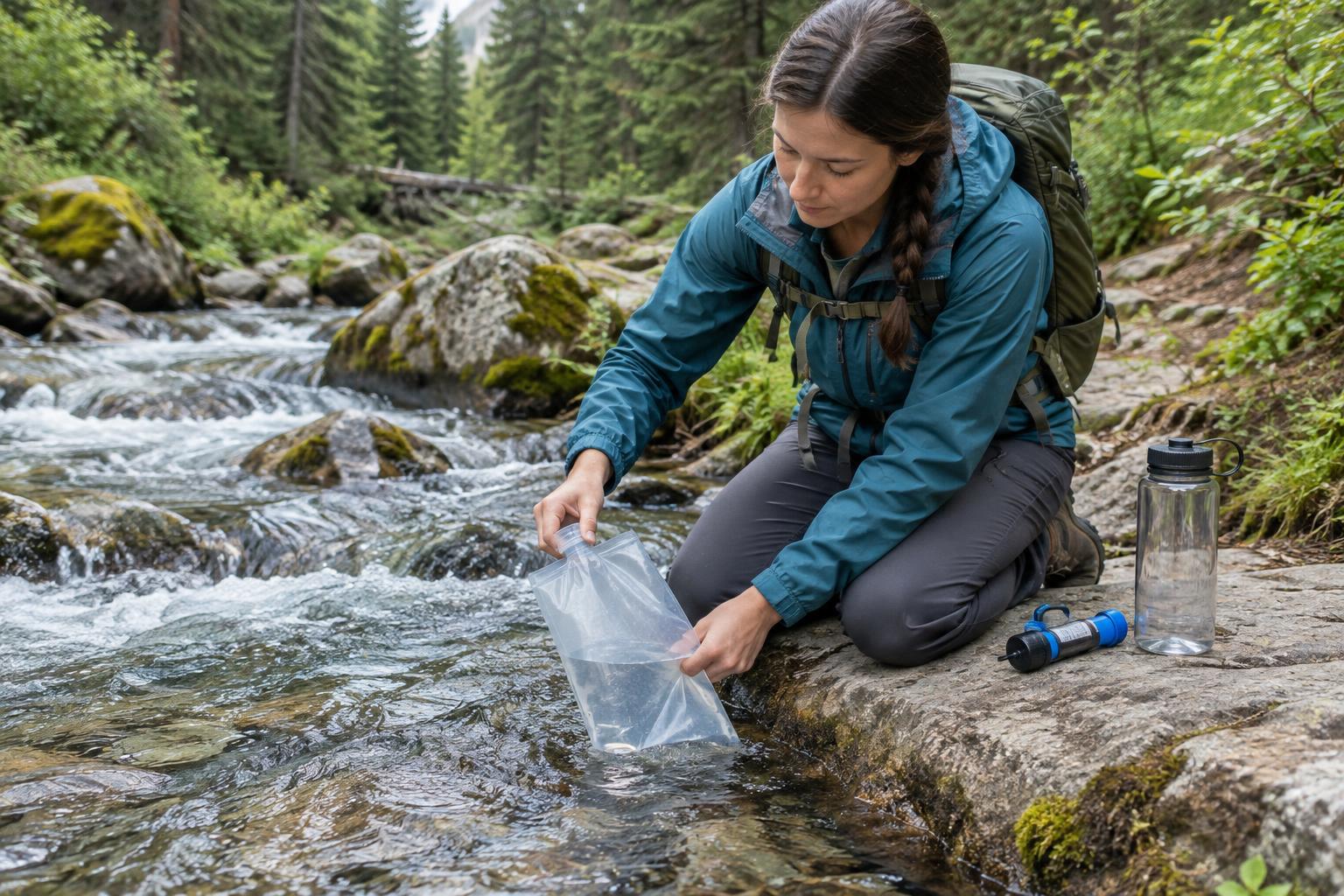
Favor water that appears clear and comes from a source with fewer visible opportunities for contamination. When comparing places along a stream, look upstream for campsites, livestock, roads, buildings, heavy foot traffic or disturbed banks. Collect from a section where you can reach the water without stirring up mud. Flowing water can be a more appealing choice than a stagnant pool, but movement alone does not make it safe.
Avoid water with an oily sheen, a chemical smell, unusual color or signs of an algal bloom. Also avoid sources near mining activity, industrial areas or agricultural runoff when you have another option. Boiling and common trail filters are intended mainly to address biological hazards; they do not reliably solve chemical contamination. If every available source raises that kind of concern, seek a known potable supply instead of assuming extra treatment will fix it.
Match treatment to the water and your gear
Boiling is a dependable way to address many disease-causing organisms when you have a stove, fuel and a suitable pot. Bring water to a full rolling boil and follow applicable local guidance on boiling time, particularly at high elevation. Let it cool in a clean, covered container. Boiling does not remove chemical pollutants, and it takes time and fuel, so it may be awkward for frequent refills.
Portable filters can remove particles and, depending on their design, bacteria and parasites. Check the manufacturer’s specifications rather than assuming every filter handles the same hazards: many hiking filters are not designed to remove viruses. Disinfectant tablets or drops can be compact backups, but effectiveness and waiting time depend on the product, water temperature and clarity. UV devices also require batteries and generally work best when water is clear. Follow the instructions for the method you carry, including maintenance and contact time.
Handle cloudy water and clean containers carefully
Cloudy water makes several treatment methods less effective or harder to use. If it is your only practical source, allow sediment to settle and pour off the clearer water, or strain out larger particles through a clean cloth before treating it. This preparation is not treatment on its own. Filters can clog faster in silty water, while disinfectants and UV devices may require additional steps specified in their instructions.
Keep untreated water away from bottle mouths, clean lids and the outlet of your filter. If you use one container for collecting and another for drinking, make the distinction obvious. Wash or sanitize a container that held untreated water before filling it with treated water, or use a dedicated dirty-water bag as directed by your filter manufacturer. Clean hands matter too: touching a treated bottle opening after handling untreated water can undo careful treatment.
Make a simple decision at each refill
Pause before collecting. First, ask whether the source has signs of chemical pollution or an obvious contamination point upstream. If so, choose another source when possible. Next, assess clarity and prepare cloudy water as your treatment instructions require. Finally, use a method suited to the hazards it can address, wait until treatment is complete, and transfer the water without contaminating it again.
If your equipment fails or a source seems questionable, do not rely on appearance or taste as a safety test. Use the water you carried, turn toward a known potable supply or adjust the trip. The most useful outdoor water skill is not finding one supposedly perfect stream; it is having enough options to make a cautious choice.