Start with the breaks you actually take
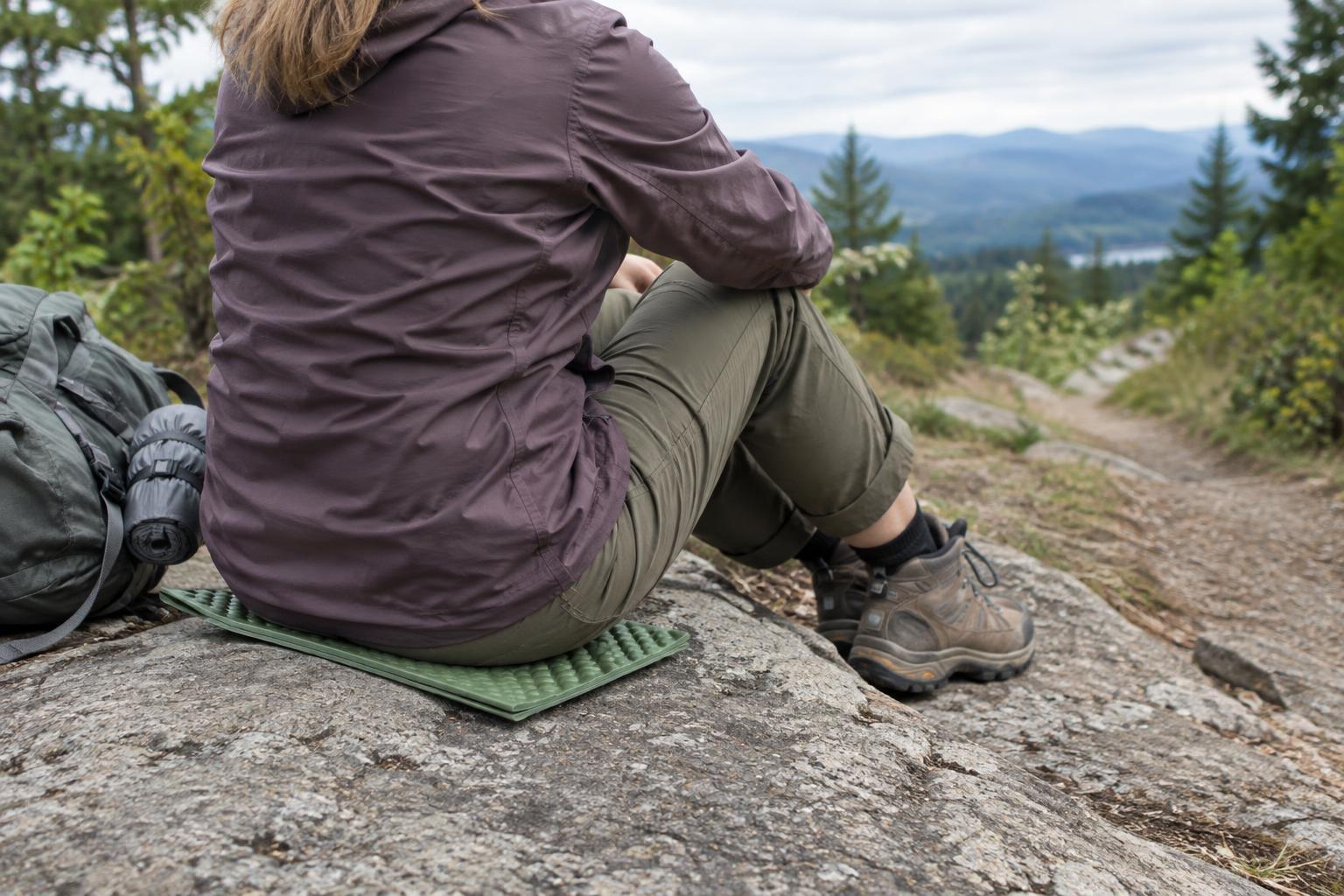
A sit pad is a small barrier between you and a rock, log, bench, or patch of ground. It can make a quick lunch more pleasant by keeping dampness, grit, and cold surfaces off your clothing. Unlike a full sleeping mat, it only needs to support you while you sit, so a simple, lightweight design may be enough.
Think about where and how long you tend to stop. If you usually pause for a few minutes on dry benches, a thin pad may meet your needs. If you sit on wet grass, rough stone, or cold ground while eating lunch, look for more coverage and cushioning. The best choice is one you will bother to bring and use, not necessarily the thickest option available.
Choose between foam and inflatable designs
Closed-cell foam pads are straightforward: unfold one, sit down, then shake off dirt before packing it away. They do not need inflation, and small punctures rarely make them unusable. Many fold into a compact stack, although that stack can be bulky compared with its weight. Foam can flatten with repeated use, and a very thin pad may do little to soften a sharp rock.
Inflatable sit pads can offer more cushioning in a small packed bundle. They take a moment to inflate and may need an occasional top-up during a long break. They also need more care around thorns, sharp gravel, and stray sparks. Some designs combine foam with an air chamber; these can feel supportive but may weigh or cost more. If fuss-free stops matter most, start with foam. If packed size and cushioning are higher priorities, consider an inflatable.
Compare coverage, comfort, and warmth
A pad should be wide enough for you to sit comfortably without constantly readjusting it. Dimensions on a product label are useful, but a quick test tells you more: place the pad on a firm chair or the floor and sit on it in the clothing you expect to wear outdoors. Check whether its edges dig in and whether you can shift position without sliding off. Extra length can protect the backs of your legs on a damp surface, though it adds packed bulk.
Thickness and warmth are related, but they are not the same thing. A pad that keeps you off cold ground can improve comfort even if it feels quite firm. Air-filled pads may feel plush but can lose warmth when air moves within them; construction varies. If cold-weather stops are a priority, pay attention to any insulation information the maker provides and, when possible, try the pad on a cool surface before relying on it.
Make sure it fits your packing routine
A light pad is only convenient if it has a sensible place in your kit. Check its packed shape as well as its weight. A folding foam pad may slip into a pack’s outer pocket, while an inflatable pad might fit inside a small pouch. If you plan to strap a pad outside your bag, make sure it is secure and will not catch on branches. Keeping it accessible means you can use it for a brief stop without unpacking everything.
Also consider what happens after you sit on wet or muddy ground. Foam is generally easy to wipe down, but dirt can collect in folds and textured surfaces. An inflatable pad may need to dry before being stored in its pouch. A colour you can spot on the ground can help you remember to pick it up before leaving. These small details often matter more on a day walk than a minor difference in listed weight.
Try it at home, then look after it on the trail
Before a trip, use your shortlisted pad on a hard floor, a garden step, or another safe surface for the length of a typical break. Practise folding or inflating it with cold hands or while wearing gloves if that reflects your usual outings. If it feels awkward to carry or takes too much effort to set up, a simpler option may serve you better.
On the trail, clear sharp debris before placing a pad down, and keep it well away from fires and hot cookware. Sit where you will not block a path or damage fragile vegetation. Afterward, shake off loose grit, let the pad dry if needed, and check for wear before packing it for your next walk. A modest sit pad that suits your stops can earn its place in your bag by making ordinary breaks easier to enjoy.