Start with the job your fleece needs to do
A fleece midlayer sits between a base layer and, when needed, an outer jacket. Its job is to add warmth while letting some of the moisture produced by movement escape. The best choice is not necessarily the thickest fleece: it is the one that keeps you comfortable at your usual pace without making you stop repeatedly to change layers.
Think through a typical outing before comparing garments. Will you be walking steadily, climbing hills, taking frequent breaks or standing around at a viewpoint? Consider what you will wear over the fleece, too. A wind-resistant jacket can make a light fleece feel much warmer, while the same fleece worn on its own may offer little protection from a cold breeze. If your plans vary, a lighter fleece paired with an adjustable outer layer may be more versatile than one very warm piece.
Understand warmth without relying on thickness alone
Fleece holds warm air close to your body. Lofty, plush fabrics often feel warmer when you are moving slowly or resting, but they can also feel hot during sustained effort. Thinner, smoother fleeces usually provide less insulation and are often easier to wear while walking briskly. Fabric construction, fit and the layers around it all affect how warm a garment feels, so treat labels such as “lightweight” or “heavyweight” as starting points rather than guarantees.
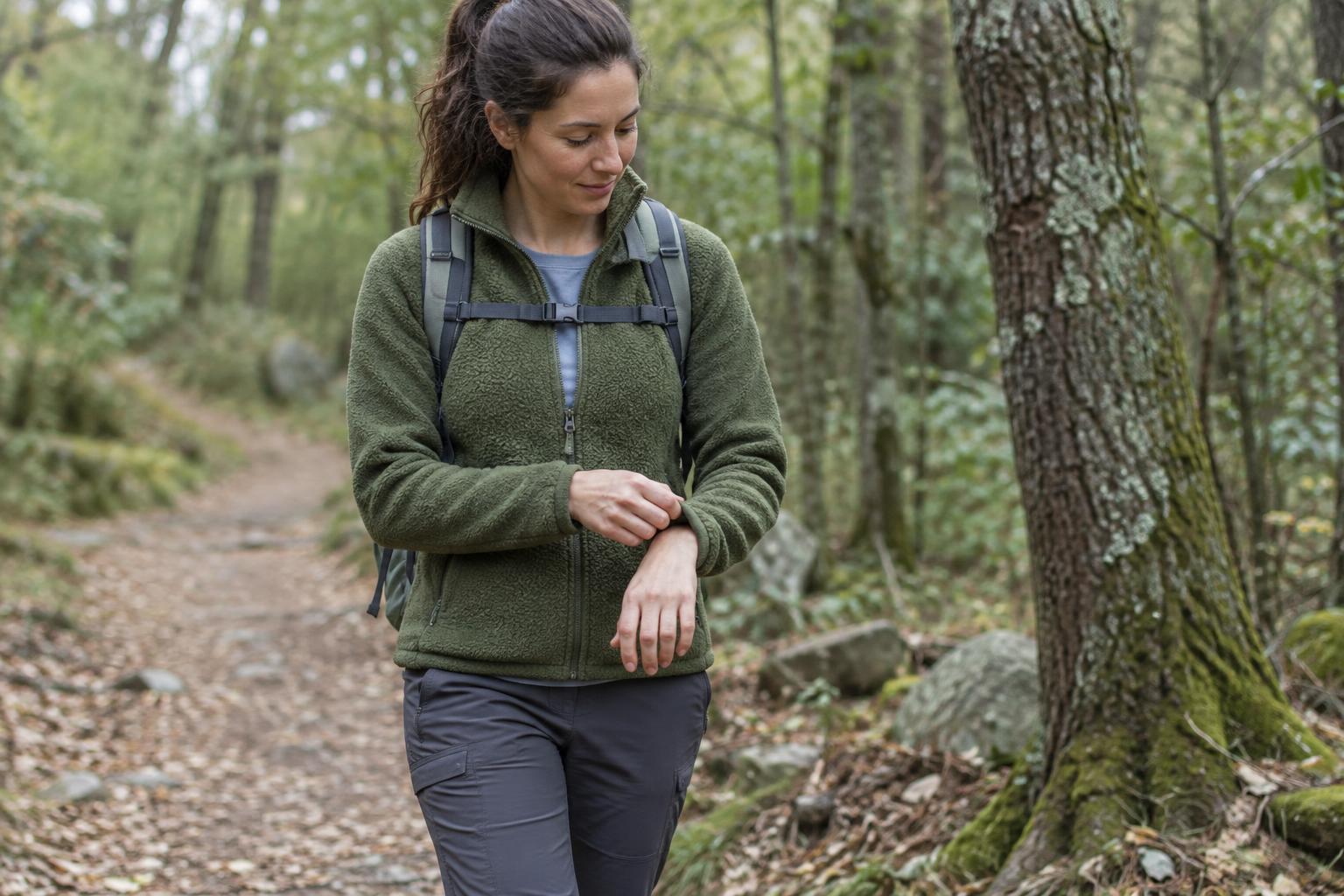
Look closely at details that change everyday comfort. A high collar can protect your neck; cuffs that sit neatly under gloves can reduce gaps; and a hem that stays in place helps keep warmth in. A full zip gives you more ways to release heat than a pullover, especially when your pace changes. Pockets are useful at rest, but check whether they remain accessible when you wear a backpack hip belt.
Match weight and breathability to your pace
For energetic walks or routes with long climbs, a light fleece is often the easiest to manage. It adds modest warmth without taking up much room when packed away. Some fleeces have an open or grid-like texture designed to let heat and moisture move through more readily. That can feel comfortable during active use, although it may offer less warmth when you stop or when wind passes through it.
For leisurely day trips, travel days or outings with extended breaks, a medium-weight fleece can be a useful middle ground. A thick fleece may suit low-intensity activity in cooler conditions, but consider its bulk as well as its warmth: it needs to fit beneath your outer jacket and in your bag when you take it off. If you tend to feel cold at rest and warm while walking, packable extra insulation for breaks may work better than wearing a heavy fleece all day.
Check the fit with your other layers
Try a fleece over the base layer you expect to wear outdoors. It should allow you to lift your arms, reach forward and walk comfortably without pulling across the shoulders. A close fit can help it sit neatly beneath a jacket, but it should not squeeze your base layer flat or restrict movement. Excessively loose fabric can bunch under an outer shell and make a backpack less comfortable.
Then try your outer jacket over the fleece. Zip both garments, turn your head and move your arms as you would on a walk. Check that the collars do not crowd your chin and that the sleeves stay at your wrists. If you use a backpack, put it on as well: seams, pockets or bulky fabric can feel different under shoulder straps. These quick checks tell you more about practical comfort than the size label alone.
Choose for your routine, then look after it
A simple way to decide is to picture the fleece in three moments: moving uphill, walking on level ground and stopping for a snack. If it seems comfortable only in one of those situations, plan how you will adjust your layers in the others. Prioritize the features you will use regularly rather than carrying extra warmth or bulk “just in case.” For many recreational walkers, an easy-to-vent fleece that layers cleanly is a dependable starting point.
Once you have chosen one, follow its care label to help it keep working well. Washing away sweat and dirt can help the fabric feel comfortable, while avoiding unnecessary high heat may help preserve its shape. Let it dry fully before storing it, and check zips and seams occasionally. A fleece that fits your usual outings and is easy to care for is more useful than a more technical option that rarely leaves the cupboard.