Start with the experience, not the mileage
A day walk that works for children is not necessarily the shortest route. A brief climb over awkward ground can feel harder than a longer stroll on a smooth path, while a familiar route with places to stop may hold attention better than a walk chosen for its views. Before choosing a destination, think about the children coming along: how they usually handle time on their feet, whether they enjoy exploring or prefer a clear goal, and what has made past outings pleasant or difficult.
Choose an aim everyone can understand, such as reaching a pond, crossing a bridge or finding a good picnic spot. The aim gives the walk shape without turning it into a race. If the group includes children with different abilities or interests, plan around the person who will need the most time and support. You can always add a short detour if everyone still has energy.
Look closely at the route
Distance is only one part of a route description. Check the surface, climbs, road crossings and any narrow or exposed sections. Consider whether a child can walk the route comfortably or whether you will be carrying a younger child for part of it. An easy-looking loop on a map may include steps that rule out a stroller, for example. Recent route descriptions can be useful, but leave room for conditions to be different when you arrive.
For a first visit, a clearly marked loop or an out-and-back path is often simpler than a route with many junctions. An out-and-back walk also lets you turn around whenever the group is ready. Before setting off, identify a shorter option and a sensible turnaround point. Make sure the return journey fits the plan: children who happily walk toward a destination still need energy to get back.
Make breaks part of the plan
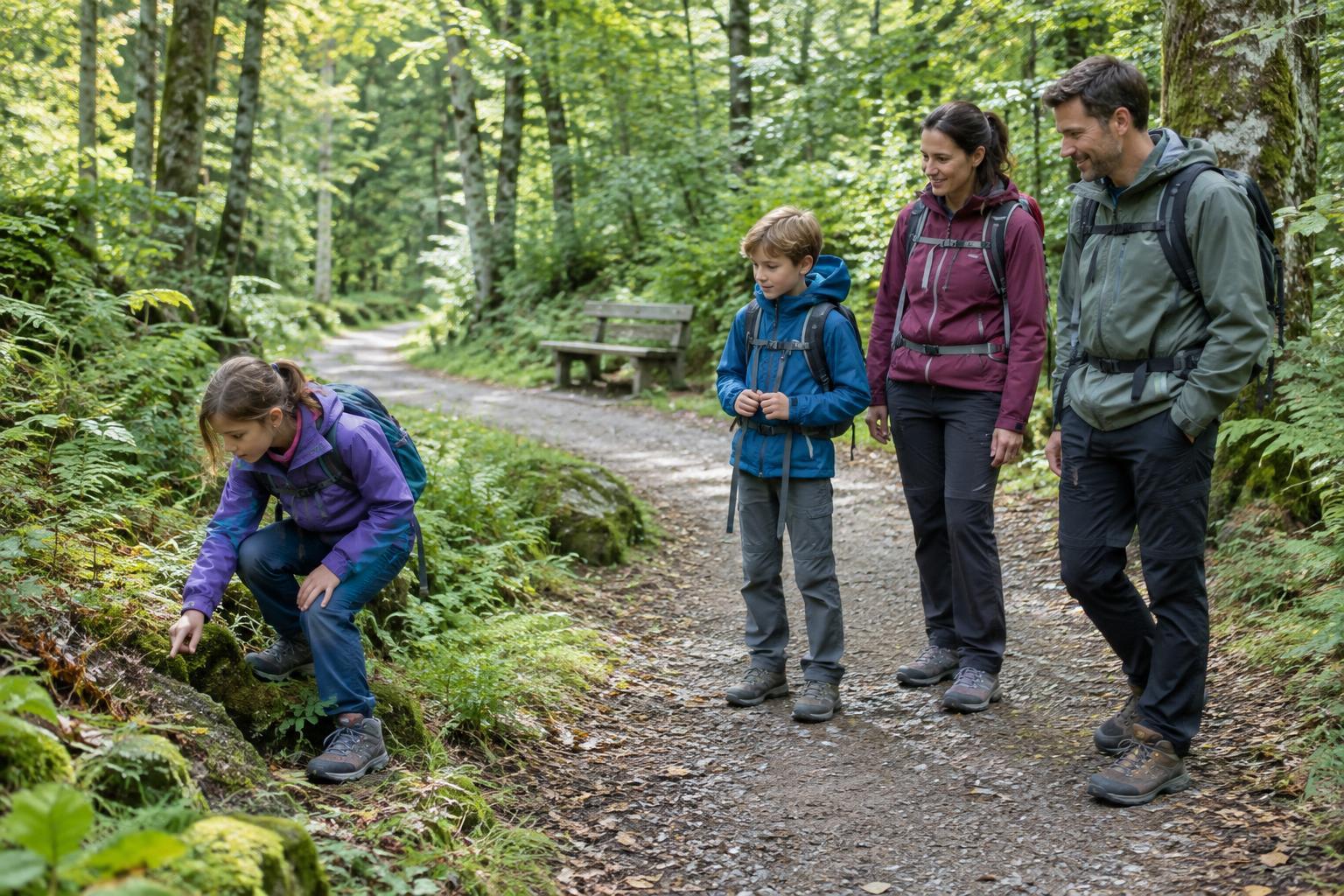
Children may stop to watch insects, balance on a log or ask questions about something beside the trail. Treat that curiosity as part of the outing rather than lost time. Allow more time than you would for the same route with adults, and avoid building the day around a tight deadline. A walk with a few natural pause points can feel easier than one long push, even if the total distance is similar.
Look for places to sit, eat and use a toilet, if available. Check where those facilities are rather than assuming they will be open or close to the path. Pack water, food and an extra layer so a break remains comfortable if the weather changes. A small, familiar snack can also make a planned pause feel like an event, without needing to promise a reward for finishing the route.
Match the walk to the day
A route that suits your group in mild weather may be a poor choice in heat, heavy rain or strong wind. Check the forecast before leaving and reassess at the trailhead. Think about shade or shelter, how slippery the path might become, and whether there is enough daylight for an unhurried return. Conditions matter especially when small children need help staying warm, dry or comfortable.
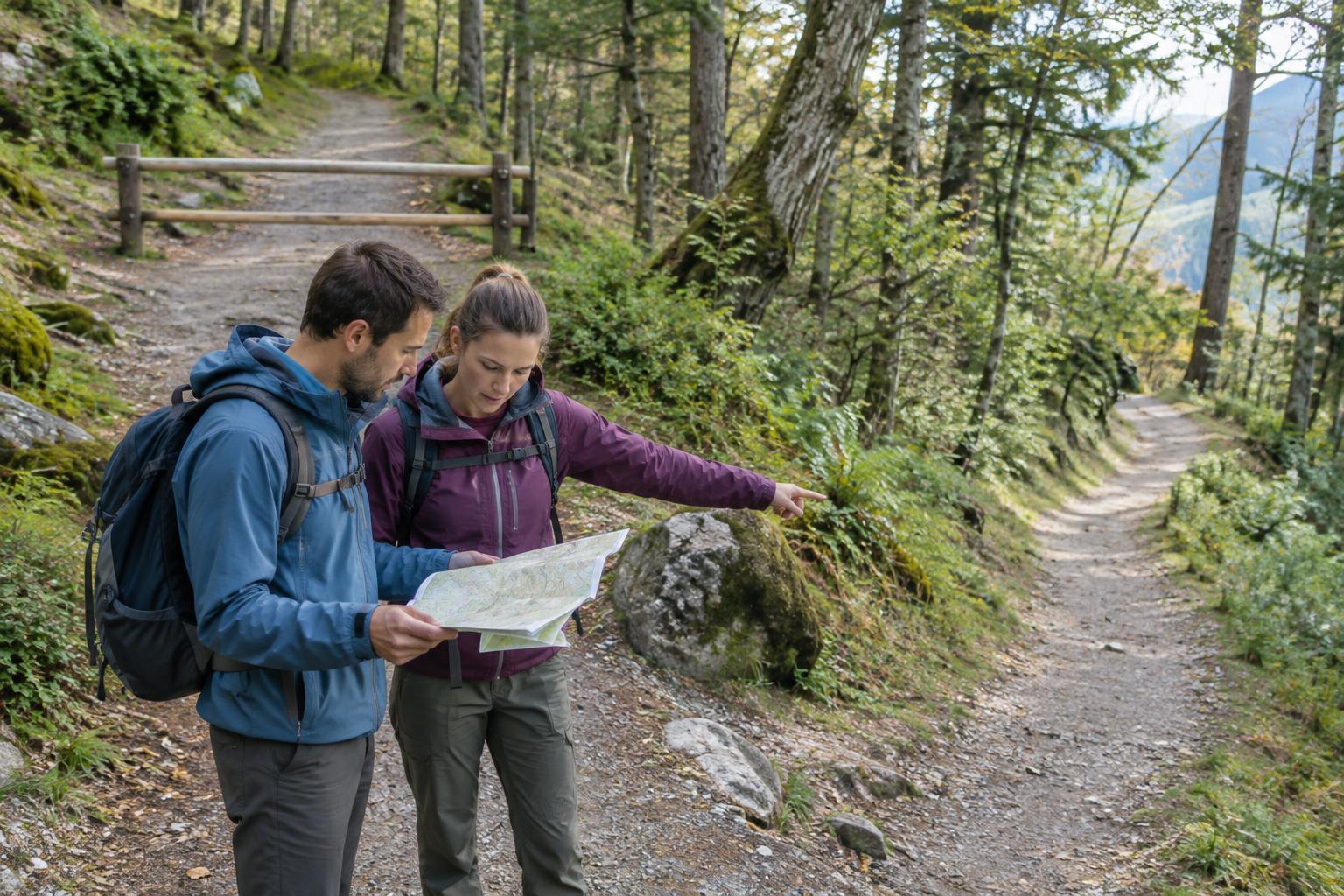
Clothing does not have to be complicated: comfortable footwear suited to the ground and layers that can be added or removed are a useful starting point. Carry what your group needs for the route and weather, including a way to navigate if signs are unclear. Let someone know your general plan when heading somewhere less familiar, and keep children close where paths meet traffic, water or steep ground.
Keep success flexible
Explain the basic plan before you start, but leave space for the group to help shape the walk. Children might choose between two suitable paths, look for trail markers or decide where to take the next break. Small choices give them a role without making them responsible for navigation or safety. If interest fades, try a short pause or a simple observation game before deciding whether to continue.
Turning back early is not a failed outing. Tiredness, uncomfortable clothing or changing weather are good reasons to use the shorter option you planned. Afterward, ask what everyone liked and what felt hard. Those answers will help you choose the next walk more effectively than mileage alone—and make another day outdoors feel inviting.